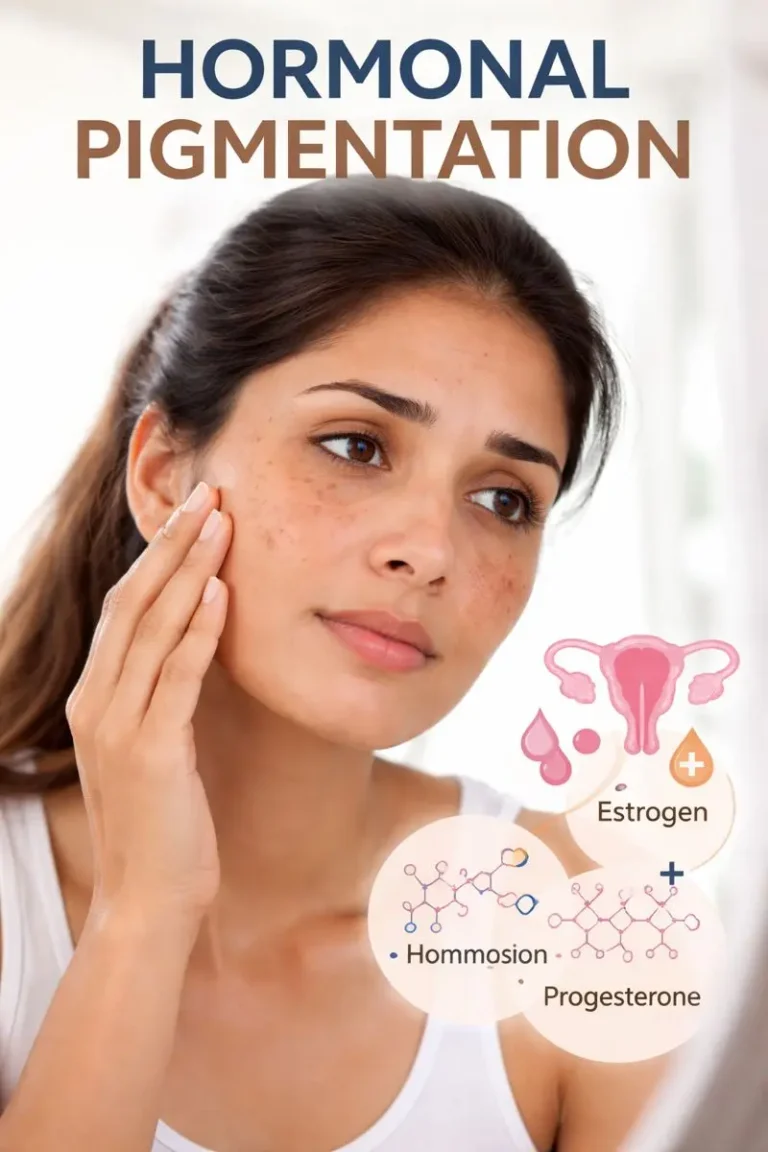
Why Pigmentation Gets Worse in Summer and Heat (Even Without Sun Exposure)
Table of Contents
- Pigmentation and Heat: How It Differs From Sun Exposure
- The Science Behind Heat-Induced Pigmentation
- Why Pigmentation Gets Worse in Summer
- Why Sunscreen Alone Is Not Enough
- Heat vs UV Pigmentation: Key Differences
- Who Is Most Affected by Heat-Induced Pigmentation
- How to Prevent Pigmentation From Heat Exposure
- Does Heat-Induced Pigmentation Go Away
- Science-Backed Takeaways on Heat and Pigmentation
- Final Thoughts
- References
- FAQS
Many people notice the same frustrating pattern every year.
Pigmentation seems stable in winter, starts darkening in spring, and then suddenly worsens in summer—sometimes even when sunscreen use is consistent.

This leads to a common question:
Why does pigmentation get worse in heat, even without direct sun exposure?
The answer lies in something most skincare routines don’t address: heat-induced pigmentation.
Pigmentation is not triggered by UV light alone. Heat itself activates pigment pathways through inflammation, blood vessels, and cellular stress responses. This is especially relevant for melasma-prone skin, post-inflammatory hyperpigmentation (PIH), and deeper skin tones.
As Dr. Faiza Shams explains:
“Many patients assume sunscreen alone will control pigmentation. But in clinical practice, heat exposure is one of the most underestimated triggers for pigment flares—particularly in melasma and brown skin.”
This article explains the science of heat-related pigmentation, why it worsens in summer, and how to manage it effectively.
To better understand what pigmentation is and why it occurs, read the full, in-depth article here.
Pigmentation and Heat: A Different Trigger Than Sunlight
UV radiation and heat are often grouped together, but biologically, they act through different pathways.
- UV light damages DNA and activates melanocytes directly
- Heat increases inflammation, vascular activity, and oxidative stress
You can avoid sunlight and still experience pigmentation flares due to heat alone.
This explains why pigmentation worsens:
- Indoors
- While cooking
- During hot showers
- In humid weather
- During exercise
Sunscreen blocks UV—but it does not block heat.
The Science Behind Heat-Induced Pigmentation
Recent dermatology research confirms that heat can independently stimulate melanogenesis (melanin production).
Here’s how it happens.
1. Heat Increases Inflammatory Signaling in the Skin
Heat causes blood vessels in the skin to dilate. This increases the release of inflammatory mediators such as prostaglandins, cytokines, and growth factors.
These inflammatory signals activate melanocytes.
Unlike UV damage, this process does not require sunlight at all.
“Heat creates a low-grade inflammatory environment in the skin. In pigment-prone individuals, that inflammation alone is enough to trigger melanin production,” says Dr. Faiza Shams.
This is why even mild warmth can worsen pigmentation over time.
2. Heat Stimulates Vascular Pathways Linked to Melasma
Melasma is now understood to be a vascular-inflammatory pigment disorder, not just excess melanin.
Studies show:
- Increased blood vessel density in melasma skin
- Elevated vascular growth factors
- Strong heat sensitivity
Heat increases blood flow and vascular signaling, which directly stimulates melanocytes.
This explains why melasma often worsens:
- During summer
- In tropical climates
- With steam exposure
3. Heat Activates Melanocytes Without UV Damage
Laboratory studies demonstrate that melanocytes respond to heat stress by increasing melanin synthesis as a protective mechanism.
This is different from tanning.
It is a defensive pigment response.
In deeper skin tones, melanocytes are already more reactive, making heat-induced pigmentation more pronounced and persistent.
4. Heat Weakens the Skin Barrier
Heat increases transepidermal water loss (TEWL).
A weakened barrier leads to:
- Increased irritation
- Increased sensitivity
- Increased inflammation
All of these contribute to pigmentation persistence.
“Barrier damage from heat exposure is often subtle but chronic. Over time, it significantly slows pigmentation recovery,” notes Dr. Faiza Shams.
Why Pigmentation Gets Worse in Summer Specifically
Summer creates a perfect storm for pigmentation.

1. Combined UV + Heat Exposure
Even minimal sun plus high heat multiplies pigment activity.
2. Humidity and Sweat
Sweat alters skin pH and increases friction, leading to inflammation.
3. Indoor Heat Sources
Cooking, poor ventilation, and hot water exposure continue heat stress indoors.
4. Overuse of Actives
Many people increase exfoliation in summer, worsening inflammation.
This combination explains why pigmentation often flares despite “doing everything right.”
To understand why melasma often returns and how to prevent flare-ups, read the detailed explanation here.
Why Sunscreen Alone Is Not Enough
Sunscreen is essential—but it is incomplete protection.
Sunscreens:
- Block UVB and UVA
- Do NOT block heat
- Only partially block visible light (unless tinted)
This is why dermatologists now emphasize multi-layer pigment protection, especially for melasma and PIH.
“For pigmentation-prone skin, sun protection must be paired with heat control and anti-inflammatory skincare. Sunscreen alone is rarely sufficient,” says Dr. Faiza Shams.
To learn how post-inflammatory hyperpigmentation (PIH) responds to inflammation and why it can persist, read the full explanation here.
Heat vs UV Pigmentation: Key Differences
| Feature | UV-Induced Pigmentation | Heat-Induced Pigmentation |
|---|---|---|
| Requires sunlight | Yes | No |
| Occurs indoors | Rarely | Common |
| Linked to inflammation | Moderate | High |
| Triggers melasma | Yes | Strongly |
| Controlled by sunscreen | Mostly | No |
Understanding this difference prevents treatment failure.
Who Is Most Affected by Heat-Induced Pigmentation?
Heat plays a bigger role in certain groups:
- Melasma-prone individuals
- People with PIH
- Indian and Asian skin tones
- People in tropical climates
- Those with barrier-damaged skin
This is why pigment disorders behave differently in warmer regions.
How to Prevent Pigmentation From Heat Exposure
Managing heat is as important as managing sun exposure.
1. Control Heat Sources
Reduce:
- Hot showers
- Steam facials
- Cooking heat exposure
- Sauna and steam rooms
Use ventilation where possible.
2. Use Anti-Inflammatory Skincare
Ingredients that help calm heat-related pigmentation:
- Niacinamide
- Azelaic acid
- Tranexamic acid
- Panthenol
- Ceramides
These reduce inflammation rather than “bleaching” pigment.
3. Choose the Right Sunscreen
For summer pigmentation:
- Broad-spectrum SPF 30–50
- Iron-oxide tinted sunscreen
- Reapplication every 2–3 hours
Tinted sunscreens help block visible light, which often acts alongside heat.
4. Strengthen the Skin Barrier
A strong barrier tolerates heat better.
Focus on:
- Gentle cleansing
- Avoiding over-exfoliation
- Consistent moisturization
Barrier repair shortens pigment recovery time.
5. Adjust Summer Skincare Routines
Reduce:
- Acid frequency
- Retinoid strength
- Layering multiple actives
Summer skin needs calm, not correction.
“One of the biggest summer mistakes I see is over-treating pigmentation. In heat, less is often more,” explains Dr. Faiza Shams.
Does Heat-Induced Pigmentation Go Away?
Yes—but slowly.
If heat exposure continues:
- Pigmentation persists
- Treatments appear ineffective
When heat triggers are controlled:
- Melanin production slows
- Treatments work better
- Pigment fades more evenly
Heat control improves outcomes across melasma, PIH, and sun-induced pigmentation.
To understand how heat exposure affects Indian skin pigmentation and triggers melanin overproduction, read the detailed explanation here.
Key Science-Backed Takeaways
Recent dermatology research confirms:
- Heat alone can stimulate melanogenesis
- Vascular and inflammatory pathways drive pigment flares
- Melasma is highly heat-sensitive
- Barrier repair reduces pigment relapse
- Summer pigmentation requires more than sunscreen
These insights explain why many traditional approaches fail.
Final Thoughts
Pigmentation worsens in heat because heat is an active biological trigger, not just an environmental inconvenience. It increases inflammation, activates melanocytes, and weakens the skin barrier—often without any sun exposure at all.
Once heat is addressed alongside UV protection, pigmentation becomes far more manageable.
As Dr. Faiza Shams summarizes:
“When patients understand heat as a trigger, not just sunlight, their pigmentation outcomes improve dramatically.”
References
- Passeron T. et al., “Heat-Induced Melanogenesis and Pigmentation Disorders,” Journal of the European Academy of Dermatology, 2022–2024.
- Hexsel D. et al., “Vascular and Inflammatory Components of Melasma,” Journal of Cosmetic Dermatology, 2022–2023.
- Grimes P.E., “Pigmentary Disorders and Environmental Triggers,” Dermatologic Clinics, 2021–2024.
FAQS
1. Why does pigmentation get worse in summer even when I avoid the sun?
Pigmentation can worsen in summer even without direct sun exposure because heat alone triggers inflammation, increases blood flow, and activates melanocytes. This process, known as heat-induced pigmentation, can darken existing spots indoors or during daily activities like cooking or hot showers.
2. Can heat cause pigmentation without UV exposure?
Yes. Dermatology research shows that heat can stimulate melanin production without UV damage. Heat increases inflammatory and vascular signaling in the skin, which is enough to trigger pigmentation, especially in melasma-prone and darker skin tones.
3. Why doesn’t sunscreen stop summer pigmentation completely?
Sunscreen protects against UV radiation but does not block heat or fully block visible light. Because summer pigmentation is often driven by heat and inflammation, sunscreen must be combined with heat control and anti-inflammatory skincare for effective results.
4. Is heat-induced pigmentation permanent?
Heat-induced pigmentation is not permanent, but it fades slowly if heat exposure continues. When heat triggers are controlled and the skin barrier is repaired, pigmentation gradually improves and responds better to treatment.
5. Who is most at risk for heat-related pigmentation?
People with melasma, post-inflammatory hyperpigmentation (PIH), Indian or Asian skin tones, and those living in hot or humid climates are more likely to experience pigmentation flares caused by heat rather than sun exposure alone.
Address: Block C, Punjab University Employees Housing Scheme Phase-II, Lahore, Pakistan
Contact Number: +923224563810