Why Pigmentation Treatments Fail: Inflammation, Barrier Damage, and Over-Treatment Explained
Table of Contents
One of the most common things people say after months of treating pigmentation is this:
“I’m using the right products… so why is my pigmentation not improving?”
They’ve tried vitamin C.
They’ve added retinoids.
They exfoliate regularly.
They wear sunscreen.
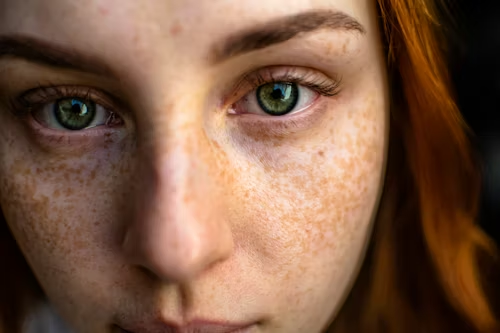
Yet the dark patches stay the same—or worse, they deepen.
The truth is uncomfortable but important: most pigmentation treatments fail not because the ingredients are wrong, but because the skin environment is hostile to healing.
As Dr. Faiza Shams explains:
“In many patients, pigmentation doesn’t persist because treatments are weak. It persists because the skin is inflamed, barrier-damaged, or overstimulated. Pigment cannot clear in an unhealthy skin environment.”
This article breaks down why pigmentation treatments fail, what blocks progress at a biological level, and how to reset your approach using science-backed principles.
Skin tone changes are influenced by many internal and external factors, and learning how pigmentation forms in the skin helps readers better understand why dark spots, uneven tone, and recurring pigmentation develop over time.
When Pigmentation Treatment Failure Is Actually Skin Stress
Pigmentation fades when melanocytes calm down and pigmented cells are replaced gradually.
But that process shuts down when the skin is under constant stress.
Treatment failure usually means one or more of these are present:
- Chronic inflammation
- Barrier damage
- Over-exfoliation
- Too many active ingredients
- Ignoring internal or environmental triggers
Pigmentation doesn’t fade in chaos.
It fades in calm.
The Role of Chronic Inflammation in Pigmentation Failure
Inflammation is the number one reason pigmentation treatments don’t work. Skin discoloration often follows irritation or injury, and understanding how inflammation triggers pigmentation helps explain why redness, acne, or rashes can leave behind persistent dark marks.
Even low-grade, invisible inflammation keeps melanocytes active.
How Inflammation Blocks Pigment Fading
Inflammation:
- Releases cytokines that stimulate melanocytes
- Increases tyrosinase activity
- Slows normal skin turnover
- Deepens pigment into lower skin layers
This is why pigmentation often worsens when people:
- Exfoliate too frequently
- Layer strong actives
- Use irritating “brightening” products
“If the skin is irritated—even mildly—melanocytes interpret that as a signal to produce more pigment. No brightening product can override that signal,” says Dr. Faiza Shams.
Barrier Damage: The Silent Saboteur
A healthy skin barrier is essential for pigmentation to fade.
When the barrier is damaged:
- Water loss increases
- Inflammation rises
- Skin becomes more reactive
- Pigment clearance slows
Barrier damage often happens gradually, so people don’t notice it.
Common Causes of Barrier Damage
- Daily exfoliation
- High-strength acids used too often
- Strong retinoids without buffering
- Alcohol-based toners
- Scrubs and cleansing brushes
Once the barrier is compromised, even good treatments fail.
Why Over-Exfoliation Makes Pigmentation Worse
Exfoliation is often marketed as the fastest way to fade dark spots.
In reality, over-exfoliation is one of the most common causes of stubborn hyperpigmentation.
Too much exfoliation:
- Creates micro-inflammation
- Triggers post-inflammatory hyperpigmentation (PIH)
- Deepens existing pigment
- Delays healing
This is especially true for:
- Indian and Asian skin
- Melasma-prone skin
- Sensitive or acne-affected skin
“Exfoliation should support pigment turnover, not create repeated injury. Most pigmentation failures I see are linked to excessive exfoliation,” notes Dr. Faiza Shams.
Too Many Actives: When “More” Backfires
Another common mistake is stacking actives in the same routine.
Typical failing routines include:
- Vitamin C + AHA + retinoid + niacinamide + exfoliant
- Multiple acids layered daily
- Switching actives every few weeks
This constant stimulation keeps the skin in a reactive state.
Pigmentation needs stability, not constant correction.
Why Pigmentation Gets Worse With Treatment
This is a major red flag—and a common one.
Pigmentation worsens during treatment when:
- Inflammation exceeds repair capacity
- Heat or visible light exposure continues
- Barrier repair is ignored
- The skin never gets recovery time
At this point, adding stronger treatments only deepens the problem.
Environmental Triggers That Sabotage Treatment Results
Even perfect routines fail if triggers remain active.
Common overlooked triggers include:
- Heat exposure (cooking, hot showers)
- Visible light indoors
- UV through windows
- Friction (mask use, rubbing)
- Stress and poor sleep
“Patients often blame products, but persistent pigmentation usually means ongoing triggers are still activating melanocytes,” explains Dr. Faiza Shams.
Pigmentation concerns often flare during warmer months, and learning why pigmentation worsens in heat helps explain the link between increased temperature, inflammation, and excess melanin production.
Why Some Pigmentation Is Slow by Nature
Not all pigmentation behaves the same way.
Treatment response depends on:
- Depth of pigment
- Type (melasma vs PIH)
- Skin tone
- Hormonal sensitivity
- Inflammatory status
Hormonal and melasma-related pigmentation fades slower and relapses more easily than acne marks.
Understanding this prevents unrealistic expectations.
How to Reset a Failing Pigmentation Routine
If pigmentation isn’t improving after 8–12 weeks, a reset is often necessary.
Step 1: Remove Irritants
Temporarily stop:
- Exfoliating acids
- Scrubs
- High-strength actives
Give the skin a chance to calm down.
Step 2: Repair the Barrier First
Focus on:
- Gentle cleanser
- Ceramides
- Glycerin
- Panthenol
Barrier repair alone can reduce pigment activity.
Step 3: Reintroduce Actives Slowly
Add back:
- Azelaic acid or tranexamic acid
- Niacinamide
- Low-strength retinoid (2–3 nights weekly)
Avoid layering multiple actives together.
Step 4: Control Heat, Light, and Sun
Use:
- Broad-spectrum sunscreen
- Iron-oxide tinted sunscreen if pigment-prone
- Physical protection (hats, shade)
Environmental control is non-negotiable.
When to Seek Professional Guidance
Treatment failure is a sign to reassess—not push harder.
Consult a professional if:
- Pigmentation worsens despite care
- Skin stings or burns regularly
- Dark patches turn gray or blue
- You’ve been treating for months without change
Early correction prevents long-term damage.
Science-Backed Insights on Pigmentation Treatment Failure
Recent dermatology research shows:
- Inflammation prolongs melanocyte activation
- Barrier repair improves pigment clearance
- Aggressive treatments increase relapse risk
- Calming strategies outperform aggressive ones long term
These findings align with real-world clinical outcomes.
Pigmentation research continues to evolve, and understanding Visible Light Interaction helps readers learn how everyday light exposure can influence melanin activity and uneven skin tone beyond UV radiation.
Final Thoughts
Pigmentation treatments fail not because skin is “resistant,” but because the skin environment is not supportive of healing.
Pigment fades when the skin is:
- Calm
- Protected
- Repaired
- Consistently maintained
As Dr. Faiza Shams summarizes:
“Pigmentation improves when we stop fighting the skin and start supporting it.”
Resetting your approach often does more than adding another active ever could.
References
- Grimes P.E., “Inflammation and Pigmentation Disorders,” Journal of Clinical and Aesthetic Dermatology, 2022–2024.
- Passeron T. et al., “Melanocyte Reactivity and Pigment Persistence,” Journal of the European Academy of Dermatology, 2022–2024.
- Taylor S.C., “Barrier Function and Pigmentation in Skin of Color,” Dermatologic Clinics, 2021–2023.
FAQS
1. Why is my pigmentation not improving despite using the right products?
Pigmentation often fails to improve because the skin is inflamed or barrier-damaged. Even effective ingredients cannot work properly if the skin is irritated, over-exfoliated, or constantly exposed to triggers like heat and visible light.
2. Can over-exfoliation make hyperpigmentation worse?
Yes. Over-exfoliation causes micro-inflammation in the skin, which activates melanocytes and leads to darker, more persistent hyperpigmentation, especially in Indian and Asian skin tones.
3. How do I know if my pigmentation treatment is damaging my skin barrier?
Signs of barrier damage include stinging, burning, tightness, increased sensitivity, redness, and worsening pigmentation. If these occur, treatment should be paused and barrier repair prioritized.
4. How long should pigmentation treatments take to show results?
Most pigmentation treatments require at least 8–12 weeks to show visible improvement. If pigmentation worsens or stays unchanged beyond this period, the routine may need to be simplified rather than intensified.
5. What is the best way to reset a failing pigmentation routine?
The best reset involves stopping irritants, focusing on barrier repair, reintroducing pigment-regulating ingredients slowly, and controlling environmental triggers like sun, heat, and friction. Calm skin fades pigment more effectively.
Address: Block C, Punjab University Employees Housing Scheme Phase-II, Lahore, Pakistan
Contact Number: +923224563810