Why Brightening Products Burn but Still Don’t Fade Pigmentation
Table of Contents
Many people believe that burning, tingling, or stinging means a brightening product is “working.”
In reality, this sensation is often the exact reason pigmentation refuses to fade—or comes back darker.
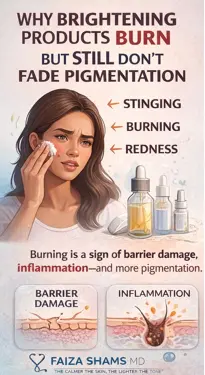
This article explains why brightening products burn, what that sensation actually means inside the skin, and why irritation-driven routines frequently fail in melasma, PIH, and inflammation-prone skin, especially in South Asian and deeper skin tones.
The Dangerous Myth: “If It Burns, It’s Working”
A persistent skincare myth has convinced users that discomfort equals effectiveness. This belief is especially common with:
- Whitening creams
- Acid-based serums
- Vitamin C products
- Kojic acid, arbutin, or retinoid combinations
In pigmentation-prone skin, burning is not a sign of melanin suppression.
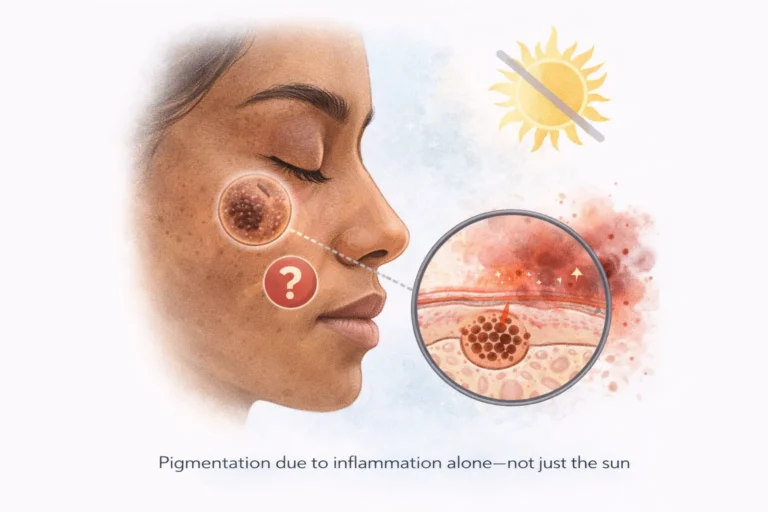
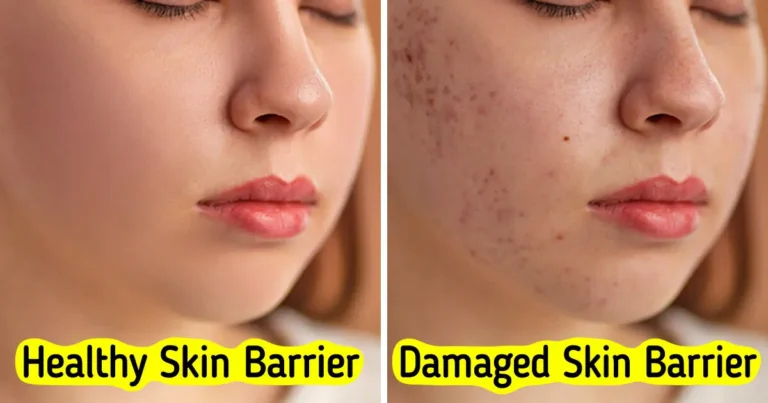
It is a sign of barrier damage and inflammation—two major triggers of pigmentation.
The damage from over-aggressive brightening is largely an inflammatory and oxidative-stress response. Our research on flavonoid antioxidants (Shams et al., 2022) demonstrated how reducing oxidative stress markers and inflammatory signalling protects tissue — a principle that applies directly to irritated, reactive skin.
Pigmentation improves when the skin is calm, not when it is inflamed.
— Dr. Faiza Shams
What Burning Actually Means at a Skin Level
When a product causes burning or stinging, several things are happening simultaneously:
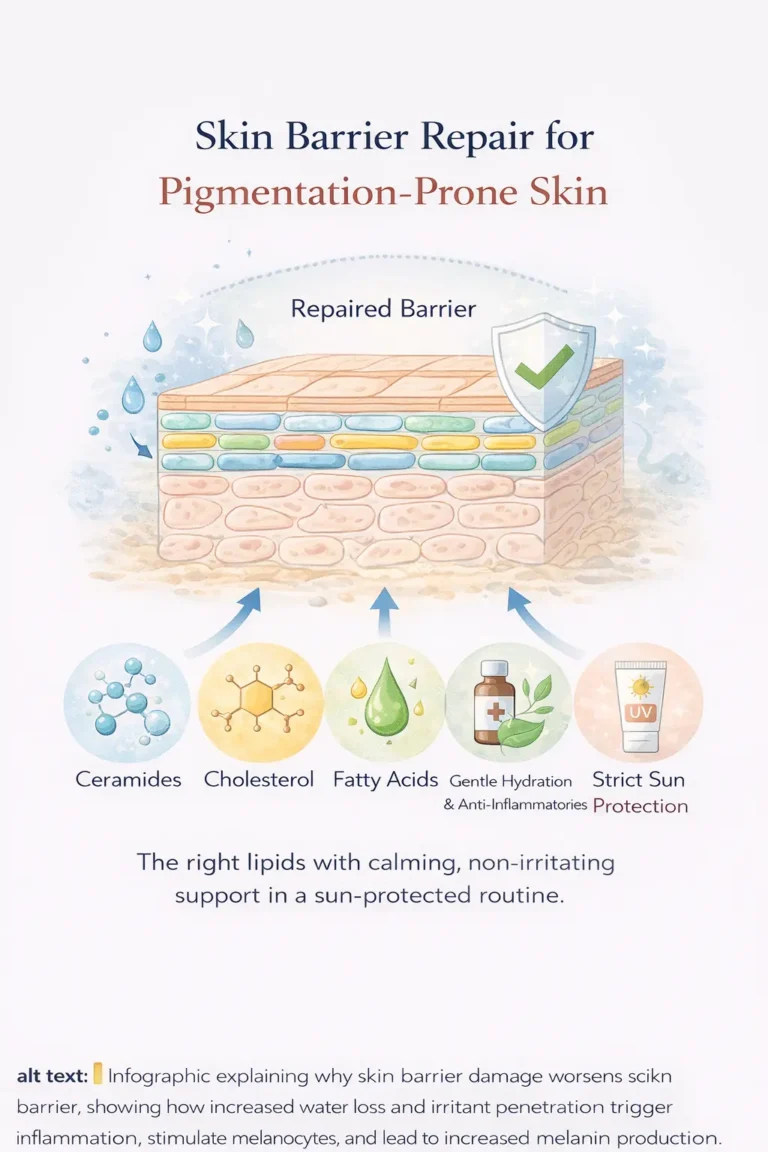
1. The Skin Barrier Is Compromised
The stratum corneum (outer barrier) is unable to regulate penetration properly. This allows active ingredients to enter too deeply and too quickly.
2. Inflammatory Pathways Are Activated
Keratinocytes release inflammatory mediators such as:
- Prostaglandins
- Cytokines (IL-1, TNF-α)
- Reactive oxygen species
These signals directly stimulate melanocytes, increasing melanin production.
3. Melanocytes Become Over-Reactive
Instead of shutting down pigment formation, irritated melanocytes enter a defensive hyperpigmentation mode.
This is why skin may:
- Look darker after a few weeks
- Develop patchy pigmentation
- Improve briefly, then relapse
Why Brightening Products Cause Burning in the First Place
1. Overloaded Formulations
Many products combine multiple actives in one formula:
- Acids + retinoids
- Vitamin C + niacinamide at unstable pH
- Kojic acid + exfoliants
These combinations may look powerful on paper but are biologically aggressive, especially for melasma-prone skin.
2. Incorrect pH for Pigmentation-Prone Skin
Low pH products (<3.5) dramatically increase penetration but also increase irritation.
Pigmentation-prone skin performs best in a slightly acidic, barrier-friendly pH (~5–5.5).
3. Barrier Damage from Previous Treatments
Many patients already have compromised skin due to:
- Long-term steroid use
- Harsh peels
- Over-exfoliation
- Improper whitening creams
When a new brightening product is applied, the damaged barrier amplifies irritation, not results.
Why Burning Does NOT Equal Pigment Reduction
Melanin production is regulated by cell signaling, not discomfort.
Burning triggers:
- Increased tyrosinase activity
- Increased melanosome transfer
- Increased pigment retention in keratinocytes
In simple terms:
Irritation tells the skin to protect itself by producing MORE pigment.
This is why many users say:
- “My skin looks brighter for a week, then darker”
- “The patches spread”
- “Nothing works long-term”
Learn more on why pigmentation treatments fail?
Melasma & PIH: Why They React Worse to Irritation
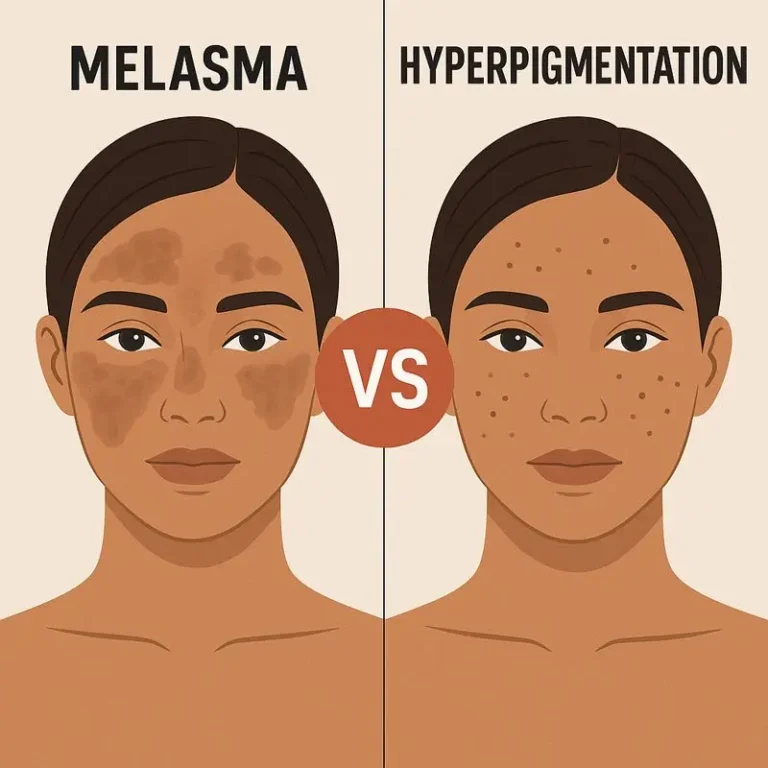
Melasma and post-inflammatory hyperpigmentation are inflammation-driven disorders, not simple pigment excess.
Key characteristics:
- Hyper-responsive melanocytes
- Chronic low-grade inflammation
- Strong link to barrier dysfunction
Aggressive brightening feeds the disease mechanism, rather than treating it.
Common Ingredients That Burn but Fail in Pigmentation
This does not mean these ingredients are “bad.”
They fail when used incorrectly.
Switching to gentle serums for sensitive and irritation-prone skin can help prevent further damage.
Frequently problematic when misused:
- High-strength glycolic acid
- Low-pH vitamin C
- Kojic acid in unstable bases
- Retinoids layered with acids
- Alcohol-heavy formulations
The problem is delivery, concentration, and timing, not the ingredient itself.
Why the Skin “Gets Used To” Burning (And Why That’s Dangerous)
Many users report:
“It burned at first, now it doesn’t.”
This is not adaptation—it is nerve desensitization + barrier thinning.
The skin may feel calmer, but internally:
- Barrier lipids are depleted
- Inflammation continues silently
- Pigment pathways remain activated
This leads to delayed worsening, often months later.
The Right Way to Brighten Without Burning
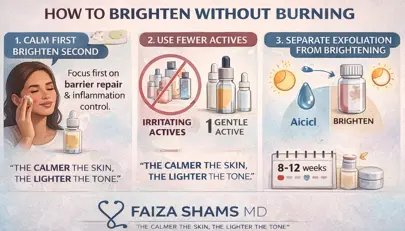
1. Calm First, Brighten Second
Pigmentation improves only when inflammation is controlled.
Focus first on:
- Barrier repair
- Anti-inflammatory support
- Gentle cleansing
2. Use Fewer Actives, Not More
One well-chosen active works better than five irritating ones.
Examples:
- Tranexamic acid
- Low-dose niacinamide
- Stable arbutin
3. Separate Exfoliation from Brightening
Never layer:
- Acids + pigment inhibitors
- Retinoids + exfoliants
Alternate instead.
4. Respect Skin Recovery Time
Melanin turnover is slow.
Expect:
- 8–12 weeks for visible improvement
- Temporary dullness before clarity
- Gradual lightening, not instant brightness
When Burning Should Never Be Ignored
Stop immediately if you experience:
- Persistent stinging
- Redness lasting hours
- Darkening after 2–3 weeks
- Patchy or uneven tone
These are warning signs of inflammation-induced pigmentation.
Final Takeaway
Burning is not a shortcut to clear skin.
In pigmentation-prone individuals, it is often the root cause of treatment failure.
True brightening comes from:
- Barrier integrity
- Inflammation control
- Strategic, patient use of actives
The calmest skin is the skin that lightens the most.
— Dr. Faiza Shams
FAQS
1. Why do brightening creams cause burning or stinging on the skin?
Burning usually happens when a product disrupts the skin barrier or penetrates too deeply, triggering inflammation rather than controlled pigment reduction.
2. Does burning mean a pigmentation product is working faster?
No. Burning is a sign of irritation, not effectiveness. Inflammation can actually activate melanocytes and worsen pigmentation over time.
3. Can irritated skin produce more melanin?
Yes. Skin inflammation releases signals that stimulate melanocytes, leading to increased melanin production and darker patches.
4. Should I stop using a product if my skin burns but doesn’t look red?
Yes. Even without visible redness, ongoing stinging indicates subclinical inflammation that can delay pigment improvement.
5. What is a safer way to brighten skin without irritation?
Focus on barrier repair first, use fewer actives, avoid layering exfoliants with brighteners, and allow adequate recovery time between treatments.
Address: Block C, Punjab University Employees Housing Scheme Phase-II, Lahore, Pakistan
Contact Number: +923224563810