Asian Skin Discoloration: Why It Happens and the Safest Treatment Options
Table of Contents
- What Is Asian Skin Discoloration?
- Common Types of Pigmentation in Asian Skin
- Post-Inflammatory Hyperpigmentation in Asian Skin
- Melasma in Asian Skin
- Sun-Induced Pigmentation in Asian Skin
- Does Pigmentation Behave Differently in Darker Skin Tones?
- Why Many Pigmentation Treatments Fail in Asian Skin
- Safest Treatment Options for Asian Skin Discoloration
- Topical Ingredients That Work Best for Asian Skin
- Sun and Visible Light Protection Strategies
- Chemical Peels and Asian Skin: What to Know
- Laser Treatments for Asian Skin Discoloration
- Daily Skincare Routine for Pigmentation-Prone Asian Skin
- Lifestyle Factors That Worsen Pigmentation
- When to See a Dermatologist
- Science-Backed Insights on Asian Skin Pigmentation
- Final Thoughts
- References
Asian skin discoloration refers to uneven darkening of the skin that occurs more frequently or more intensely in people of East Asian, South Asian, Southeast Asian, and Middle Eastern descent.
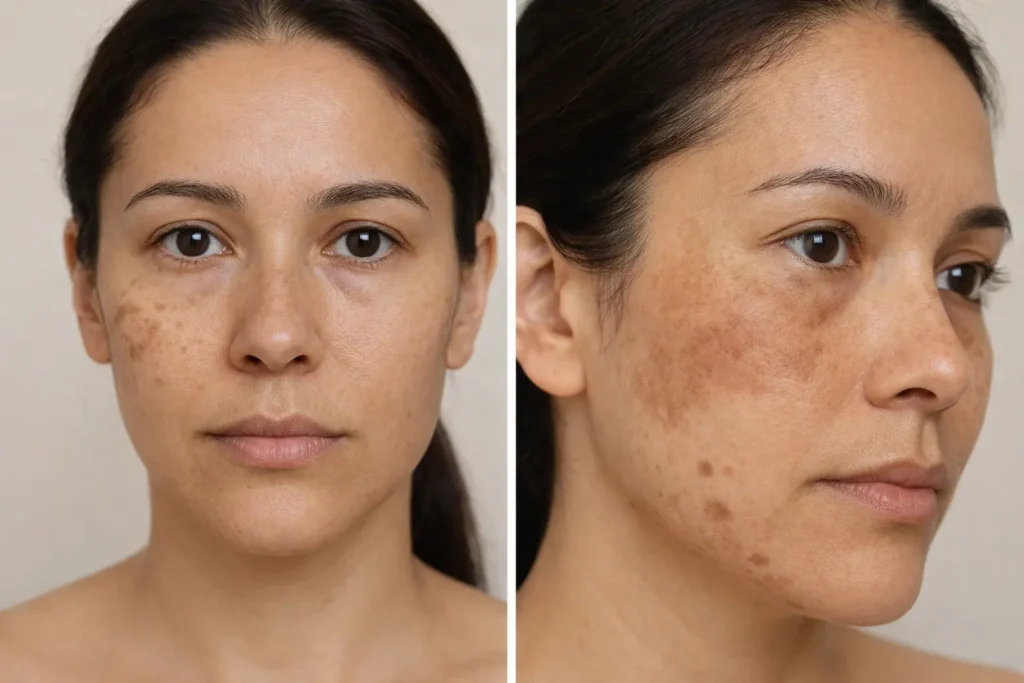
Common forms include:
- Post-inflammatory hyperpigmentation (PIH)
- Melasma
- Sun-induced pigmentation
- Acne marks
- Heat-induced darkening
Asian skin is not “more sensitive,” but it is more reactive when inflammation occurs. This reactivity is the key reason pigmentation is more visible and longer-lasting.
Why Asian Skin Develops Pigmentation More Easily
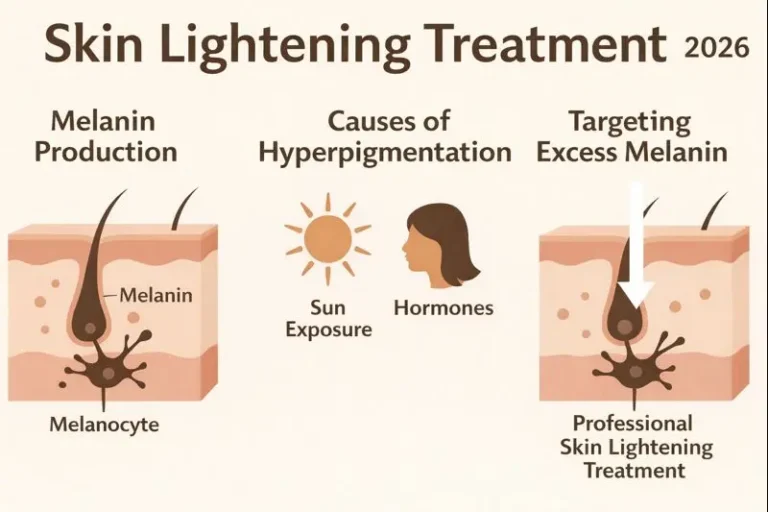
The primary reason pigmentation behaves differently in Asian skin lies in melanin biology, not skin thickness or weakness.
1. More Active Melanocytes
Asian skin has melanocytes that are:
- More responsive to stimuli
- Faster to produce melanin
- More reactive to inflammation
This does not mean Asian skin has more melanocytes.
It means melanocytes are more easily activated.
When acne, irritation, or heat occurs, melanocytes respond aggressively by producing pigment as a protective mechanism.
2. Stronger Inflammatory Response
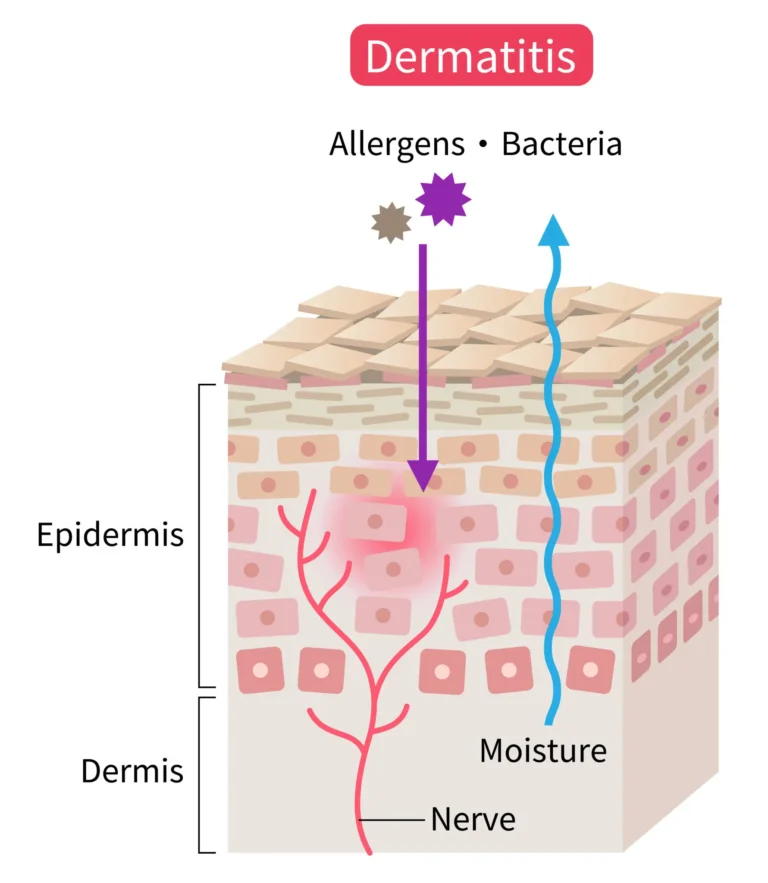
Studies show that Asian skin exhibits a heightened inflammatory cascade when injured. Inflammation releases mediators that stimulate melanin production.
This explains why:
- Acne marks linger longer
- Scratches darken quickly
- Cosmetic procedures trigger PIH
Inflammation, not sun alone, is the dominant driver.
3. Greater Sensitivity to UV and Visible Light
Asian skin responds not only to UV radiation but also to visible light, particularly blue light.
Research confirms that visible light can worsen pigmentation in deeper skin tones even when UV is blocked. This is why discoloration may persist despite sunscreen use.
4. Heat as a Major Trigger
Heat increases blood flow and inflammatory signaling. In Asian skin, heat alone can trigger pigmentation without sun exposure.

Common heat sources include:
- Cooking
- Hot weather
- Steam facials
- Hot showers
- Exercise in warm environments
This explains why pigmentation worsens in summer or humid climates.
Common Types of Pigmentation in Asian Skin
Asian skin discoloration does not present as a single condition. Multiple pigment disorders often coexist.
Post-Inflammatory Hyperpigmentation (PIH)
PIH is the most common pigmentation issue in Asian skin.
It occurs after:
- Acne
- Eczema
- Allergic reactions
- Cosmetic procedures
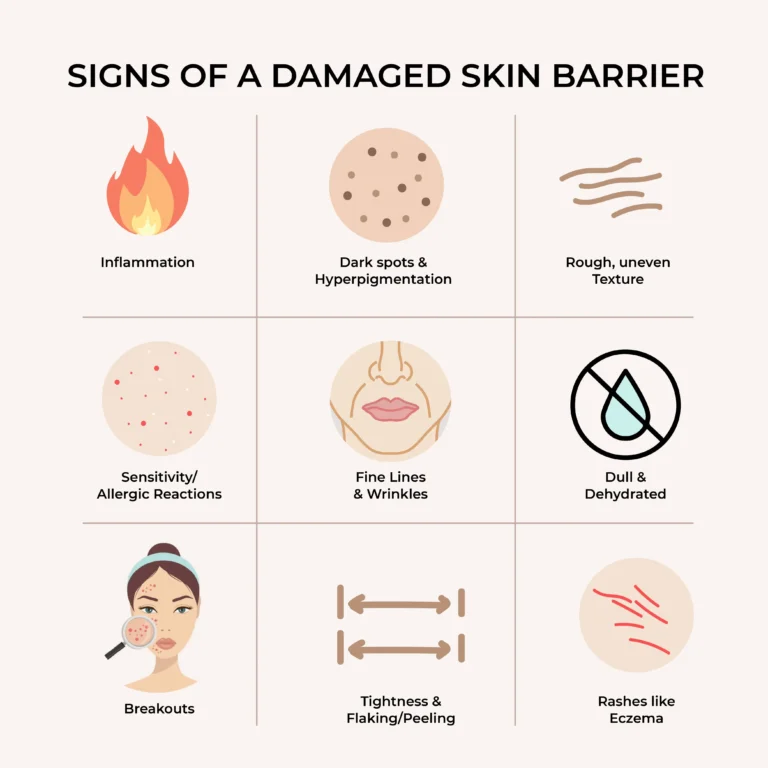
PIH appears exactly where inflammation occurred and can range from light brown to deep gray.
Asian skin tends to develop deeper PIH, which takes longer to fade.
Melasma in Asian Skin
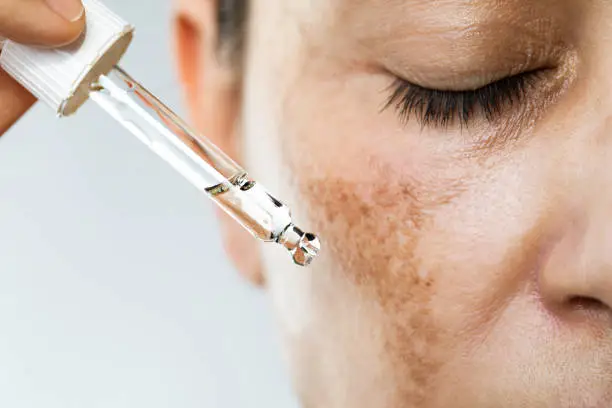
Melasma is extremely common in Asian populations, especially among women.
Triggers include:
- Hormonal fluctuations
- Pregnancy
- Oral contraceptives
- Heat exposure
- UV and visible light
Melasma in Asian skin often:
- Appears earlier in life
- Covers larger facial areas
- Recurs easily
Lear why melasma keep coming back.
Sun-Induced Pigmentation
Asian skin tans easily and retains pigment longer. Even brief sun exposure can darken existing pigmentation.
Unlike freckles, sun-induced pigmentation in Asian skin often blends into surrounding skin, creating uneven tone rather than discrete spots.
Does Pigmentation Behave Differently in Darker Skin Tones?
Yes — and this is critical for treatment planning.
In darker and Asian skin tones:
- Pigmentation forms faster
- Pigment penetrates deeper
- Healing takes longer
- Aggressive treatments increase risk
This is why treatments designed for lighter skin often cause worsening discoloration in Asian skin.
Why Many Pigmentation Treatments Fail in Asian Skin
Failure is usually due to over-treatment, not under-treatment.
Common mistakes include:
- Strong chemical peels
- High-energy lasers
- Overuse of exfoliating acids
- Aggressive retinoid use
- Inadequate sun and heat protection
These approaches increase inflammation, which worsens pigmentation.
Safest Treatment Options for Asian Skin Discoloration
The safest approach focuses on calming inflammation first, then gradually reducing pigment.
Topical Ingredients That Work Best
Azelaic Acid
Reduces inflammation and tyrosinase activity.
Safe for long-term use in Asian and Indian skin.
Niacinamide
Strengthens the skin barrier and reduces pigment transfer.
Tranexamic Acid
Targets inflammation-driven pigmentation and melasma.
Vitamin C
Helps brighten uneven tone when used gently and consistently.
Retinoids (Low Strength)
Improve cell turnover but must be introduced slowly to avoid PIH.
Sun and Visible Light Protection
For Asian skin, sunscreen alone is not enough.
Best practices include:
- Broad-spectrum SPF 30–50
- Iron-oxide tinted sunscreen
- Reapplication every 2–3 hours
- Hats and physical shade
Visible light protection is especially important for melasma-prone skin.
Chemical Peels: Use With Caution
Superficial peels may help when done carefully.
Safer options:
- Mandelic acid
- Lactic acid
- Low-strength glycolic acid
Medium and deep peels increase PIH risk in Asian skin.
Laser Treatments: Not First-Line
Lasers can help but are not the first choice for Asian skin discoloration.
If used:
- Settings must be conservative
- Heat generation should be minimal
- Post-procedure sun protection is mandatory
Improper laser use is a common cause of worsening pigmentation.
Daily Skincare Routine for Asian Skin Prone to Pigmentation
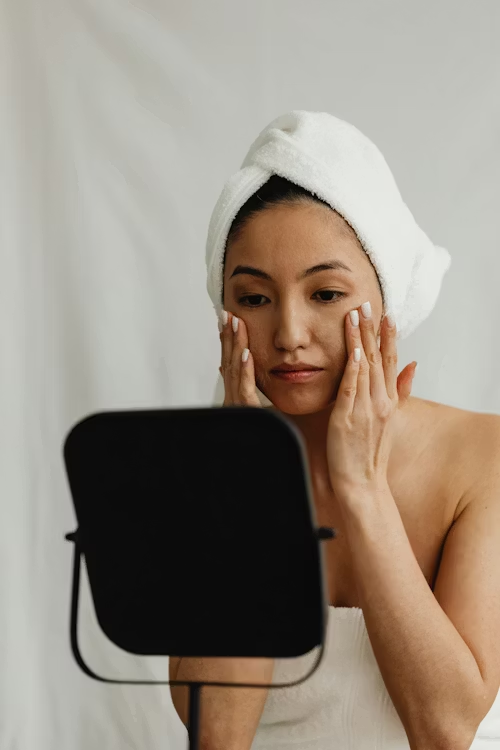
Morning
- Gentle cleanser
- Niacinamide or vitamin C
- Tinted mineral sunscreen SPF 50
Evening
- Gentle cleanser
- Azelaic acid or tranexamic acid
- Retinoid (2–3 nights weekly)
- Barrier-repair moisturizer
Consistency matters more than strength.
Lifestyle Factors That Worsen Pigmentation in Asian Skin
Pigmentation is not just a skincare issue.
Key contributors include:
- Heat exposure
- Hormonal imbalance
- Stress
- Sleep deprivation
- Poor barrier repair
Addressing these factors improves treatment outcomes significantly.
When to See a Dermatologist
Professional guidance is important if:
- Pigmentation worsens despite treatment
- Dark patches appear suddenly
- Pigment turns gray or blue
- You have a history of PIH after procedures
Early intervention prevents long-term discoloration.
Science-Backed Insights on Asian Skin Pigmentation
Recent research shows:
- Asian skin melanocytes respond faster to inflammation
- Visible light plays a major role in pigmentation persistence
- Barrier repair reduces pigment formation
- Gentle, long-term treatment outperforms aggressive approaches
These findings shape modern dermatologic care for Asian skin.
Final Thoughts
Asian skin discoloration is common, complex, and manageable. The key is understanding that Asian skin responds differently to inflammation, heat, and light. Treating pigmentation safely means calming the skin, protecting it consistently, and avoiding aggressive shortcuts.
With the right approach, pigmentation can fade without causing further damage.
References
- Grimes P.E., et al. “Pigmentary Disorders in Skin of Color.” Journal of Clinical and Aesthetic Dermatology, 2022–2024.
- Taylor S.C., et al. “Post-Inflammatory Hyperpigmentation in Asian and Darker Skin Types.” Dermatologic Clinics, 2021–2023.
- Passeron T., et al. “Visible Light and Pigmentation in Skin of Color.” Journal of the European Academy of Dermatology, 2022–2024.
FAQS
Why does Asian skin develop pigmentation more easily?
Asian skin has more active melanocytes, which produce melanin quickly in response to triggers like sun exposure, inflammation, and hormonal changes. This makes pigmentation a common protective response—but it can easily become uneven or excessive.
Does pigmentation behave differently in darker skin tones?
Yes. In darker skin tones, pigmentation tends to be deeper, more intense, and slower to fade because melanin is produced and retained more efficiently within skin cells. This also increases the risk of post-inflammatory hyperpigmentation.
Why does pigmentation last longer in brown skin?
Brown skin has larger and more numerous melanosomes that disperse pigment throughout the skin more evenly, making discoloration persist longer. Additionally, inflammation triggers stronger melanin responses, prolonging pigment retention.
What is the best treatment for pigmentation in Asian skin?
The most effective treatment combines strict sun protection, gentle pigment-regulating ingredients (like niacinamide, azelaic acid, tranexamic acid, and retinoids), and dermatologist-guided procedures when needed. Consistency and skin-barrier protection are key.
What are safe pigmentation treatments for Indian skin?
Safe treatments include broad-spectrum sunscreen, topical antioxidants, chemical exfoliants used cautiously, and professional treatments such as mild chemical peels or microneedling. Aggressive lasers and harsh bleaching agents should be avoided without expert supervision.
Address: Block C, Punjab University Employees Housing Scheme Phase-II, Lahore, Pakistan
Contact Number: +923224563810