Azelaic Acid for Pigmentation: Complete Dermatologist Guide
Pigmentation is one of the most frustrating skin concerns patients bring into a dermatology clinic. Dark spots linger long after acne heals. Melasma returns despite expensive treatments. Sensitive skin reacts badly to strong actives. Many people feel trapped between ineffective home remedies and aggressive procedures that worsen discoloration — especially in skin of color.
This is where azelaic acid for pigmentation quietly stands out as one of dermatology’s most reliable yet underrated treatments.
Unlike harsh depigmenting agents, azelaic acid works gently but intelligently. It targets excess pigment production, calms inflammation, treats acne, and strengthens skin tolerance at the same time. For patients dealing with melasma, post-inflammatory hyperpigmentation, or stubborn dark spots, this multitasking ingredient often succeeds where stronger products fail.
According to dermatologist Dr. Faiza Shams, “The biggest mistake people make with pigmentation is choosing aggressive treatments too quickly. In many cases, consistent use of azelaic acid gives safer, long-term pigment control — particularly for sensitive and South Asian skin types.”
What makes azelaic acid for pigmentation especially important is its compatibility with reactive, acne-prone, and hormonally influenced skin — including patients who cannot use retinoids or hydroquinone.
In this complete dermatologist guide, we’ll explore how azelaic acid for melasma, dark spots, and sensitive skin pigmentation works, how to use it correctly, expected results, safety during pregnancy, and what real timelines look like for visible improvement.
What Is Azelaic Acid?
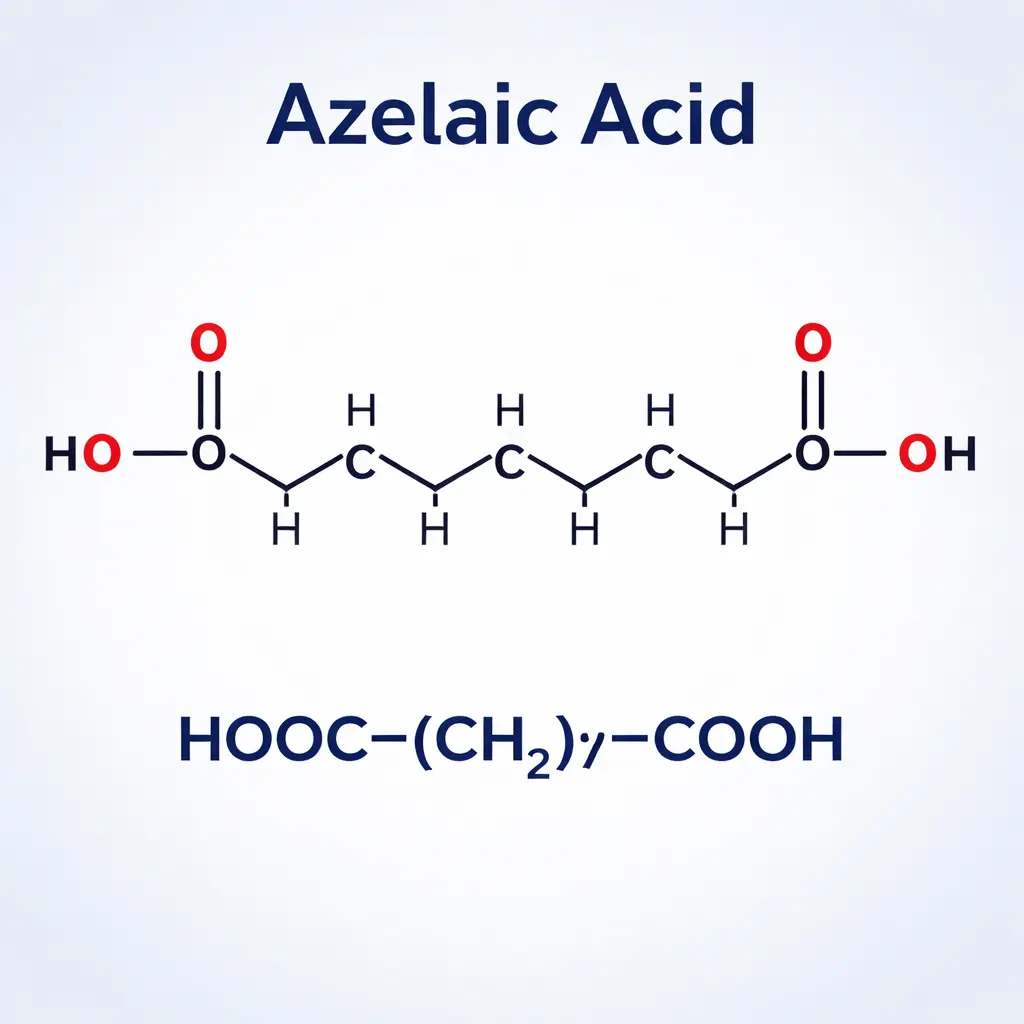
Azelaic acid is a naturally occurring dicarboxylic acid that dermatologists have used for decades to treat acne, rosacea, and pigmentation disorders. It is originally derived from grains such as wheat, rye, and barley, but the azelaic acid used in skincare and medical treatments is pharmaceutically purified and stabilized to ensure safety, potency, and consistency.
Scientifically, azelaic acid belongs to a group of compounds known as dicarboxylic acids, which work by regulating abnormal skin cell activity rather than aggressively exfoliating the skin. This makes it fundamentally different from stronger acids like glycolic acid or salicylic acid.
Dermatologists prescribe azelaic acid because it performs multiple therapeutic actions simultaneously. It reduces excess melanin production, decreases inflammation, controls acne-causing bacteria, and normalizes keratinization — all key pathways involved in pigmentation development.
Dr. Faiza Shams explains, “Azelaic acid is unique because it treats the root causes of pigmentation instead of simply lightening the skin surface. That is why it works particularly well for melasma and post-inflammatory pigmentation in sensitive skin.”
Its balanced mechanism makes azelaic acid a medically trusted option for long-term pigment correction without damaging the skin barrier.
How Azelaic Acid Works on Pigmentation
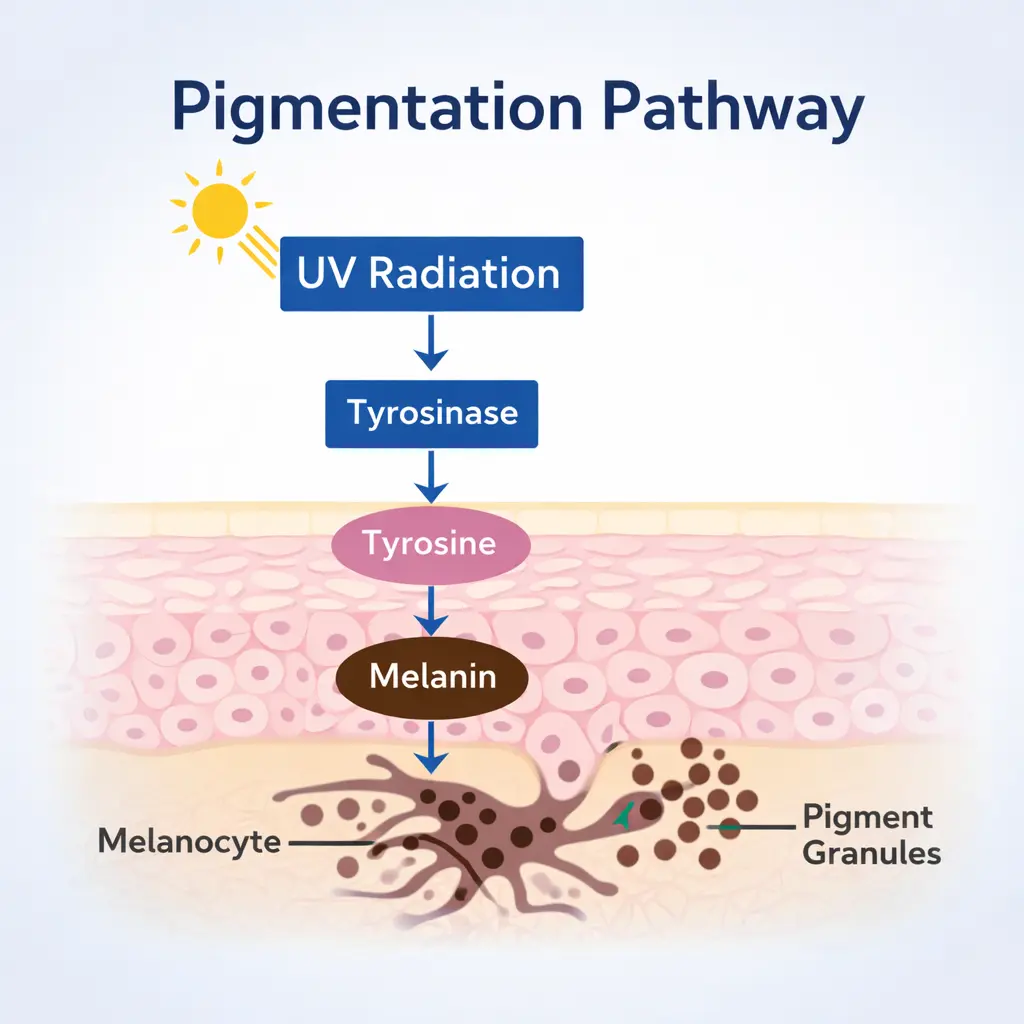
Understanding how azelaic acid for pigmentation works requires looking at the biology of how dark spots form. Pigmentation is not just a surface issue. It involves melanocytes, inflammatory pathways, oxidative stress, and abnormal skin cell signaling — especially in melasma and post-inflammatory hyperpigmentation (PIH).
Azelaic acid works at multiple points in this pathway, which is why dermatologists rely on it for long-term pigment control rather than temporary lightening.
Tyrosinase Inhibition
To understand pigmentation, imagine this simplified pathway:
UV exposure / inflammation → Tyrosinase activation → Melanin production → Dark spots
Tyrosinase is the key enzyme that converts the amino acid tyrosine into melanin. When this enzyme becomes overactive — due to sun exposure, hormones, or inflammation — excess pigment forms.
Azelaic acid inhibits tyrosinase activity. It slows down the conversion process, meaning fewer pigment molecules are produced. Unlike bleaching agents, it does not destroy melanocytes; it simply regulates them.
Clinical studies published in the Journal of the American Academy of Dermatology and Cutis have shown that 15–20% azelaic acid significantly improves melasma and hyperpigmentation by targeting this enzyme pathway while maintaining skin safety.
Dr. Faiza Shams explains, “Instead of stripping pigment, azelaic acid gently tells the melanocyte to calm down. That regulatory effect makes it ideal for long-term use.”
Selective Action on Abnormal Melanocytes
One of the most important reasons azelaic acid for melasma is effective is its selective mechanism.
In melasma, melanocytes become hyperactive and abnormal. Azelaic acid preferentially targets these overactive cells while leaving normal melanocytes largely unaffected. This is crucial in skin of color, where aggressive treatments can cause rebound pigmentation.
Think of it like a “smart filter”:
Normal melanocytes → minimally affected
Overactive melanocytes → regulated and reduced
Research comparing azelaic acid with hydroquinone has shown comparable pigment improvement in mild-to-moderate melasma, but with fewer irritation-related side effects.
This selective action is why azelaic acid is often recommended for azelaic acid for\
pigmentation cases.
Anti-Inflammatory Action
Inflammation is a major trigger for pigmentation, particularly in acne-prone skin.
Here is another simplified pathway:
Acne / irritation → Inflammatory mediators → Melanocyte stimulation → PIH
Azelaic acid reduces inflammatory cytokines and reactive oxygen species. It also decreases the growth of Cutibacterium acnes, helping prevent acne breakouts that later leave dark marks.
This dual effect makes azelaic acid for dark spots especially useful when pigmentation is acne-related.
According to a 2022 review in Dermatologic Therapy, azelaic acid’s anti-inflammatory properties significantly reduce post-inflammatory hyperpigmentation risk when used consistently in acne patients.
Antioxidant & Keratinocyte Regulation
Pigmentation is not just about melanocytes. Keratinocytes — the surrounding skin cells — also influence how pigment is distributed and retained.
Azelaic acid:
• Reduces oxidative stress
• Normalizes abnormal keratinization
• Improves epidermal turnover
• Stabilizes pigment distribution over time
Think of it as improving the “skin environment” so that pigment is less likely to accumulate unevenly.
This explains why patients often notice gradual, steady improvement rather than sudden bleaching. The skin becomes more stable and less reactive.
Dr. Faiza Shams emphasizes, “Pigmentation control is about regulation, not aggression. Azelaic acid works slowly but intelligently — and that’s why results are more sustainable.”
By targeting tyrosinase, calming inflammation, correcting abnormal melanocytes, and supporting antioxidant defense, azelaic acid addresses pigmentation at its biological roots — making it one of dermatology’s most balanced long-term treatments.
Which Types of Pigmentation Respond Best?
Not all pigmentation behaves the same way — and not every treatment works equally well across conditions. The effectiveness of azelaic acid for pigmentation depends on the underlying trigger. Because it targets melanin production, inflammation, and abnormal melanocyte activity simultaneously, it performs particularly well in certain types.
Melasma
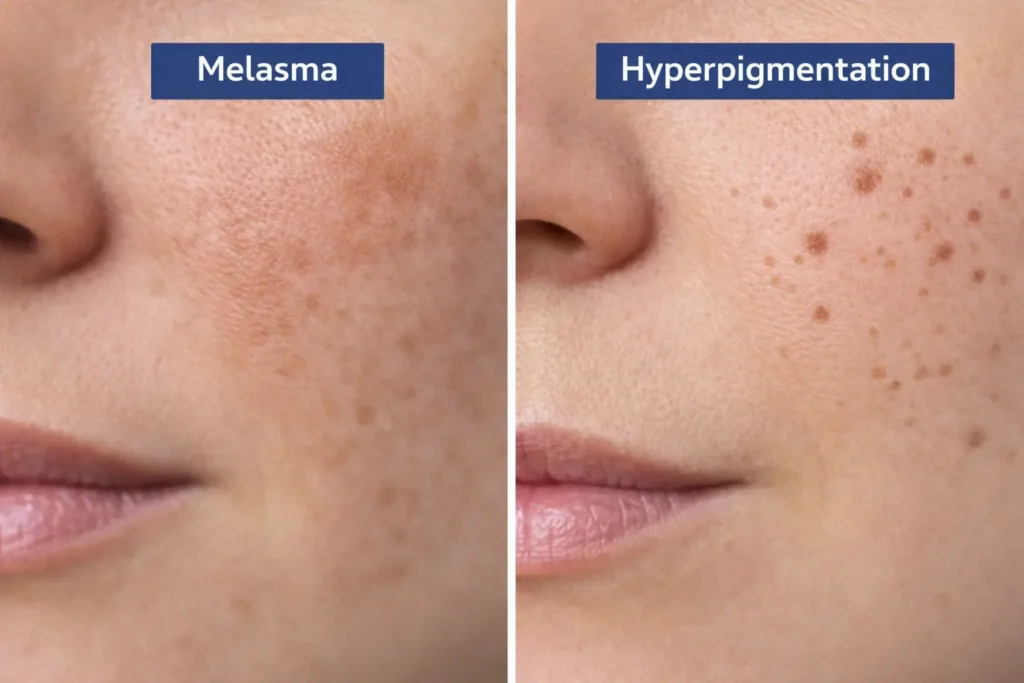
Azelaic acid is one of the most evidence-supported non-hydroquinone treatments for melasma. It works by regulating overactive melanocytes without causing rebound darkening — a common risk in skin of color.
If you’ve read our detailed breakdown of melasma vs hyperpigmentation, you’ll know melasma is hormonally driven and often chronic. Azelaic acid helps stabilize pigment production over time, making it ideal for maintenance therapy and long-term control.
Dr. Faiza Shams notes, “For patients who relapse repeatedly with stronger treatments, azelaic acid often becomes the safest long-term melasma stabilizer.”
Post-Inflammatory Hyperpigmentation (PIH)
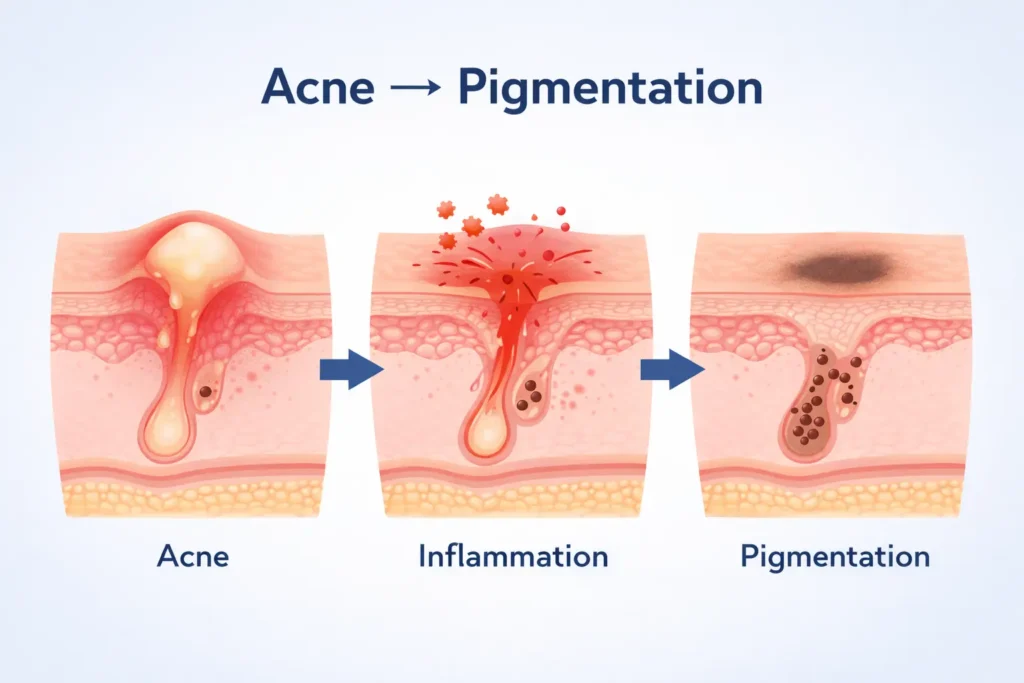
PIH occurs after inflammation — acne, eczema, irritation, or cosmetic procedures. Because azelaic acid reduces inflammatory mediators, it addresses the root of inflammation-induced pigmentation while simultaneously lightening existing spots.
In fact, dermatologists frequently recommend it as first-line therapy for post-inflammatory hyperpigmentation, particularly in darker skin tones where irritation can worsen discoloration.
Acne Marks
Azelaic acid treats both active acne and the marks it leaves behind. By controlling bacteria, reducing redness, and preventing clogged pores, it breaks the cycle:
Breakout → inflammation → dark mark
This makes it highly practical for patients struggling with recurring acne pigmentation.
Sun Damage
While not a primary treatment for deep solar lentigines, azelaic acid can gradually improve mild sun-induced dark spots by slowing melanin overproduction and supporting antioxidant defense.
Sensitive Skin Pigmentation
For patients who cannot tolerate retinoids or hydroquinone, azelaic acid for pigmentation is often the safest effective alternative. It rarely disrupts the barrier and is suitable for long-term daily use — even in reactive or rosacea-prone skin.
Azelaic Acid for Melasma (Evidence Review)
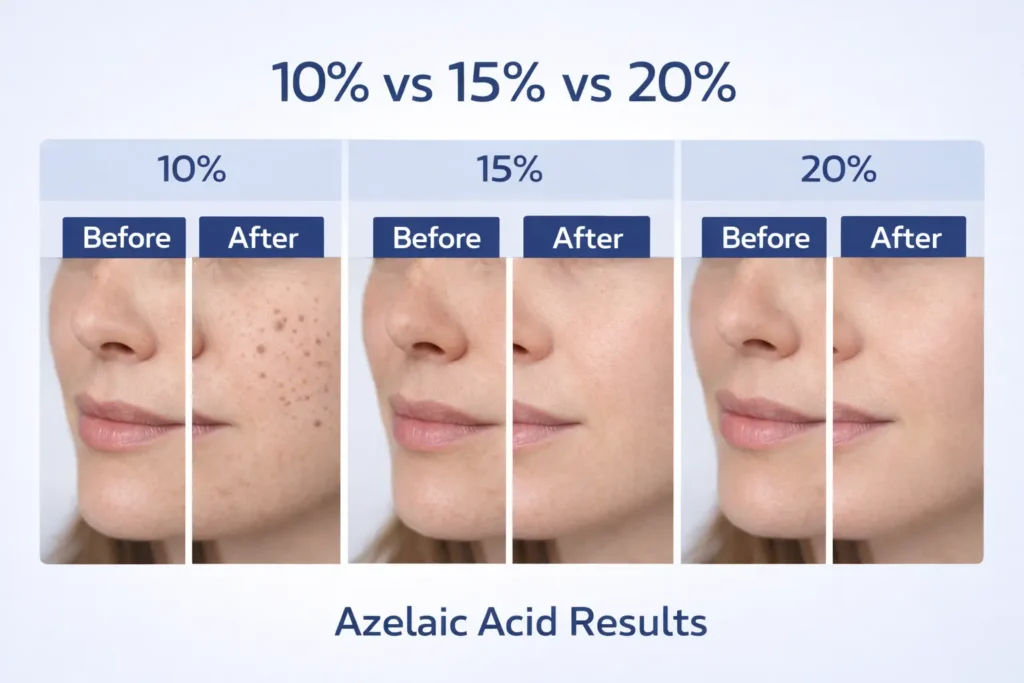
Among non-hydroquinone options, azelaic acid for melasma has one of the strongest clinical track records. Multiple studies evaluating 15–20% formulations show significant reduction in Melasma Area and Severity Index (MASI) scores over 12–24 weeks.
A landmark comparative study published in the International Journal of Dermatology demonstrated that 20% azelaic acid for pigmentation cream produced comparable improvement to 4% hydroquinone in mild-to-moderate melasma, with fewer irritation-related side effects. More recent reviews in Dermatologic Therapy (2021) and Journal of Clinical and Aesthetic Dermatology (2022) confirm its efficacy in epidermal melasma, particularly in skin of color.
The key advantage is tolerability. Hydroquinone can cause irritation and rebound pigmentation in sensitive patients. Azelaic acid regulates abnormal melanocytes without cytotoxic bleaching.
It also performs well in combination therapy. Dermatologists often pair 15–20% azelaic acid with sunscreen, oral antioxidants, or short cycles of retinoids to enhance results while maintaining safety.
Dr. Faiza Shams explains, “Azelaic acid is my long-term stabilizer for melasma patients. Even when we use stronger treatments briefly, azelaic acid helps prevent relapse.”
For chronic melasma, consistency matters more than intensity — and this is where azelaic acid excels.
Azelaic Acid for Acne & Rosacea
One reason azelaic acid benefits skin beyond pigmentation is its versatility.
Antibacterial Effect
Azelaic acid reduces Cutibacterium acnes growth, making it effective in inflammatory acne. Unlike antibiotics, it does not promote resistance.
Redness Reduction
In rosacea-prone skin, azelaic acid decreases inflammatory mediators and improves persistent erythema. The 15% gel formulation is FDA-approved for rosacea treatment.
Sebum & Keratinization Regulation
It normalizes keratinocyte turnover and helps prevent clogged pores, reducing both active breakouts and future acne marks.
For patients with acne + pigmentation overlap, this dual action is extremely valuable:
Breakouts decrease → inflammation decreases → fewer dark marks form
Dr. Faiza Shams notes, “In acne patients who scar or pigment easily, azelaic acid addresses both the cause and the consequence.”
What Concentration Is Best? (10% vs 15% vs 20%)
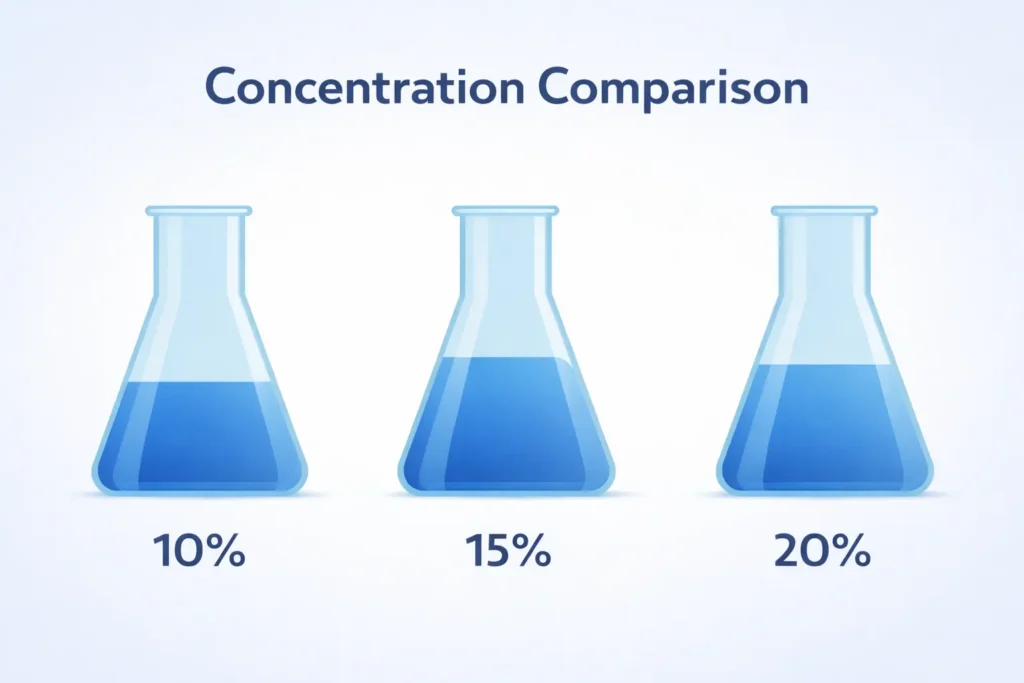
This is a common search question — and the answer depends on skin type and condition severity.
10% (Over-the-Counter)
Suitable for:
- Mild pigmentation
- Sensitive skin
- Beginners
- Maintenance therapy
Lower strength, slower results, but excellent tolerance.
15% (Prescription Gel/Foam)
Ideal for:
- Rosacea
- Acne + pigmentation overlap
- Moderate hyperpigmentation
Better penetration with anti-inflammatory focus.
20% (Prescription Cream)
Best for:
- Melasma
- Stubborn dark spots
- Established PIH
Stronger tyrosinase inhibition but may cause more tingling initially.
Stronger is not always better. Barrier-compromised skin may worsen with aggressive concentrations. Slow, consistent use often outperforms high-strength misuse.
How to Use Azelaic Acid Correctly (Step-by-Step)
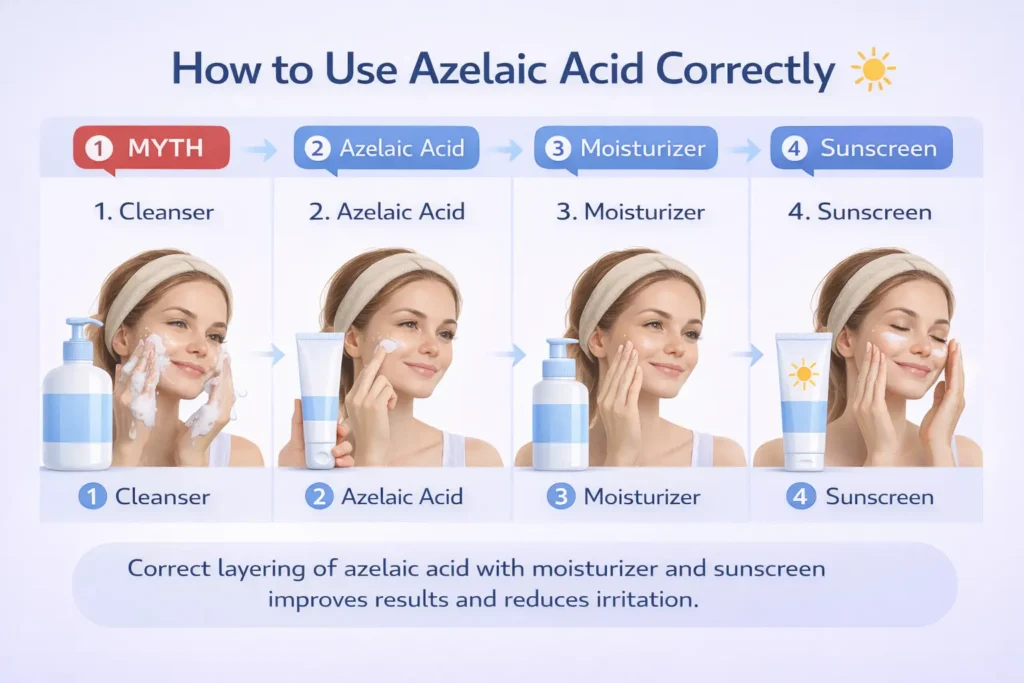
Correct application determines results.
Step 1: Cleanse gently
Use a non-stripping cleanser.
Step 2: Apply a pea-sized amount
A thin layer is sufficient for the entire face.
Step 3: Timing
Can be used morning or night. Many dermatologists prefer nighttime for beginners to reduce tingling discomfort.
Step 4: Moisturizer
Apply moisturizer after azelaic acid. Sensitive skin patients can use the “moisturizer sandwich” method (moisturizer → azelaic acid → moisturizer).
Step 5: Sunscreen (Non-Negotiable)
If used in the morning, follow with broad-spectrum sunscreen. Pigmentation cannot improve without UV protection.
Frequency Build-Up
Start once daily. After 2–3 weeks, increase to twice daily if tolerated.
When Will You See Results?
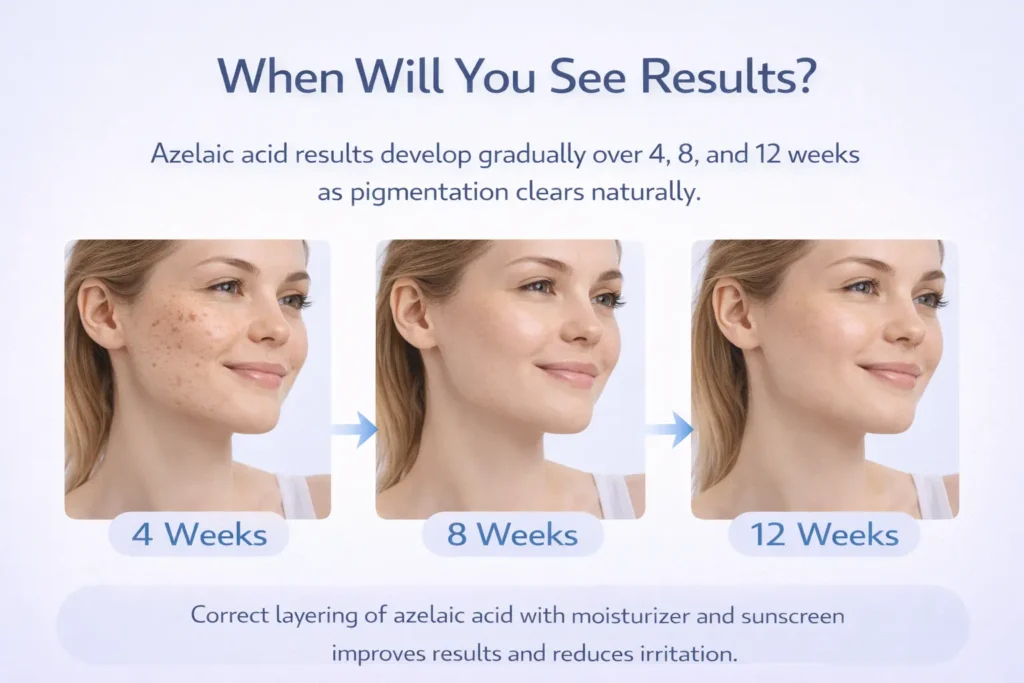
Expectation management is critical.
- 4 Weeks: Reduced redness, fewer new acne marks
- 8 Weeks: Gradual lightening of superficial dark spots
- 12+ Weeks: Noticeable melasma improvement
Pigmentation improves slowly because melanocytes have “memory.” Even after suppression, existing pigment must move upward and shed through natural skin turnover.
If you’ve read our discussion on why pigmentation improves slowly, you’ll understand that melanin clearance is biologically gradual. Some patients also experience a temporary treatment plateau before steady improvement resumes.
Dr. Faiza Shams emphasizes, “Patients quit too early. Azelaic acid rewards consistency.”
Azelaic Acid Side Effects
Most reactions are mild and temporary.
Common side effects:
- Mild burning or tingling (first 1–2 weeks)
- Dryness
- Light itching
The sensation often decreases as skin adapts.
Purging Myth vs Irritation
Azelaic acid does not typically cause true purging like retinoids. New breakouts usually indicate irritation or layering conflicts.
To reduce irritation:
- Start slowly
- Use moisturizer buffering
- Avoid combining immediately with strong exfoliating acids
This section often ranks for “azelaic acid burning skin” because early tingling is common but manageable.
Is Azelaic Acid Safe During Pregnancy?
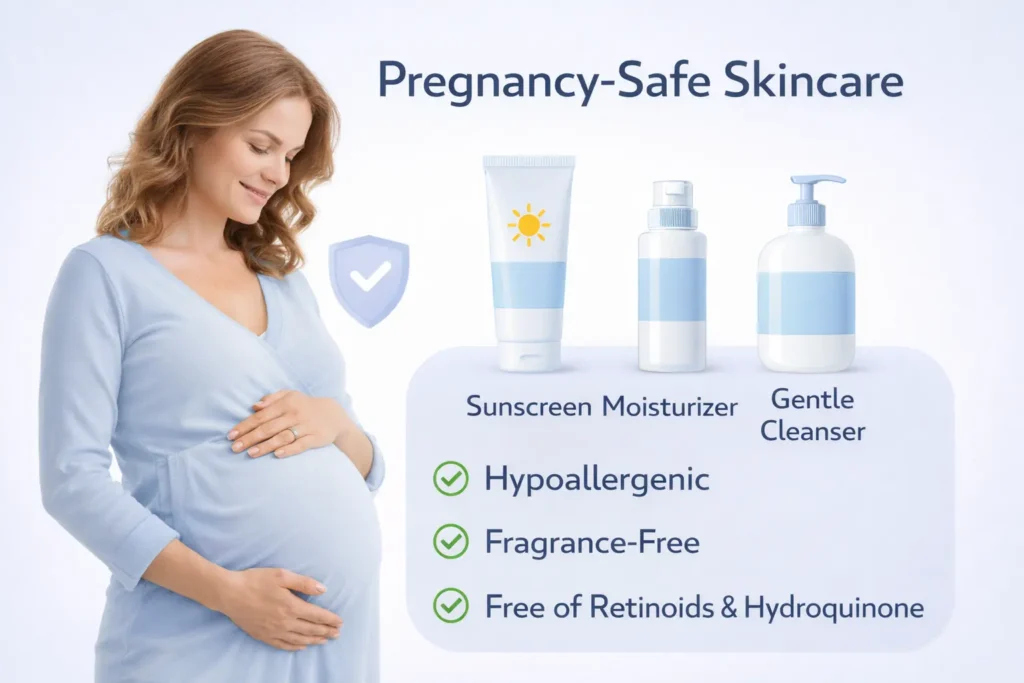
Yes — azelaic acid has a long safety history and minimal systemic absorption. It is often considered one of the safest topical options during pregnancy.
Because retinoids are contraindicated and hydroquinone has higher systemic absorption, azelaic acid pregnancy safe searches are increasing.
Dermatologists frequently recommend it for pregnant patients dealing with melasma or acne, always under medical guidance.
Who Should Avoid Azelaic Acid?
While generally safe, caution is needed in:
- Severely compromised skin barrier
- Active eczema flares
- Skin using multiple strong exfoliants simultaneously
In such cases, barrier repair should come first before pigment treatment.
Can You Combine Azelaic Acid With Other Actives?
Yes — with guidance.
Common combinations:
- Niacinamide (barrier support)
- Vitamin C (antioxidant synergy)
- Retinol (night rotation)
- Tranexamic acid (melasma targeting)
However, layering multiple strong actives increases irritation risk. A structured routine works better than random mixing. A detailed combination guide can optimize results safely.
Common Myths About Azelaic Acid
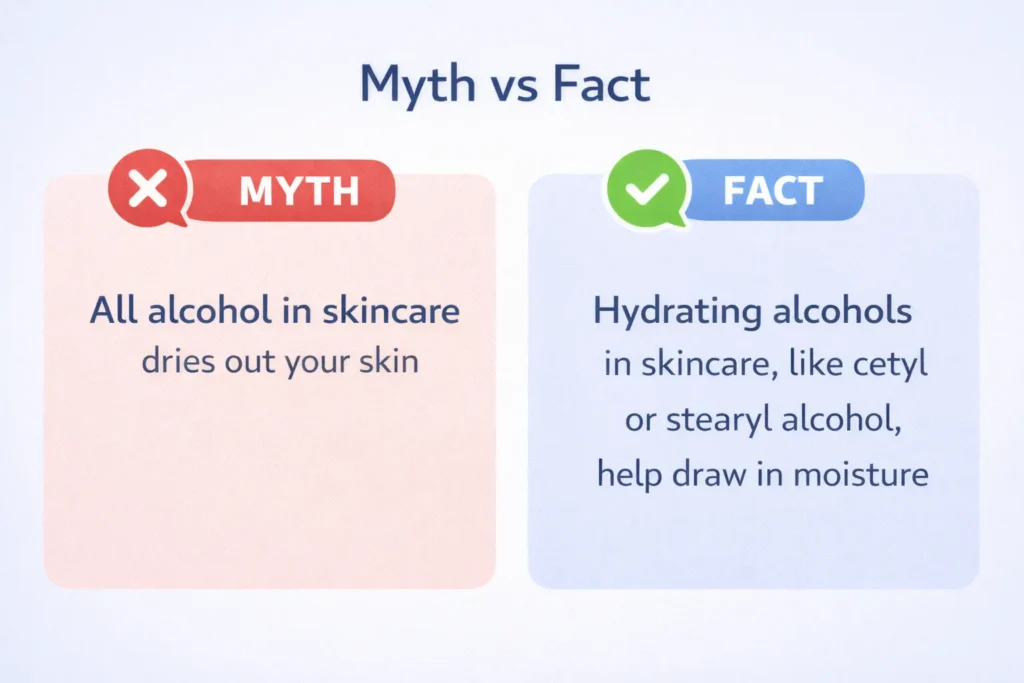
Myth 1: It works instantly.
Reality: Visible improvement requires 8–12 weeks.
Myth 2: It bleaches the skin.
Reality: It regulates pigment production. It does not destroy melanocytes.
Myth 3: It thins the skin.
Reality: It normalizes keratinization and supports barrier function.
Myth 4: It is only for acne.
Reality: It treats acne, rosacea, melasma, PIH, and sensitive skin pigmentation.
Where Azelaic Acid Fits in a Pigmentation Treatment Plan
Effective pigmentation treatment follows a hierarchy:
- Barrier stabilization
- Inflammation control
- Tyrosinase suppression
- Maintenance therapy
Azelaic acid fits into steps 2, 3, and 4 simultaneously.
It calms inflammation, suppresses excess melanin production, and maintains results long-term without barrier damage.
Dr. Faiza Shams concludes, “In pigmentation management, the goal is stability. Azelaic acid is not the loudest treatment — but it is one of the most dependable.”
For patients seeking sustainable, dermatologist-backed results, azelaic acid remains one of the most intelligent foundations in modern pigmentation therapy.
Conclusion
When it comes to treating pigmentation, stronger does not always mean better. The real success behind azelaic acid for pigmentation lies in consistency, patience, and respecting skin biology rather than forcing rapid results.

Azelaic acid works by calming inflammation, regulating melanocytes, and supporting long-term skin stability — which is why improvements appear gradual but sustainable. Instead of temporary lightening followed by relapse, it helps retrain the skin toward balanced pigment production.
Patients who understand realistic timelines often achieve the best outcomes. Dark spots fade slowly because pigment turnover follows natural skin renewal cycles, not overnight transformations.
Dr. Faiza Shams summarizes it best: “Healthy skin improves when treatment supports the skin barrier while correcting pigment pathways. Azelaic acid embodies that philosophy — gentle, scientific, and reliable for long-term skin health.”
With the right routine and sun protection, azelaic acid becomes less of a quick fix and more of a lifelong pigmentation management strategy.
FAQ
1. How long does azelaic acid take to work for pigmentation?
Most patients begin noticing subtle improvement in redness and new acne marks within 4 weeks. Visible lightening of dark spots typically appears around 8 weeks, while melasma may require 12 weeks or longer of consistent use. Because pigment clears through natural skin turnover, results are gradual. Stopping too early is one of the most common reasons people think it “didn’t work.”
2. Is azelaic acid safe for sensitive skin pigmentation?
Yes. Azelaic acid for sensitive skin pigmentation is often preferred over stronger lightening agents because it regulates melanocytes without aggressively exfoliating or thinning the skin. Mild tingling during the first 1–2 weeks is common, but serious irritation is rare when introduced gradually with moisturizer support.
3. Can I use azelaic acid every day?
In most cases, yes. Start once daily for 2–3 weeks, then increase to twice daily if tolerated. Consistent daily use is more effective than using a stronger concentration inconsistently. Always apply sunscreen during the day to prevent new pigmentation from forming.
4. Does azelaic acid bleach or lighten normal skin?
No. Azelaic acid does not bleach healthy skin. It selectively targets overactive melanocytes and reduces excess pigment production. Normal skin tone remains unchanged, which is why it is considered safe for long-term use — including in skin of color.
Address: Block C, Punjab University Employees Housing Scheme Phase-II, Lahore, Pakistan
Contact Number: +923224563810