Best Iron Oxide Sunscreens for Pigmentation (2026): Why Regular SPF Fails Brown Skin
Table of Contents
Introduction: The Missing Piece in Pigmentation Protection
Many people with brown skin follow their skincare routine diligently.
They apply sunscreen daily.
They avoid harsh treatments.
Yet, pigmentation keeps returning.
This is one of the most frustrating realities for patients dealing with melasma and hyperpigmentation.
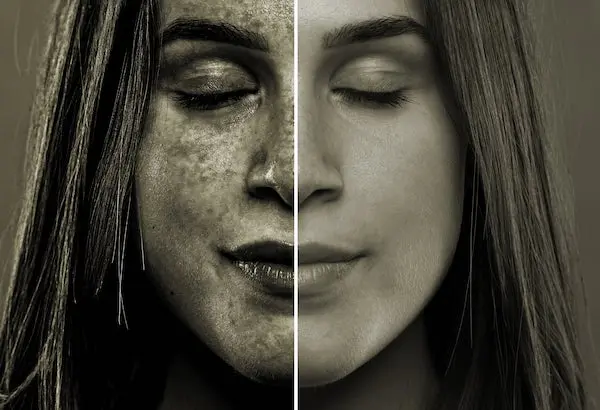
Difference between melasma and other pigmentation types
The reason is often misunderstood — traditional sunscreen alone is not enough for brown skin. If you’re using regular sunscreen but still seeing dark patches, this may explain why your pigmentation is not improving.
In recent years, dermatology research has confirmed something important:
visible light, not just ultraviolet (UV) rays, plays a major role in pigmentation — especially in darker skin tones.
And this is where iron oxide sunscreens for pigmentation become essential.
As Dr. Faiza Shams explains:
“Many pigmentation treatments fail not because the treatment is wrong, but because visible light protection for melasma is completely ignored — particularly in brown skin.”
This article explains why regular SPF fails, how iron oxide works, and who truly needs iron oxide–based sunscreens for pigmentation.
Understanding Pigmentation in Brown Skin
Brown skin contains more active melanocytes.
These pigment-producing cells are:
- More easily stimulated
- More reactive to light
- More prone to overproducing melanin
This is why pigmentation in brown skin:
- Develops faster
- Appears darker
- Lasts longer
- Recurs easily
Unlike lighter skin, even minimal triggers can reactivate melasma or post-inflammatory hyperpigmentation (PIH).
Key Triggers for Pigmentation in Brown Skin
- Sun exposure
- Heat
- Hormonal changes
- Inflammation
- Visible light exposure
Most skincare routines only address UV radiation, leaving a critical gap.
What Regular Sunscreens Actually Protect Against
Traditional sunscreens for pigmentation are designed to block:
- UVA rays – responsible for aging and deep skin damage
- UVB rays – responsible for sunburn
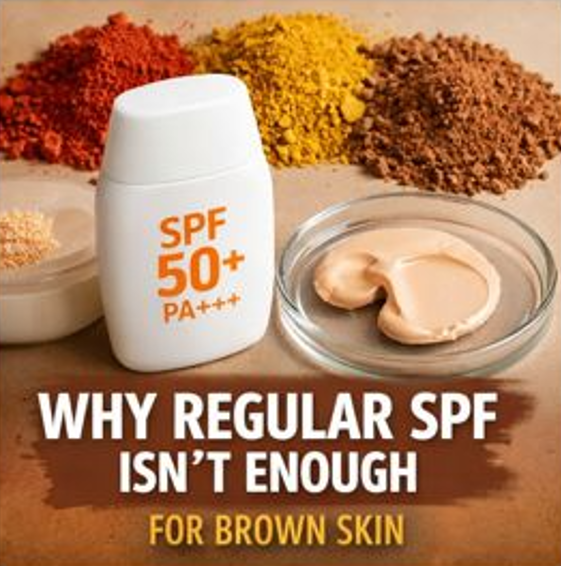
SPF ratings measure UVB protection only.
PA ratings measure UVA protection.
The Problem
Neither SPF nor PA ratings measure visible light protection for melasma.
This means:
- You can be wearing SPF 50
- You can reapply regularly
- Yet pigmentation may still worsen
Because visible light penetrates deeper than UV in brown skin.
Visible Light: The Overlooked Cause of Pigmentation
Visible light includes wavelengths between 400–700 nm.
Sources include:
- Sunlight
- Indoor lighting
- Screens and electronic devices
Research has shown that visible light can:
- Stimulate melanocytes directly
- Trigger deeper, longer-lasting pigmentation
- Worsen melasma even when UV is blocked
This effect is significantly stronger in darker skin tones.
A landmark study published in Journal of Investigative Dermatology demonstrated that:
- Visible light causes more intense and persistent pigmentation in skin types IV–VI
- UV filters alone do not prevent this effect
This explains why patients often say:
“I use sunscreen, but my pigmentation still gets darker.”
Why Brown Skin Is More Vulnerable to Visible Light
Brown skin has higher levels of melanin, which absorbs visible light efficiently.
Ironically, this protective pigment also:
- Triggers inflammation pathways
- Activates melanocyte signaling
- Prolongs pigment deposition
This is why:
- Melasma is more common in South Asian, Middle Eastern, and Hispanic skin
- Pigmentation often worsens even indoors
- Standard sunscreen protocols fail
As Dr. Faiza Shams notes:
“In brown skin, visible light acts like a silent trigger. Patients think they are protected, but biologically, the skin is still receiving pigment-stimulating signals.”
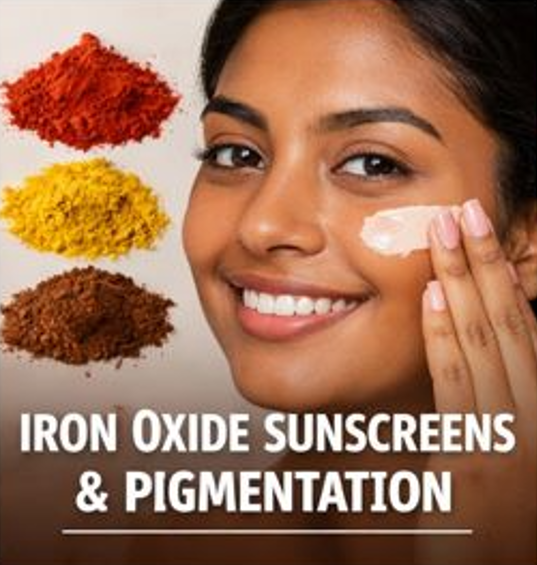
What Are Iron Oxides?
Iron oxides are pigmentary minerals commonly used in:
- Tinted sunscreens
- Cosmetic foundations
- Dermatological camouflage products
Unlike chemical or mineral UV filters, iron oxides specifically block visible light.
Key Iron Oxides Used in Sunscreens
- Red iron oxide
- Yellow iron oxide
- Black iron oxide
Together, they form shades that:
- Match skin tone
- Provide visible light protection for melasma
- Reduce pigmentation relapse
How Iron Oxide Sunscreen Work
Iron oxides function by:
- Absorbing visible light wavelengths
- Preventing light-induced melanocyte activation
- Reducing pigment darkening
Studies show that tinted sunscreens containing iron oxides significantly outperform non-tinted sunscreens in preventing melasma worsening.
One randomized controlled trial published in Journal of the American Academy of Dermatology found that:
- Iron oxide–containing sunscreen reduced melasma relapse more effectively than SPF alone
Why Tinted Sunscreens Are Not Just Makeup
Many patients assume tinted sunscreens are cosmetic.
This is a major misconception.
Tinted ≠ Optional
In pigmentation-prone skin, tint is therapeutic.
Iron oxide pigments:
- Serve a medical purpose
- Are critical for long-term pigment control
- Reduce dependence on aggressive treatments
This is why dermatologists increasingly recommend tinted iron oxide sunscreen for:
- Melasma
- PIH
- Hormonal pigmentation
- Post-procedure skin
Who Needs Iron Oxide Sunscreen?
Iron oxide sunscreens are especially important if you have:
- Melasma
- Post-inflammatory hyperpigmentation
- Hormonal pigmentation
- Pigmentation that worsens despite sunscreen
- Brown or olive skin tone
- History of pigmentation relapse
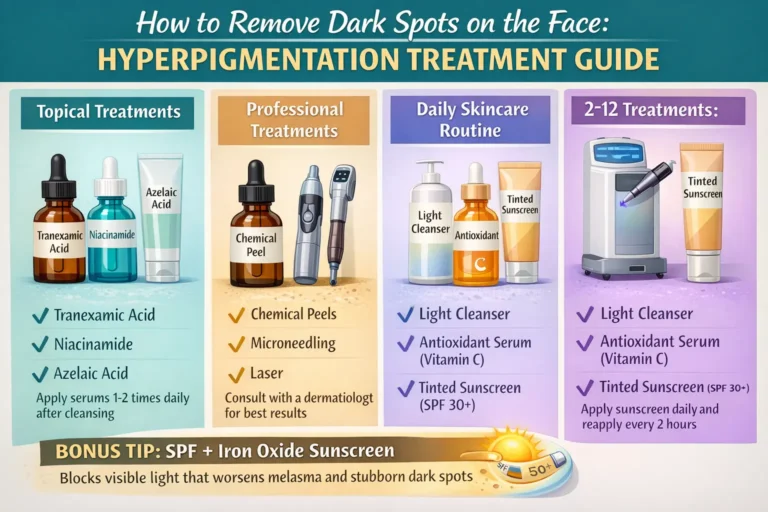
They are also essential after treatments such as:
- Chemical peels
- Microneedling
- Laser procedures
Without visible light protection, treatment results often reverse.
Why Regular SPF Alone Fails in Melasma
Melasma is not just a UV-driven condition.
It is:
- Hormonal
- Vascular
- Inflammatory
- Light-sensitive
UV filters alone:
- Do not block visible light
- Do not prevent deep pigment activation
- Do not protect against indoor light exposure
Many people feel their pigmentation is not improving despite sunscreen, because standard SPF does not protect against visible light. This explains why melasma often:
- Improves initially
- Returns within weeks
- Appears darker than before
As Dr. Faiza Shams emphasizes:
“Melasma maintenance is more important than treatment. Without iron oxide protection, relapse is almost guaranteed.”
According to the American Academy of Dermatology, standard sunscreens may not fully protect against visible light, which can worsen pigmentation in darker skin tones.
That’s why iron oxide–based sunscreens are recommended to provide additional protection against visible light exposure and help prevent stubborn pigmentation.
How to Choose the Right Iron Oxide Sunscreen For Pigmentation
What to Look For
- Broad-spectrum SPF 30 or higher
- Clearly labeled tinted formula
- Iron oxides listed in ingredients
- Shade suitable for your skin tone
What to Avoid
- Untinted mineral sunscreens for melasma
- Lightweight clear gels for pigmentation
- Assuming makeup alone provides protection
Foundation alone is not sufficient unless it is formulated with adequate iron oxide concentrations.
Application Tips for Maximum Protection
- Apply generously (two finger lengths for face)
- Use as the last step of skincare
- Reapply every 2–3 hours if outdoors
- Use even when indoors near windows
- Do not mix with moisturizer (dilutes protection)
Consistency is critical.
Common Myths About Iron Oxide Sunscreen
“They clog pores”
Modern formulations are non-comedogenic when chosen correctly.
“They look too heavy”
Newer shades are sheer and adaptable to brown skin tones.
“They are only for women”
Pigmentation affects all genders. Protection is universal.
Best Iron Oxide Sunscreen for Hyperpigmentation (2026 Guide)
If you’re dealing with melasma or stubborn pigmentation, choosing the right tinted sunscreen matters. Below are dermatologist-recommended options with iron oxides that protect against visible light.
- EltaMD UV Elements Tinted Broad-Spectrum SPF 44 is Best for: Sensitive & acne-prone skin
- Why it works: Zinc oxide + iron oxides for visible light protection La Roche-Posay Anthelios Mineral Tinted Sunscreen SPF 50 is Best for: Melasma-prone skin
- Why it works: High UVA protection + tint ISDIN Eryfotona Ageless Tinted Mineral SPF 50 is Best for: Anti-aging + pigmentation
- Why it works: DNA repair enzymes + iron oxides Heliocare 360° Color Gel Oil-Free SPF 50 is Best for: Oily skin
- Why it works: Fernblock + visible light defense Bioderma Photoderm M Tinted Sunscreen SPF 50+ is Best for: Moderate to severe melasma
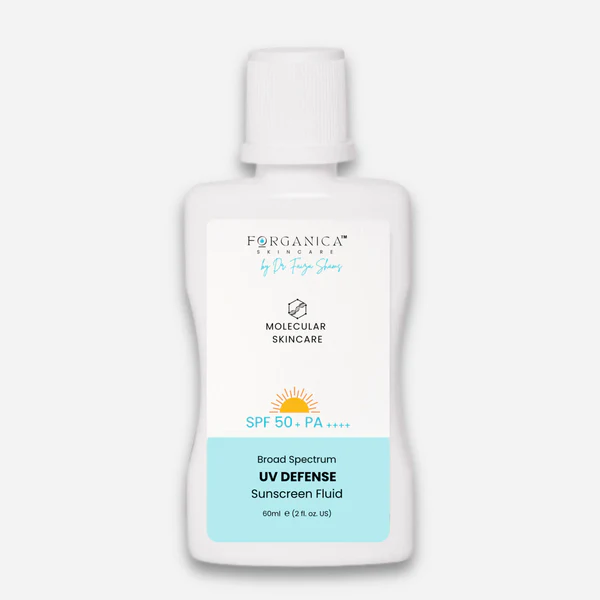
- Broad Spectrum UV Defense Sunscreen Fluid by Forganica.com
For the full morning routine using Vitamin C before SPF, read the step-by-step guide.
How to Choose the Right Tinted Sunscreen Shade for Brown Skin
Why Shade Matters for Pigmentation
Choosing the right shade in tinted sunscreen is not just about aesthetics—it directly impacts whether people consistently use it. When the shade is too light, it creates a white cast or an ashy, grey appearance on melanin-rich skin. This is one of the most common reasons people abandon sunscreen altogether.
That’s a serious problem, especially for individuals dealing with pigmentation concerns like melasma or post-inflammatory hyperpigmentation. Daily sunscreen use is essential for preventing worsening of dark spots, but adherence drops when the product doesn’t blend well.
There’s also a functional reason shade matters. Tinted sunscreens often contain iron oxides, which help protect against visible light—a key trigger for pigmentation. However, this protection is only effective when the sunscreen is applied evenly and in sufficient quantity. If the shade looks unnatural, users tend to apply less product or skip reapplication, reducing its protective benefit.
In short, the right shade ensures:
- Better cosmetic blending
- Consistent daily use
- Effective protection against visible light-induced pigmentation
Shade Guide by Skin Tone
Finding the best tinted sunscreen for brown skin requires understanding undertones and depth. Here’s a simple guide tailored for Pakistani and South Asian skin tones:
Light to Medium Brown Skin
Look for shades labeled neutral beige or warm beige. These tones blend well without leaving a pink or chalky finish. Avoid very pale or cool-toned options, as they can create a dull cast.
Medium Brown Skin
Golden or honey-toned shades work best. These complement natural warmth in the skin and provide a seamless, skin-like finish. They also enhance the natural glow without looking heavy or artificial.
Deep Brown Skin
Opt for caramel, bronze, or deeper tones. These shades prevent the common grey or purple undertone that appears when the sunscreen is too light. Richer tones ensure even coverage and better visible light protection.
Pro Tip (Dermatologist Insight)
Dermatologists often recommend choosing a slightly deeper shade rather than a lighter one—especially for melanin-rich skin. A lighter shade can leave a noticeable grey cast, while a slightly deeper tone blends more naturally and mimics real skin depth.
This small adjustment can make a big difference in how the sunscreen looks and feels, ultimately improving consistency in use—which is the most important factor in managing pigmentation long-term.
Where to Buy Iron Oxide Sunscreens in Pakistan
Finding authentic tinted sunscreens in Pakistan can be challenging, especially when you’re looking for dermatologist-recommended formulas with iron oxides for pigmentation protection. Availability varies, and counterfeit products are a real concern—so choosing the right source matters just as much as choosing the right sunscreen.
Available in Pakistan
Bioderma Photoderm M SPF 50+
One of the most recommended options for melasma and hyperpigmentation. It offers strong visible light protection due to iron oxides and comes in multiple shades suitable for brown skin tones.
Available at: Naheed, Dvago, Vegas.pk
Heliocare 360 Color Gel SPF 50
Lightweight, blendable, and suitable for daily wear in humid climates. Popular among dermatologists for pigmentation management.
Available at: Dermatology clinics & trusted online stores
La Roche-Posay Anthelios Tinted SPF 50
Known for elegant texture and broad-spectrum protection. Shade range is limited, but works well for light to medium brown tones.
Available at: Limited availability (mostly imported sellers)
Forganica’s lightweight, non-greasy sunblock that gives powerful UVA/UVB protection and keeps skin safe from tanning and dark spots. Absorbs quickly, controls shine, and leaves a smooth, invisible finish. Perfect for daily use under makeup. Available at: www.forganica.com
Harder to Find (Import Required)
EltaMD
Highly trusted for sensitive and acne-prone skin, especially in dermatology settings. However, availability in Pakistan is limited and usually requires international shipping or resellers.
ISDIN
Offers advanced sunscreen formulations with strong cosmetic elegance. Tinted variants are excellent but not widely stocked locally.
💡 Important Note:
Always verify authenticity when buying from Instagram pages or third-party sellers. Check batch numbers, packaging quality, and seller credibility to avoid counterfeit products that can harm your skin and worsen pigmentation.
Final Takeaway: Prevention Is the Real Treatment
Pigmentation is not just about removing dark spots.
It is about controlling triggers.
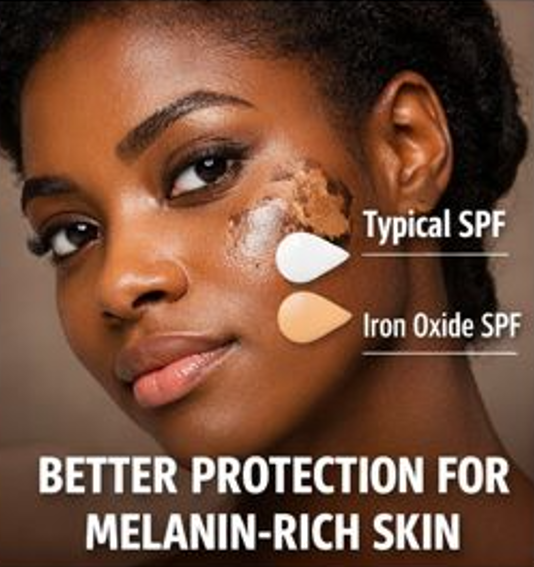
Without visible light protection:
- Treatments fail
- Pigmentation recurs
- Skin becomes treatment-resistant
Iron oxide sunscreens are not optional for brown skin — they are essential.
As Dr. Faiza Shams concludes:
“The future of pigmentation management is not stronger treatments, but smarter protection.”
FAQS
FAQ 1: Why does pigmentation worsen even when I use SPF 50 sunscreen daily?
SPF ratings only measure protection against UVB rays, not visible light. In brown skin, visible light can stimulate melanocytes more aggressively than UV, leading to persistent or worsening pigmentation despite regular sunscreen use. This is why melasma and hyperpigmentation often relapse unless iron oxide–based visible light protection is included.
FAQ 2: Are iron oxide sunscreens better than regular mineral or chemical sunscreens for melasma?
Iron oxide sunscreens are not a replacement for UV filters but an essential addition. While mineral and chemical sunscreens protect against UVA and UVB rays, iron oxides uniquely block visible light, which plays a key role in melasma and pigmentation in darker skin tones. For pigmentation-prone skin, tinted sunscreens with iron oxides provide superior protection.
FAQ 3: Is tinted sunscreen the same as makeup or foundation?
No. Tinted sunscreens formulated with iron oxides serve a therapeutic purpose, not just cosmetic coverage. Unlike regular makeup, these sunscreens are designed to uniformly block visible light wavelengths that trigger pigmentation. Makeup alone does not offer reliable or consistent visible light protection unless it is specifically formulated with iron oxides.
FAQ 4: Who should use iron oxide sunscreen regularly?
Iron oxide sunscreens are especially important for individuals with:
Melasma
Post-inflammatory hyperpigmentation
Hormonal pigmentation
Brown or olive skin tones
Pigmentation that worsens despite treatment
They are also strongly recommended after procedures like chemical peels, microneedling, or laser treatments to prevent pigment relapse.
FAQ 5: Can iron oxide sunscreen prevent pigmentation from indoor light and screens?
Yes. Visible light from windows, LED lighting, and electronic screens can contribute to pigmentation in brown skin. Iron oxide pigments help block these wavelengths, making tinted sunscreens particularly useful even indoors, especially for patients with melasma or treatment-resistant pigmentation.
Address: Block C, Punjab University Employees Housing Scheme Phase-II, Lahore, Pakistan
Contact Number: +923224563810