Niacinamide for Pigmentation: Dermatologist Guide to Dark Spots, Melasma, and Skin Barrier Repair
Table of Contents
Introduction: Why Niacinamide Is One of the Most Recommended Ingredients for Pigmentation
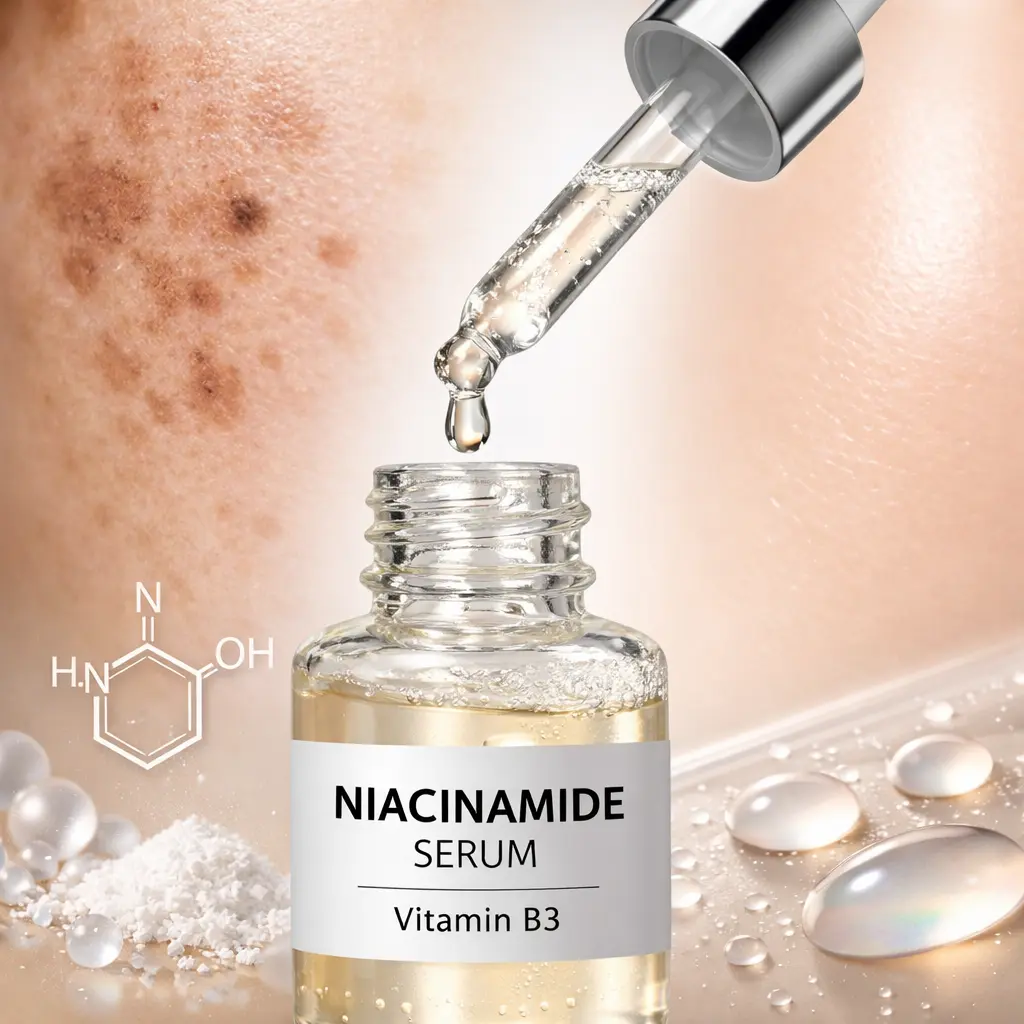
Pigmentation is one of the most common skin concerns worldwide. Dark spots, melasma, and uneven skin tone often persist even after acne heals or inflammation settles. Many people try strong brightening products that promise quick results but end up irritating the skin and worsening discoloration.
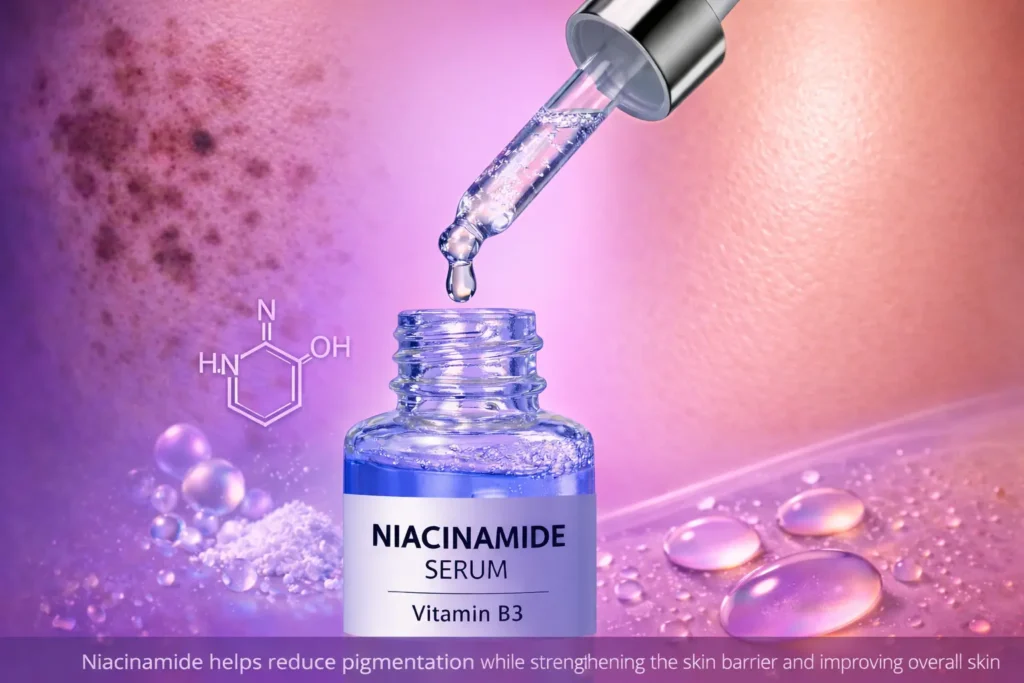
This is why dermatologists frequently recommend niacinamide for pigmentation. Unlike aggressive lightening agents, niacinamide works gently while supporting the skin’s natural repair mechanisms. It not only helps reduce excess pigment but also strengthens the skin barrier, making it a highly balanced treatment option.
Niacinamide is especially valuable for people with sensitive, acne-prone, or reactive skin. Instead of stripping or bleaching the skin, it regulates processes that contribute to pigmentation, including inflammation, barrier damage, and abnormal pigment transfer.
Another reason dermatologists favor niacinamide is its compatibility with other treatments. It can safely be combined with retinoids, vitamin C, azelaic acid, and sunscreen-based pigment protocols.
According to dermatologist Dr. Faiza Shams,
“Niacinamide is one of the most versatile ingredients in dermatology. It addresses pigmentation while simultaneously improving barrier health, which is essential for long-term pigment stability.”
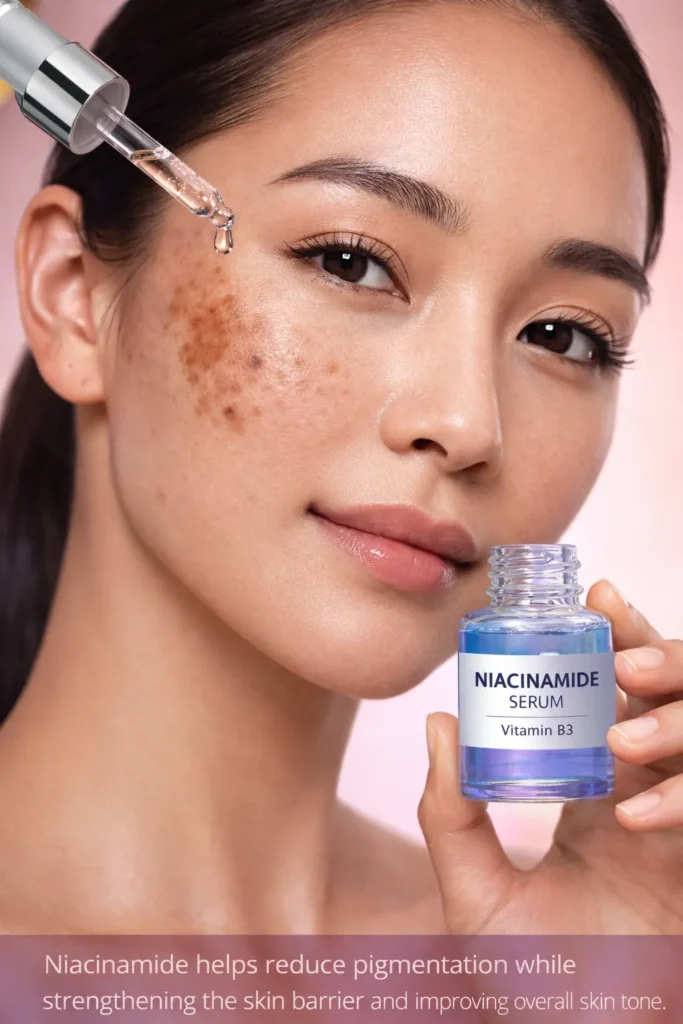
For many patients, niacinamide becomes a foundational ingredient in a pigmentation treatment plan rather than a temporary solution.
What Is Niacinamide?
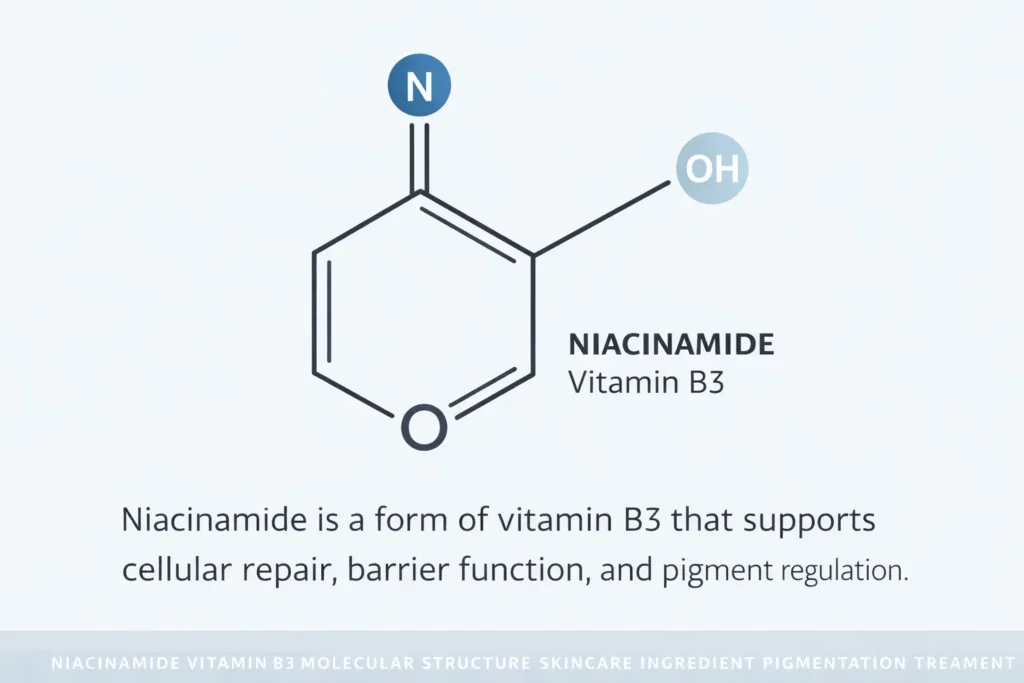
Niacinamide is a water-soluble form of vitamin B3, an essential nutrient involved in cellular energy production and skin health. In dermatology and skincare formulations, niacinamide is valued for its ability to support multiple biological functions within the skin.
Although often confused with niacin, the two forms of vitamin B3 behave differently. Niacin can cause flushing because it dilates blood vessels, while niacinamide does not produce this reaction when used topically in appropriate concentrations.
At the cellular level, niacinamide helps support the production of NAD+ and NADP+, molecules that play a central role in cellular metabolism and repair processes. These compounds are crucial for maintaining healthy skin cells and supporting barrier function.
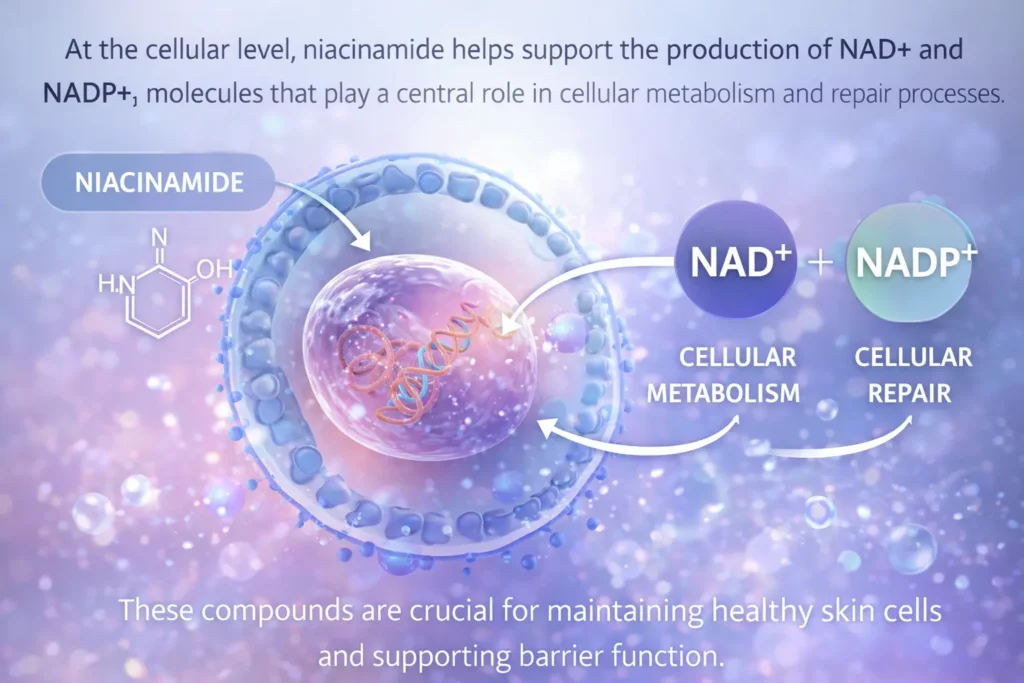
Niacinamide also influences several pathways involved in inflammation, pigmentation, and sebum production. Because of this broad biological impact, dermatologists use it in treatments targeting acne, rosacea, aging skin, and hyperpigmentation.
One of its most valuable characteristics is its low irritation profile. Unlike stronger depigmenting agents, niacinamide improves pigmentation while supporting skin resilience rather than compromising it.
Niacinamide works best when used consistently in a well-formulated routine. You can explore niacinamide-based serums for pigmentation designed for daily use.
How Niacinamide Helps Reduce Pigmentation
Understanding how niacinamide for hyperpigmentation works requires looking at how pigment forms and spreads within the skin.
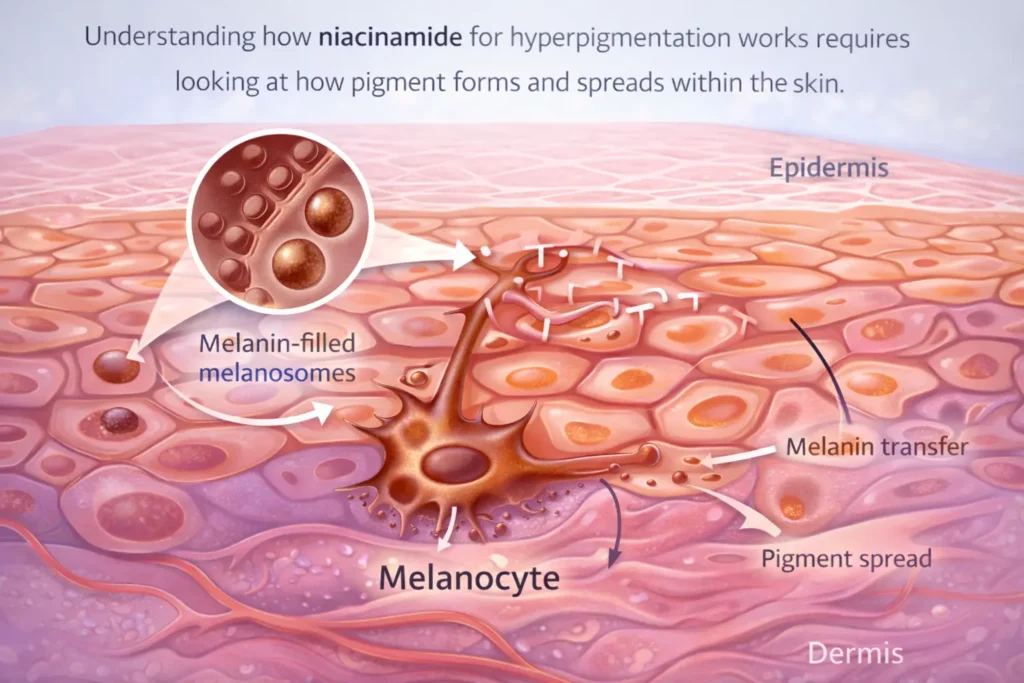
Pigmentation begins in melanocytes, specialized cells that produce melanin. Once melanin is created, it is packaged into structures called melanosomes, which are transferred to surrounding skin cells called keratinocytes. These melanosomes accumulate in the upper skin layers, appearing as dark spots.
Niacinamide interferes with several steps in this process.
Inhibits Melanosome Transfer
Unlike ingredients that stop melanin production entirely, niacinamide primarily works by reducing the transfer of melanosomes from melanocytes to keratinocytes.
In simple terms:
Melanocyte → produces melanin
Melanosome → carries pigment
Keratinocyte → receives pigment
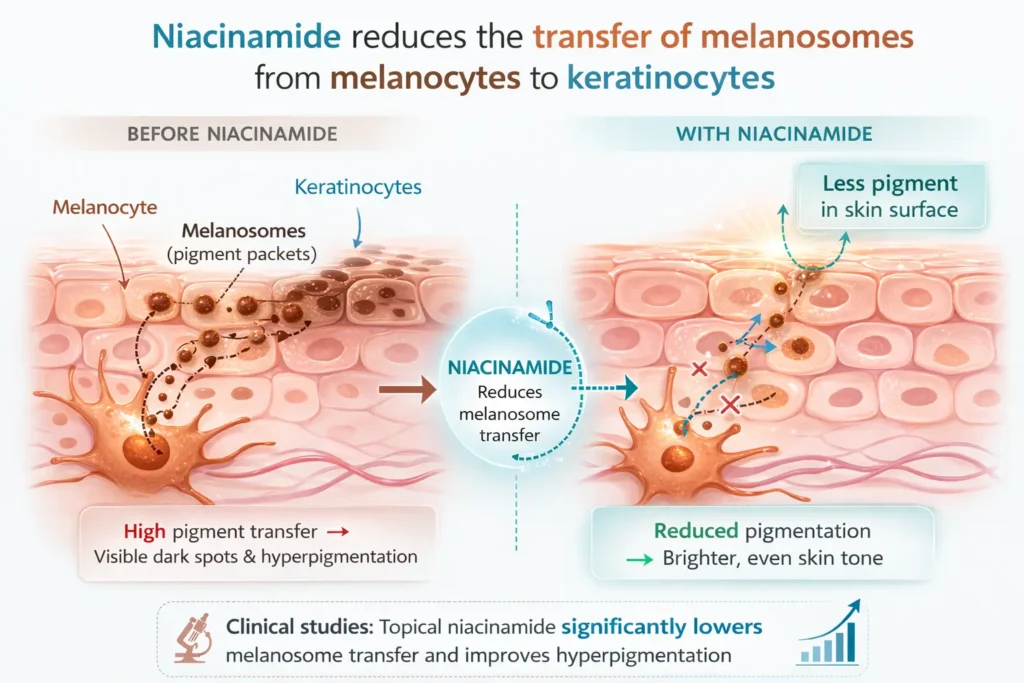
Niacinamide reduces how efficiently these pigment packets move between cells. As a result, less pigment accumulates in the visible layers of the skin.
Clinical studies have shown that topical niacinamide can reduce hyperpigmentation by significantly lowering melanosome transfer.
Reduces Inflammation That Triggers Pigmentation
Inflammation is one of the most important triggers of pigmentation. Acne, irritation, eczema, and cosmetic procedures can all activate inflammatory pathways that stimulate melanocytes.
This process contributes to inflammation-induced pigmentation, a major cause of stubborn dark marks.
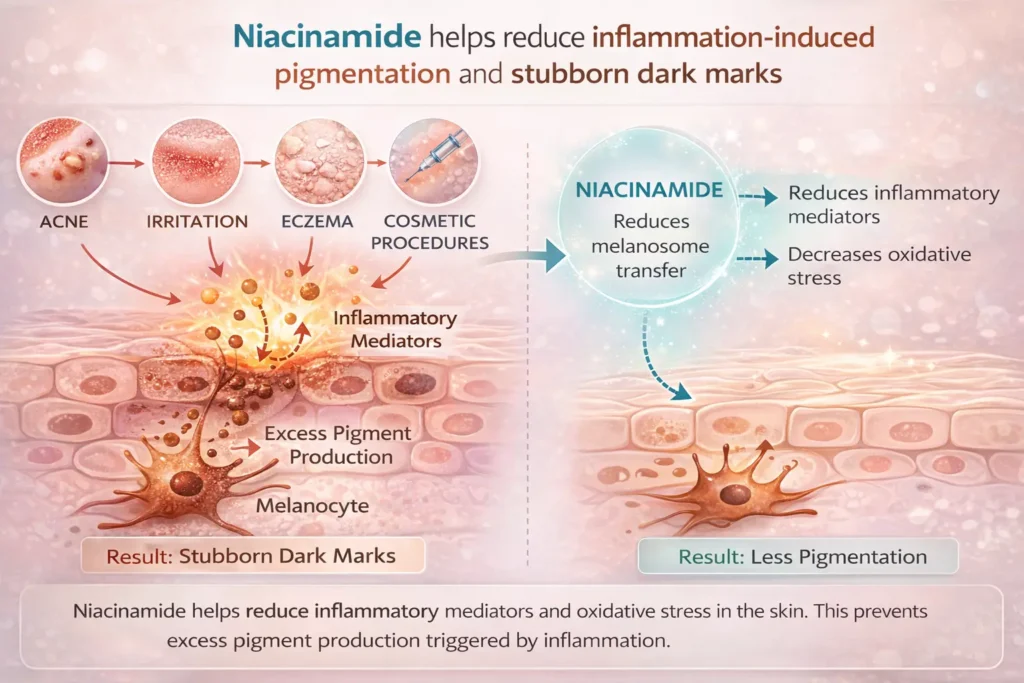
Niacinamide helps calm the skin by reducing inflammatory mediators and oxidative stress. When inflammation decreases, melanocytes receive fewer signals to produce excess pigment.
This is why niacinamide is commonly recommended for pigmentation that follows acne breakouts or irritation.
Strengthens the Skin Barrier
Barrier damage often worsens pigmentation. When the skin barrier becomes compromised, inflammation increases and melanocytes become more reactive.
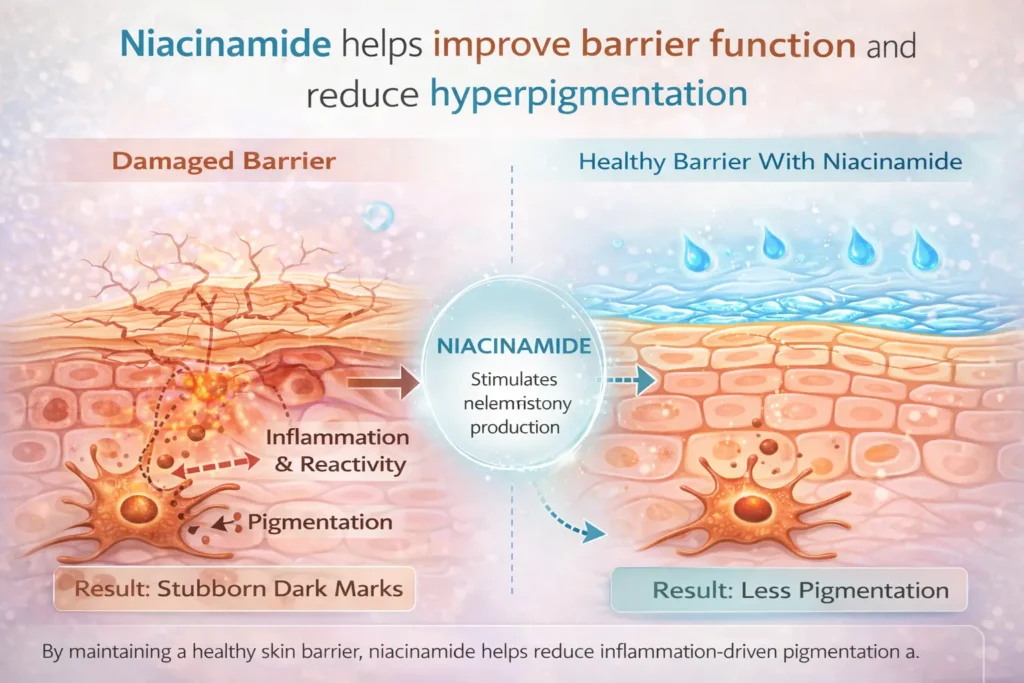
Niacinamide stimulates the production of ceramides, essential lipids that maintain barrier integrity. By supporting these lipids, niacinamide improves hydration, resilience, and overall barrier function.
This connection between pigmentation and barrier health is central to modern barrier repair skincare strategies.
When the barrier is healthy, the skin becomes less prone to inflammation-driven pigmentation.
Regulates Sebum and Skin Cell Turnover
Another advantage of niacinamide is its effect on oil production and cell renewal.
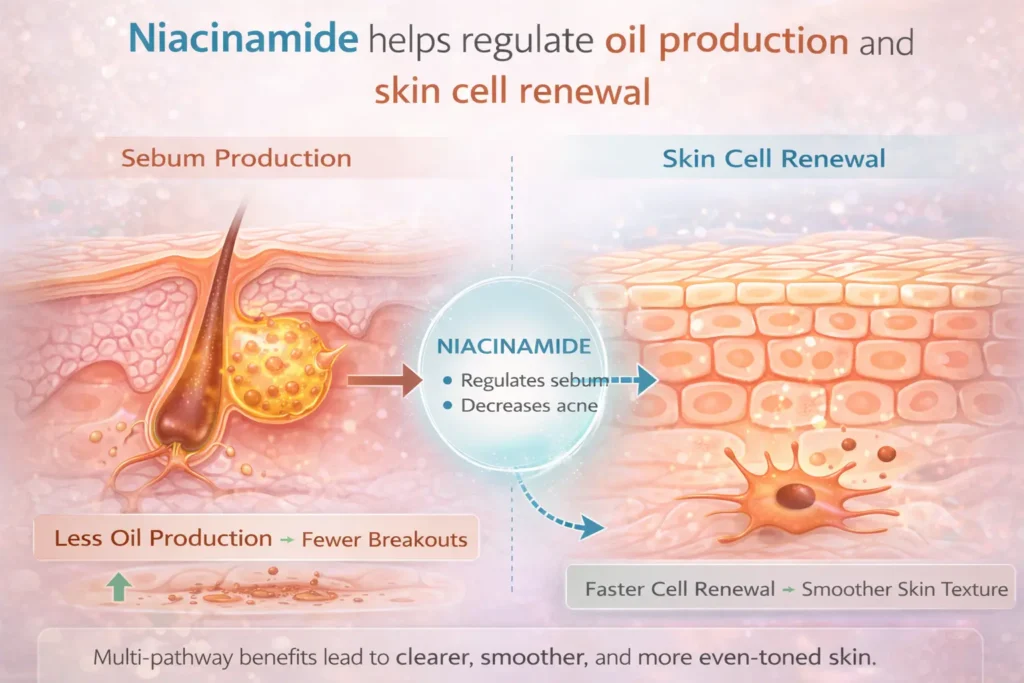
Niacinamide helps regulate sebum production, which can reduce acne formation. Fewer breakouts mean fewer opportunities for pigmentation to develop afterward.
It also improves the way skin cells renew and organize themselves, leading to smoother skin texture and a more even tone.
This multi-pathway approach explains why niacinamide benefits for skin extend far beyond simple brightening.
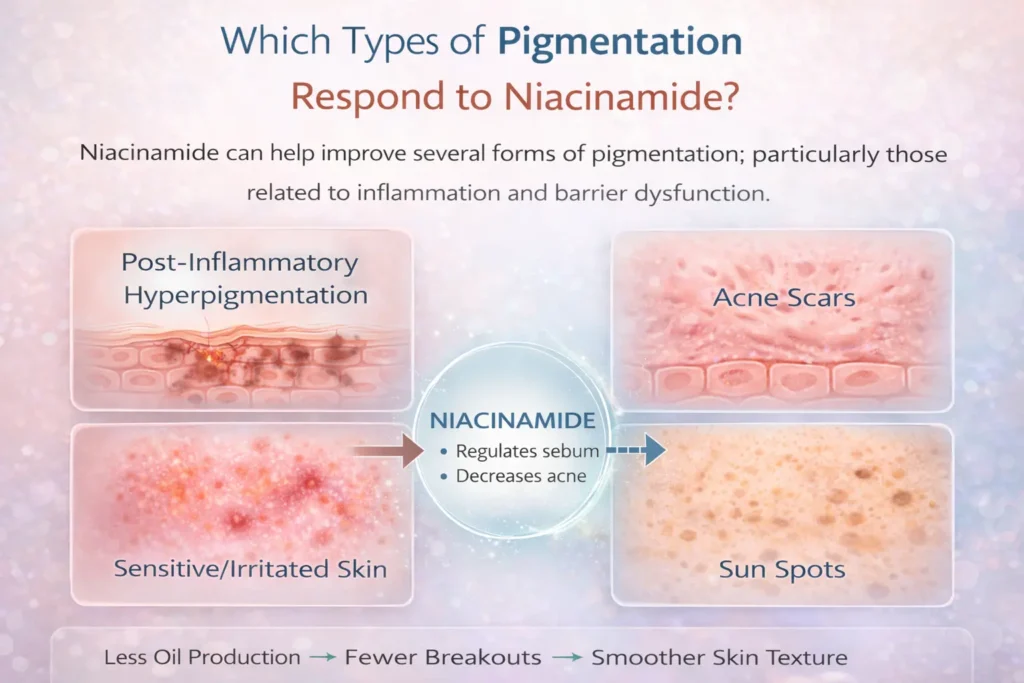
Which Types of Pigmentation Respond to Niacinamide?
Niacinamide can help improve several forms of pigmentation, particularly those related to inflammation and barrier dysfunction.
Post-Inflammatory Hyperpigmentation
Post-inflammatory hyperpigmentation occurs when inflammation stimulates melanocytes to produce excess pigment.
Common triggers include acne, eczema, allergic reactions, and cosmetic procedures. Once inflammation settles, dark marks remain.
Niacinamide helps reduce post-inflammatory hyperpigmentation by calming inflammatory pathways and reducing pigment transfer to surrounding cells.
Because it is gentle and barrier-supportive, it is particularly helpful for individuals prone to repeated inflammation.
Melasma
Melasma is a complex pigmentation disorder driven by hormones, ultraviolet exposure, and genetic predisposition.
Although niacinamide alone may not completely clear melasma, it can significantly improve skin tone and reduce pigment intensity when used consistently.
Understanding the difference between melasma and hyperpigmentation helps explain why combination therapies are often required. Niacinamide functions best as a supportive and maintenance ingredient within these treatment plans.
Acne Marks and Uneven Skin Tone
After acne lesions heal, the skin often develops dark marks that can persist for months.
Niacinamide improves these marks in two ways:
- Reducing inflammation that triggers pigment formation
- Preventing new breakouts that could create additional spots
It also helps correct causes of uneven facial pigmentation by improving skin cell turnover and reducing redness.
Niacinamide for Melasma: What Research Shows
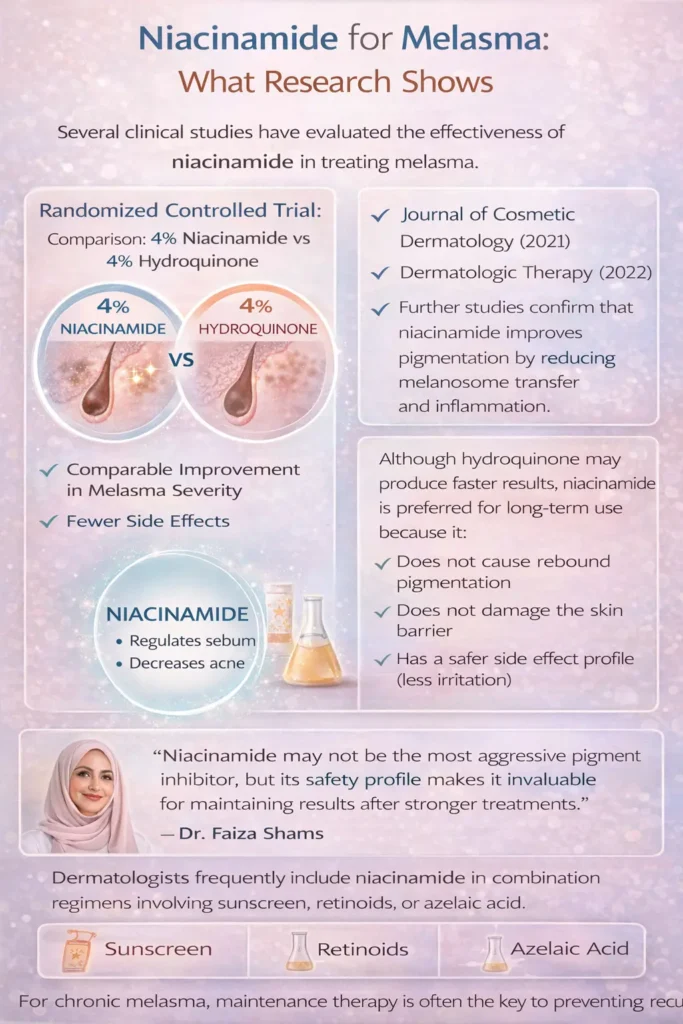
Several clinical studies have evaluated the effectiveness of niacinamide in treating melasma.
A randomized controlled trial published in the International Journal of Dermatology compared 4% niacinamide with 4% hydroquinone. After eight weeks, niacinamide showed comparable improvement in melasma severity while causing fewer side effects.
Additional research published in the Journal of Cosmetic Dermatology (2021) and Dermatologic Therapy (2022) confirms that niacinamide improves pigmentation by reducing melanosome transfer and inflammation.
Although hydroquinone may produce faster results, niacinamide is often preferred for long-term use because it does not cause rebound pigmentation or barrier damage.
Dermatologists frequently include niacinamide in combination regimens involving sunscreen, retinoids, or azelaic acid.
Dr. Faiza Shams explains:
“Niacinamide may not be the most aggressive pigment inhibitor, but its safety profile makes it invaluable for maintaining results after stronger treatments.”
For chronic melasma, maintenance therapy is often the key to preventing recurrence.
What Percentage of Niacinamide Works Best?
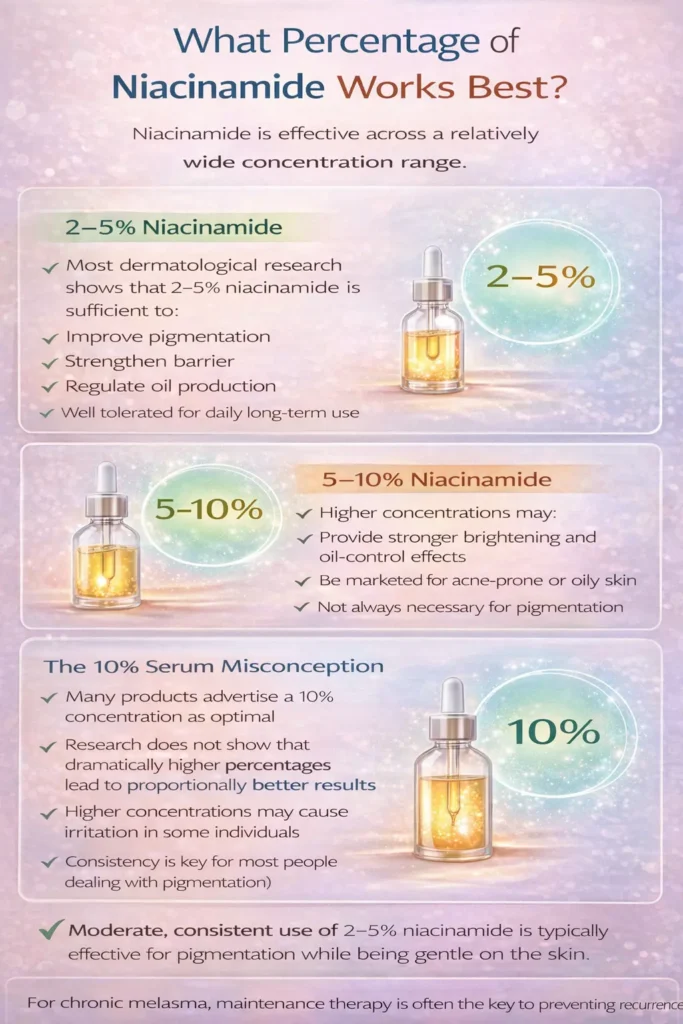
Niacinamide is effective across a relatively wide concentration range.
2–5% Niacinamide
Most dermatological research shows that 2–5% niacinamide is sufficient to improve pigmentation, strengthen the barrier, and regulate oil production.
This concentration is generally well tolerated and suitable for daily long-term use.
5–10% Niacinamide
Higher concentrations such as 5–10% may provide stronger oil-control and brightening effects. These formulas are often marketed for acne-prone or oily skin.
However, higher concentrations are not always necessary for pigmentation improvement.
The 10% Serum Misconception
Many skincare products advertise 10% niacinamide as the optimal concentration. While these formulas can work well, research does not show that dramatically higher percentages produce proportionally better results.
In some individuals, higher concentrations may cause mild irritation or redness.
For most people dealing with pigmentation, consistency with moderate concentrations is more important than using the highest possible percentage.
How to Use Niacinamide for Pigmentation
Proper usage significantly influences how well niacinamide for dark spots works.
Morning or Night Application
Niacinamide can be used both morning and evening. Many dermatologists recommend twice-daily application for optimal results.
Morning use helps protect the skin barrier and regulate oil production throughout the day. Evening use supports overnight repair processes.
Layering Order
A typical skincare routine might look like this:
Cleanser
Niacinamide serum
Moisturizer
Sunscreen (morning)
Niacinamide is water-based, so it should usually be applied before heavier creams or oils.
For a complete morning routine combining Vitamin C with SPF, see the Forganica Vitamin C Serum application guide.
Combining With Moisturizers
Niacinamide pairs well with moisturizers that contain ceramides, hyaluronic acid, or glycerin. These ingredients support barrier repair and improve hydration.
Barrier health plays a crucial role in pigment stability, which is why dermatologists emphasize supportive skincare alongside pigment inhibitors.
The Importance of Sunscreen
No pigmentation treatment works without sun protection.
Ultraviolet radiation stimulates melanocytes and can worsen existing dark spots. Even effective ingredients cannot overcome constant UV exposure.
Daily sunscreen use is essential, especially because pigmentation gets worse in summer and heat due to increased UV exposure and inflammation.

How Long Does Niacinamide Take to Work?
Pigmentation improvement requires patience.
Most patients notice early skin tone improvements within four weeks. At this stage, inflammation and redness often decrease.
More visible changes in dark spots typically appear between eight and twelve weeks of consistent use.
This timeline reflects the natural cycle of skin renewal. Pigment gradually moves upward through the skin and sheds with normal cell turnover.
Understanding why pigmentation improves slowly helps set realistic expectations.
Some individuals also experience a temporary pigmentation treatment plateau, where improvement appears to slow before continuing.
Consistency with treatment and sun protection is the most important factor in long-term success.
Can Niacinamide Be Combined With Other Actives?
Niacinamide works well with many other skincare ingredients and is frequently used in combination regimens.
Vitamin C
Niacinamide and vitamin C can be used together safely. Modern formulations are stable, and combining them can improve antioxidant protection and pigment regulation.
Tranexamic Acid
Niacinamide is often paired with tranexamic acid for melasma treatment.
For readers comparing treatments, see tranexamic acid vs alpha arbutin for pigmentation.
Retinoids
Retinoids increase skin cell turnover, helping pigment clear more quickly. Niacinamide reduces irritation that sometimes occurs with retinoid use.
Azelaic Acid
Azelaic acid suppresses tyrosinase activity while niacinamide reduces pigment transfer. Together, they provide complementary mechanisms for treating hyperpigmentation.
Because of its gentle nature, niacinamide often acts as a stabilizing ingredient in multi-active routines.
Niacinamide Side Effects and Safety
Niacinamide is considered one of the safest cosmetic ingredients used in dermatology.
Most people tolerate it extremely well. However, a few mild reactions may occur.
Possible side effects include:
• mild flushing
• slight burning sensation
• irritation when used at very high concentrations
These reactions are uncommon and usually resolve when the product concentration is reduced.
Sometimes irritation occurs when niacinamide is layered with other strong actives.
If brightening products cause discomfort, understanding why brightening products burn the skin can help identify layering conflicts.
Overall, niacinamide remains one of the lowest-risk ingredients for treating pigmentation.
Is Niacinamide Safe for Sensitive Skin and Pregnancy?
Niacinamide has a very low irritation profile, making it suitable for sensitive skin.
It does not significantly disrupt the skin barrier and often improves tolerance to other treatments.
Because systemic absorption is minimal, niacinamide is generally considered safe during pregnancy and breastfeeding when used in topical skincare products.
Many dermatologists recommend it for pregnant patients dealing with acne, redness, or mild pigmentation concerns.
Common Myths About Niacinamide
Myth: Niacinamide lightens natural skin color
Niacinamide does not bleach the skin. It reduces excess pigment and helps restore an even tone.
Myth: Higher percentages work better
Moderate concentrations often perform just as well as very high ones, with fewer irritation risks.
Myth: It cannot be combined with vitamin C
Modern formulations allow these ingredients to work together safely.
Myth: Niacinamide works instantly
Pigmentation treatments require several weeks of consistent use before visible improvement occurs.
Where Niacinamide Fits in a Pigmentation Treatment Plan
Dermatologists approach pigmentation treatment strategically rather than relying on a single ingredient.
The typical approach includes:
- Barrier repair and stabilization
- Inflammation control
- Pigment suppression
- Maintenance therapy
Niacinamide plays a role in each of these steps.
It supports barrier health, reduces inflammation, and regulates pigment transfer while maintaining skin tolerance.
For individuals prone to recurring pigmentation, maintaining barrier health is essential.
This is why resources like skin barrier damage complete guide and skin barrier repair for pigmentation-prone skin emphasize supportive skincare as a foundation for successful treatment.
Conclusion
Niacinamide has earned its place as one of dermatology’s most trusted ingredients for pigmentation management.
Rather than aggressively bleaching the skin, it works by regulating pigment transfer, calming inflammation, and strengthening the skin barrier. These combined effects make niacinamide for pigmentation particularly useful for individuals with sensitive, acne-prone, or reactive skin.
Although it may not produce overnight results, consistent use can gradually improve dark spots, melasma, and uneven skin tone.
For stubborn pigmentation, dermatologists often combine niacinamide with other targeted treatments while maintaining a strong barrier-focused routine.
As Dr. Faiza Shams explains,
“Long-term pigment control depends on maintaining skin stability. Niacinamide supports that stability while helping pigment fade naturally.”
When used consistently with sunscreen and barrier-supportive skincare, niacinamide becomes a powerful foundation for healthier, more even-toned skin.
1. Does niacinamide really help fade dark spots?
Yes, niacinamide for dark spots can gradually reduce pigmentation. It works by limiting the transfer of melanin from pigment-producing cells (melanocytes) to surrounding skin cells. This helps prevent excess pigment from accumulating in the upper layers of the skin, leading to a more even skin tone over time. With consistent use and sunscreen protection, many people begin seeing improvement within 8–12 weeks.
2. What percentage of niacinamide is best for hyperpigmentation?
Most research shows that 2–5% niacinamide is effective for improving niacinamide for hyperpigmentation and strengthening the skin barrier. Higher concentrations such as 10% may provide additional oil-control benefits but are not always necessary for pigmentation treatment. Moderate concentrations used consistently often provide the best balance between effectiveness and skin tolerance.
3. Can niacinamide be used with vitamin C or retinol?
Yes, niacinamide can safely be combined with both vitamin C and retinoids. Niacinamide helps calm inflammation and support the skin barrier, which can reduce irritation caused by stronger active ingredients. Many dermatologists recommend pairing niacinamide with retinoids, azelaic acid, or vitamin C in pigmentation treatment routines for better overall results.
4. Is niacinamide safe for sensitive or acne-prone skin?
Yes. Niacinamide is known for its low irritation profile, which makes it suitable for sensitive and acne-prone skin. It helps regulate oil production, reduce redness, and strengthen the skin barrier while treating pigmentation. Because it does not exfoliate aggressively, it is often recommended for people who cannot tolerate stronger brightening ingredients.
Address: Block C, Punjab University Employees Housing Scheme Phase-II, Lahore, Pakistan
Contact Number: +923224563810