7 Powerful Reasons Your Pigmentation Is Not Improving (Even After Treatment)
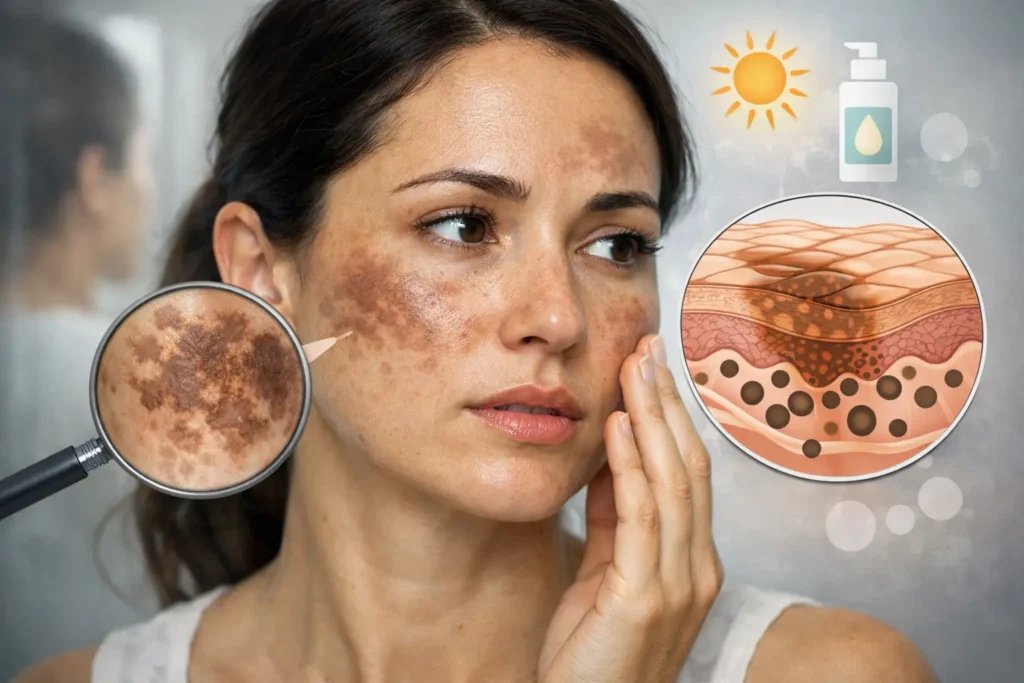
If you’ve been treating your skin for months but your pigmentation is not improving, you’re not alone.
You’ve tried different creams. Followed routines consistently. Maybe you’ve even invested in expensive treatments—but your pigmentation treatment is not working the way you expected.
And still… the dark patches remain.
At some point, it stops feeling like a skincare issue—and starts feeling like a dead end.
If your pigmentation is not improving, it does not mean your skin is resistant. And it definitely does not mean nothing will work.
It means something important is being missed.
Here’s what most people don’t realize:
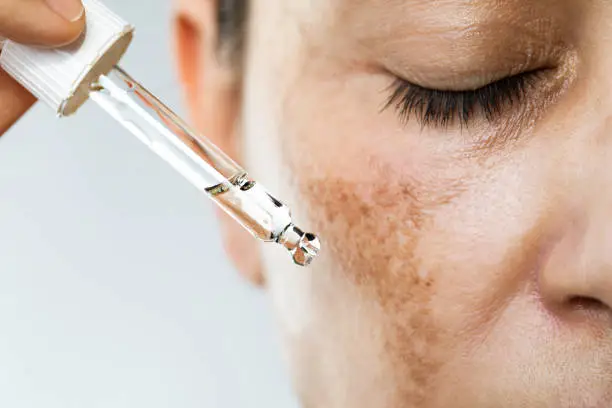
Pigmentation is not just a surface problem—it’s a regulated biological process.
It is influenced by multiple internal and external triggers, including:
- Sunlight and visible light
- Heat exposure
- Hormonal changes
- Inflammation and irritation
- Incorrect skincare use
That’s why many people feel their dark spots are not fading or their melasma is not improving, even after months of effort.
“Pigmentation requires the right treatment, strict protection, and time. Missing even one of these will delay results,” explains Dr. Faiza Shams.
In this guide, you’ll understand:
- Why your pigmentation is not improving
- Why it sometimes looks worse before it fades
- Why your pigmentation treatment is not working
- Why pigmentation comes back after treatment
- And what actually works for long-term results
Why Your Pigmentation is Not Improving (Quick Answer)
If your pigmentation is not improving, the reason is usually simple—but often overlooked.
One or more essential factors are missing.
The Most Common Causes
- Incorrect diagnosis
- Inconsistent or inadequate sunscreen use
- Using the wrong skincare products
- Skin barrier damage
- Ongoing triggers like sunlight, heat, or hormones
- Not giving treatment enough time
Pigmentation does not respond to quick fixes.
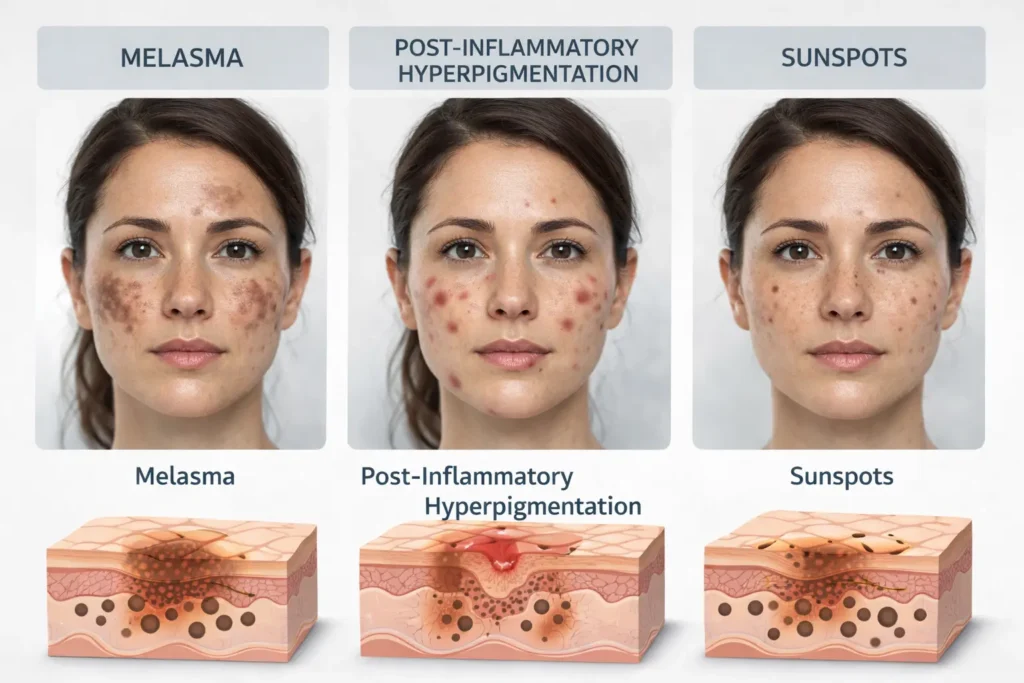
What looks like simple dark spots may actually be deeper conditions such as:
- Melasma
- Post-inflammatory hyperpigmentation
- Sun-induced pigmentation
- Mixed or recurrent pigmentation
Even the best treatment for pigmentation that won’t go away will fail if the underlying triggers are still active.
👉 In simple terms:
Your pigmentation is not improving because the root cause is still active—or your treatment strategy is incomplete.
In many cases, lack of results comes from inconsistent routines or incorrect product selection. Using targeted serums for pigmentation treatment can improve outcomes over time.
Why Pigmentation Improves Slowly (And Why Your Pigmentation Is Not Improving Yet)
One of the biggest reasons people feel frustrated is not understanding how pigmentation actually heals.
If you’re thinking:
👉 “Why is my pigmentation not going away?”
You’re asking the right question.
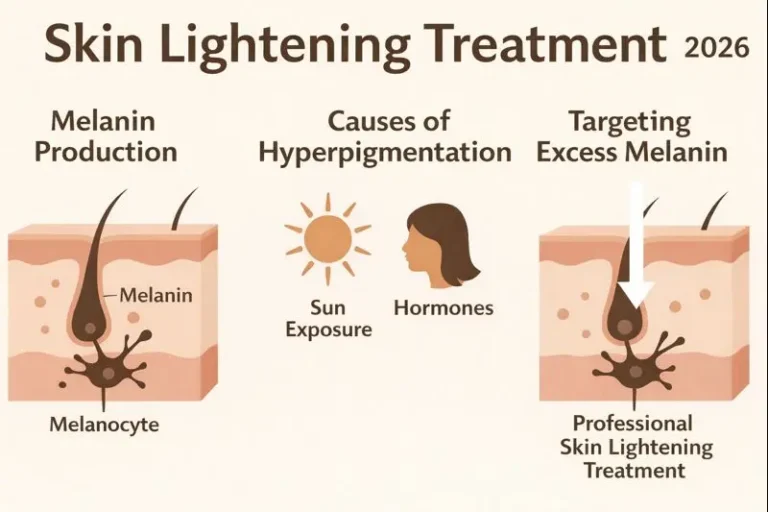
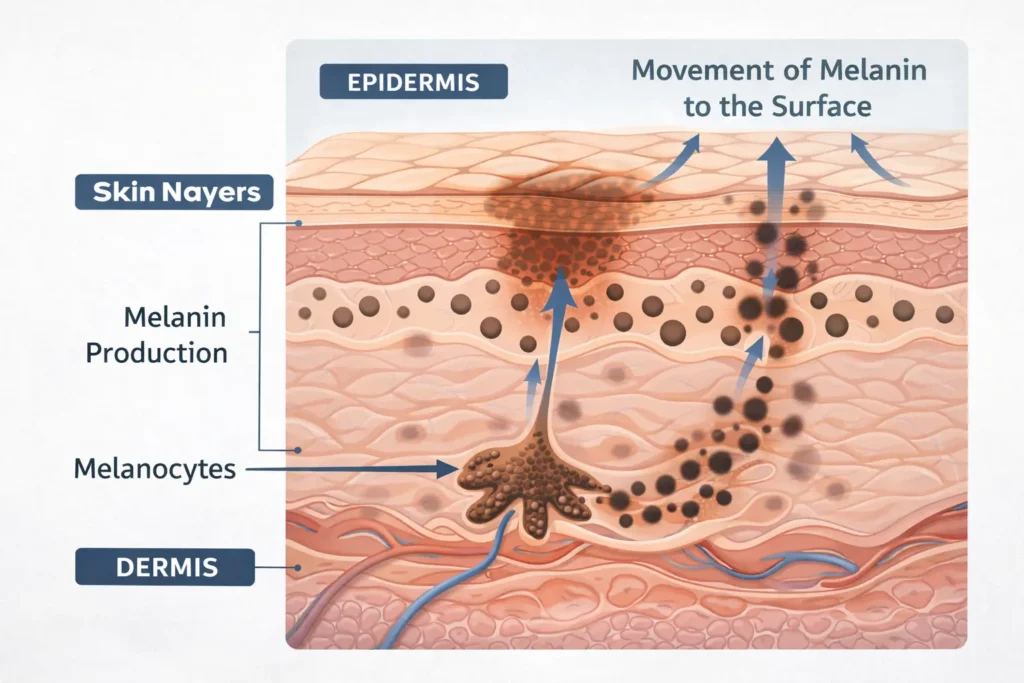
Pigmentation fades slowly because melanin—the pigment responsible for dark spots—is produced deep within the skin.
It doesn’t disappear overnight.
Your skin needs to go through multiple renewal cycles to gradually bring that pigment to the surface and remove it.
Realistic Timeline (What Most People Don’t Know)
- Mild pigmentation: 4–8 weeks
- Moderate pigmentation: 3–6 months
- Stubborn pigmentation (melasma): 6–12 months or longer
This is where most people go wrong.
They expect visible results in weeks—and assume their pigmentation is not improving when they don’t see immediate change.
Why Progress Feels Invisible
Even when treatment is working, you may not notice it because:
- New pigment may still be forming
- Old pigment is slowly clearing
- Daily triggers continue to stimulate melanin
This creates a frustrating cycle:
👉 You treat the pigment
👉 But new pigment keeps forming
And it feels like nothing is improving.
The Key Insight Most People Miss
Pigmentation is not resistant.
👉 It is slow and layered
“Patients often stop treatment too early, thinking their pigmentation is not improving. In reality, the skin is still in the early stages of repair,” says Dr. Faiza Shams.
Why Your Pigmentation Looks Worse Before It Gets Better (And Still Not Improving Initially)
This is one of the most misunderstood phases in pigmentation treatment.
You start using active ingredients… and suddenly your skin looks darker.
Naturally, you think:
👉 “My pigmentation is not improving—it’s getting worse.”
But in many cases, this is temporary—and expected.
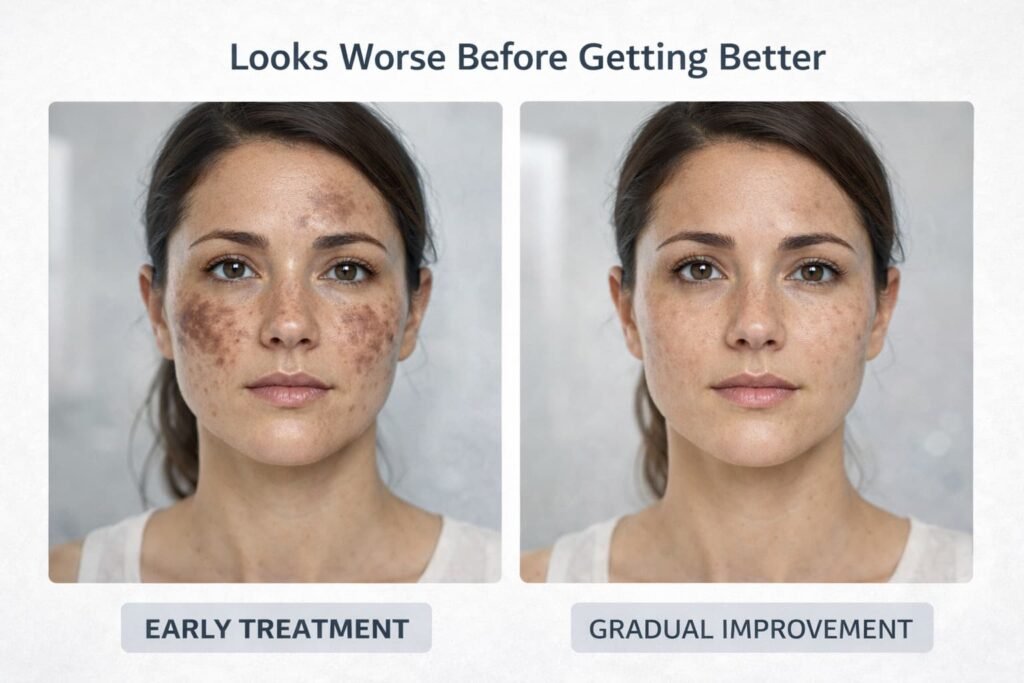
This explains why pigmentation looks darker before it improves during early treatment stages.
Why This Happens
When you start treatment, especially with:
- Retinoids
- Exfoliating acids
- Depigmenting agents
Your skin begins to renew faster.
This process:
- Brings deeper pigment to the surface
- Makes dark spots appear more visible
- Temporarily increases unevenness
The Role of Irritation
Mild irritation in early treatment stages can also:
- Stimulate melanocytes (pigment cells)
- Cause temporary darkening
This is especially common in melasma-prone skin.
When to Be Concerned
Temporary darkening is normal.
But if you notice:
- Burning sensation
- Persistent redness
- Severe irritation
Then your routine may be too aggressive—and could worsen pigmentation long-term.
What You Should Do Instead
- Stay consistent
- Avoid overusing actives
- Focus on barrier repair
- Maintain strict sun protection
👉 This phase is not failure.
👉 It is often the transition before visible improvement
Why Your Pigmentation Is Not Improving Even After Treatment
If your pigmentation is not fading even after treatment, it can feel confusing. Many patients don’t realize why pigmentation treatments fail despite using good products.
You’re doing everything right—yet results are not showing.
In reality, this is rarely due to treatment failure.
It’s usually due to gaps in the overall approach.
The Real Reasons (Most People Miss These)
1. Incorrect Diagnosis
Not all pigmentation behaves the same way.
Treating melasma like acne marks will not work.
2. Inadequate Sun Protection
Even brief exposure to sunlight or visible light can reactivate pigment production.
3. Using the Wrong Products
- Too mild → no results
- Too strong → irritation → worsening pigmentation
4. Inconsistent Routine
Frequent product switching resets progress.
5. Internal Triggers
Hormones, stress, and heat can keep pigmentation active beneath the surface.
6. Skin Barrier Damage
Overuse of active ingredients weakens the skin and triggers more pigmentation.
👉 This is why many people feel their pigmentation treatment is not working, even when they are putting in effort.
Key Takeaway
Your dark spots are not improving because something essential is missing—not because your skin cannot improve.
Pigmentation Plateau: Why Your Pigmentation Is Not Improving Anymore
Many people experience a pigmentation treatment plateau, where results stop after initial improvement.:
👉 Initial improvement
👉 Then… progress stops
If your melasma not improving anymore, you may have reached a plateau phase.
Why This Happens
- Your skin adapts to current treatment
- Deeper pigmentation becomes visible
- Triggers remain active
- Sunscreen use becomes inconsistent
This stage is often misunderstood.
It creates the feeling:
👉 “my pigmentation not going away anymore”
But in reality:
👉 Your treatment simply needs adjustment.
What a Plateau Actually Means
A plateau is not failure.
It is a signal.
“When progress stops, it usually means the treatment needs to be refined—not abandoned,” explains Dr. Faiza Shams.
What You May Need Next
- Stronger or adjusted active ingredients
- Better sun protection strategy
- Professional treatments
- More consistent routine
Why Pigmentation Comes Back After Treatment
One of the most frustrating experiences is this:
Your skin finally improves… and then the pigmentation returns.
If your pigmentation not fading long-term, or keeps coming back, it’s not because treatment failed.
It’s because pigmentation—especially melasma—is a chronic condition, not a one-time issue. Understanding hormonal pigmentation causes can help prevent recurrence and improve treatment outcomes.
Why Pigmentation Returns
1. No Maintenance Routine
Many people stop all treatment once their skin looks clear.
But underneath the surface, pigment activity may still exist.
👉 Without maintenance, pigmentation comes back.
2. Sun Exposure (Even Minimal)
Many people ignore the impact of visible light and pigmentation, which plays a major role in melasma. Even short exposure to sunlight or visible light can reactivate melanin production.
This is one of the biggest reasons your melasma not improving sustainably.
3. Hormonal Triggers
Hormones play a major role, especially in melasma.
Triggers include:
- Pregnancy
- PCOS
- Contraceptive use
Even with treatment, these can cause recurrence.
4. Heat Exposure
Heat is often ignored—but it strongly stimulates melanocytes.
This includes:
- Cooking
- Hot environments
- Sun heat (not just UV)
5. Stopping Treatment Too Early
Even if skin looks clear, treatment needs to continue in a maintenance phase.
👉 Otherwise, pigment reactivates.
The Reality You Need to Understand
Pigmentation is not always “removed.”
👉 It is controlled
“Patients who maintain their routine see long-term stability. Those who stop treatment often experience recurrence,” explains Dr. Faiza Shams.
The Real Reason Your Pigmentation Is Not fading: Light Exposure
If there is one reason why most treatments fail, it’s this:
👉 Improper light protection
Even when people say:
👉 “I use sunscreen, but my pigmentation not going away”
The problem is usually not treatment—it’s protection.
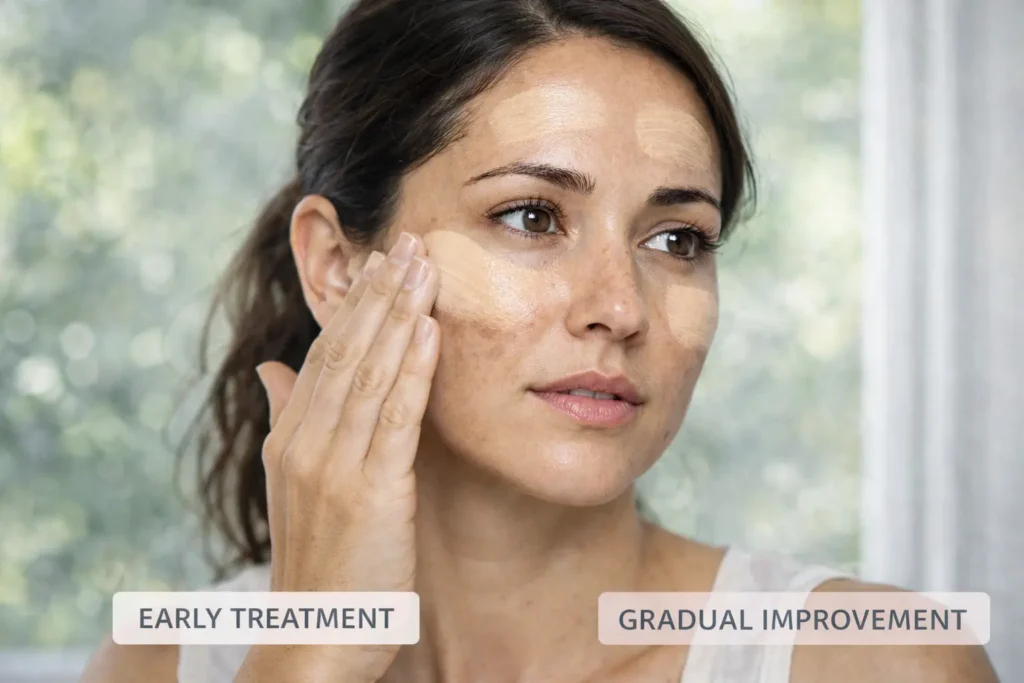
It’s Not Just Sunlight
Pigmentation is triggered by:
- UV rays (UVA + UVB)
- Visible light (blue light)
- Heat
Most people only protect against UV.
👉 But visible light is a major trigger—especially in melasma and darker skin types.
Why Your Sunscreen May Not Be Enough
Using an iron oxide sunscreen for pigmentation is essential to protect against visible light.
Many sunscreens:
❌ Do NOT protect against visible light
❌ Are applied in insufficient quantity
❌ Are not reapplied
This leads to continuous pigment activation.
What You Actually Need
To ensure your pigmentation improves, your sunscreen must include:
- Broad-spectrum SPF 50+
- UVA protection
- Visible light protection
- Iron oxide (tinted sunscreen)
And most importantly:
👉 Reapply every 2–3 hours
According to the American Academy of Dermatology, strict sun protection is essential in managing pigmentation disorders.
You can read more here:
https://www.aad.org/public/diseases/a-z/melasma-overview
Hidden Mistakes That Prevent Improvement
Even if you use sunscreen, these mistakes can prevent results:
- Applying too little product
- Skipping reapplication
- Using non-tinted sunscreen
- Ignoring indoor light exposure
- Not using physical protection (shade, hats)
👉 If your pigmentation is not fading, your sunscreen strategy likely needs upgrading.
Skin Barrier Damage: Why Your Pigmentation Is Not fading
Avoiding common pigmentation treatment mistakes can significantly improve your results. Sometimes, the problem is not pigmentation itself.
👉 It’s your skin barrier.
If your barrier is damaged, your pigmentation is not fading because your skin is constantly inflamed.
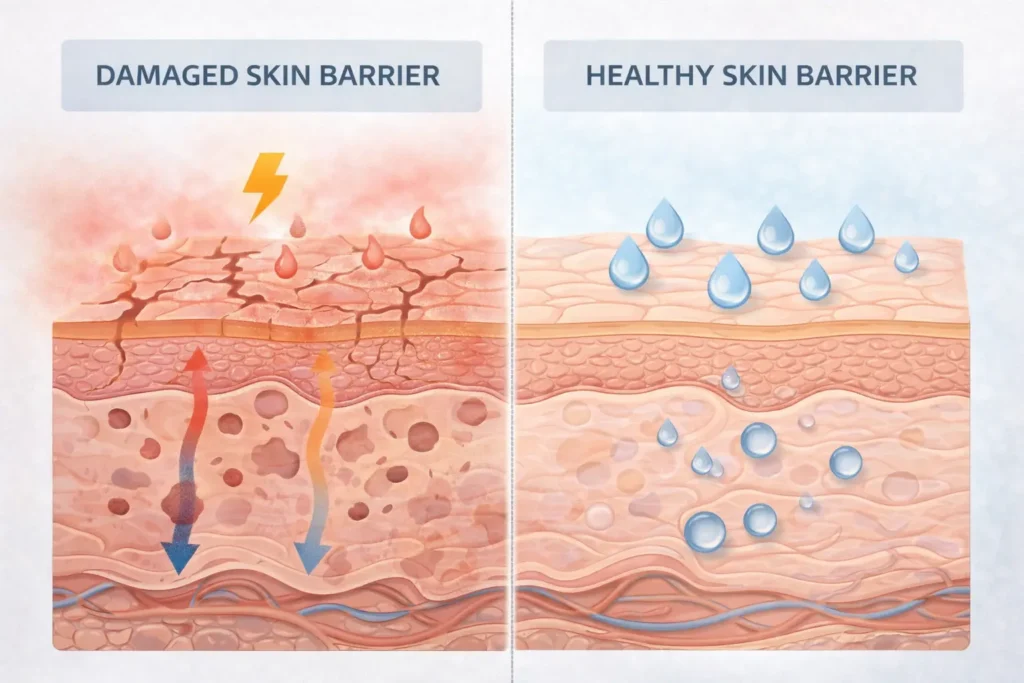
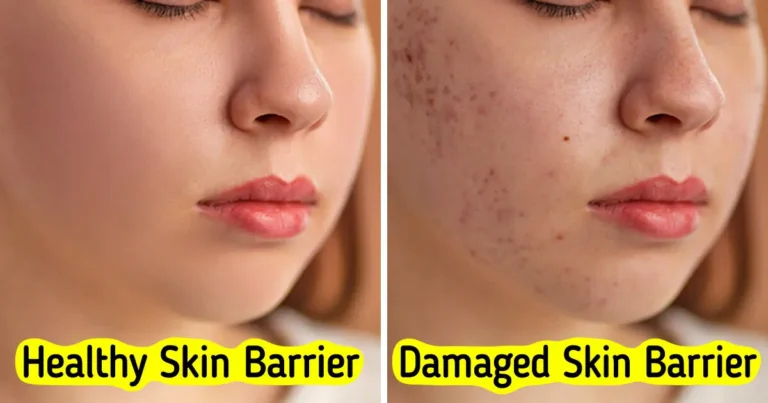
How Barrier Damage Worsens Pigmentation
When the skin barrier is compromised:
- Skin becomes sensitive
- Inflammation increases
- Melanocytes become more active
- More pigment is produced
👉 In simple terms:
Irritated skin produces more pigment
Common Causes of Barrier Damage
- Over-exfoliation (AHAs, BHAs)
- Excessive use of retinoids
- Mixing too many active ingredients
- Harsh cleansers
- Skipping moisturizers
The Cycle That Keeps Pigmentation Active
Many people unknowingly do this:
- Use strong treatments
- Skin becomes irritated
- Pigmentation worsens
- Use even stronger products
- Skin becomes more damaged
👉 This cycle prevents real improvement.
Signs Your Barrier Is Damaged
- Burning or stinging
- Redness
- Sensitivity
- Dry, tight skin
- Pigmentation appearing darker
What You Should Do
- Simplify your routine
- Use gentle cleansers
- Add barrier-repair moisturizers
- Reduce active ingredients temporarily
👉 Sometimes, your pigmentation not going away because your skin needs healing—not stronger treatment.
Common Mistakes That Keep Pigmentation From Improving
Avoiding common pigmentation treatment mistakes can significantly improve your results. Even with good products, small mistakes can prevent results.
These are some of the most common reasons why melasma not improving:
❌ Applying Sunscreen Only Once Daily
Protection fades within hours.
❌ Using Too Many Active Ingredients
More is not better—it increases irritation.
❌ Expecting Fast Results
Pigmentation takes months, not weeks.
❌ Stopping Treatment Early
Improvement requires consistency.
❌ Using Steroid Creams Without Supervision
These may give temporary results—but worsen pigmentation long-term.
❌ Ignoring Heat and Indoor Light
Pigmentation triggers are not limited to outdoor sun.
👉 Avoiding these mistakes alone can significantly improve results.
Why Pigmentation Is Harder to Treat in Pakistani Skin
If your pigmentation is not fading despite treatment, your skin type may be a factor.
Pakistani skin typically has higher melanin activity.
For deeper understanding, read our detailed melasma treatment guide to manage stubborn pigmentation effectively.
What This Means
- Pigmentation develops more easily
- Skin reacts more strongly to irritation
- Risk of post-inflammatory pigmentation is higher
- Results take longer
Environmental Factors Also Matter
- High UV exposure
- Heat and humidity
- Dust and pollution
👉 These constantly stimulate pigment production.
Why Aggressive Treatment Backfires
In darker skin types:
- Strong treatments can cause irritation
- Irritation triggers more pigmentation
👉 This is why your pigmentation is not improving with aggressive routines.
The Right Approach
- Gentle but consistent treatment
- Strong sun + visible light protection
- Barrier repair alongside treatment
- Long-term maintenance
“Treating pigmentation in darker skin requires balance—aggressive treatment often worsens the condition,” says Dr. Faiza Shams.
Why Heat Is a Hidden Trigger for Pigmentation
Most people focus only on sunlight.
But heat is a major trigger—and often ignored.
Even if your sunscreen is perfect, your pigmentation is not improving if heat exposure continues.
Common Sources of Heat
- Cooking (especially kitchens)
- Direct sun heat
- Hot environments
- Steam and saunas
How Heat Affects Pigmentation
Heat stimulates melanocytes, increasing melanin production—even without UV exposure.
👉 This is why many patients feel their pigmentation is not improving despite doing everything right.
Real-Life Scenarios (Why Your Pigmentation Is Not Improving)
Understanding real situations makes everything clearer.
Scenario 1: “I Used Hydroquinone But It Came Back”
You stopped treatment after improvement.
👉 No maintenance = recurrence
Scenario 2: “My Pigmentation Got Worse After a Peel”
Your skin barrier was damaged.
👉 Inflammation triggered more pigment
Scenario 3: “I Use Sunscreen But Still No Results”
You are not:
- Reapplying
- Using enough quantity
- Using visible light protection
Scenario 4: “Nothing Is Working For My Melasma”
Likely causes:
- Hormonal triggers
- Heat exposure
- Incomplete routine
Why Your Pigmentation Is Not Improving Despite Doing Everything Right
Best Treatment Strategy If Your Pigmentation Is Not Improving
If your pigmentation is not improving, the solution is not a single product.
It’s a structured, multi-layered approach.
Most people fail because they rely on:
❌ One cream
❌ Short-term treatment
❌ Inconsistent routines
But pigmentation requires a system, not a shortcut.
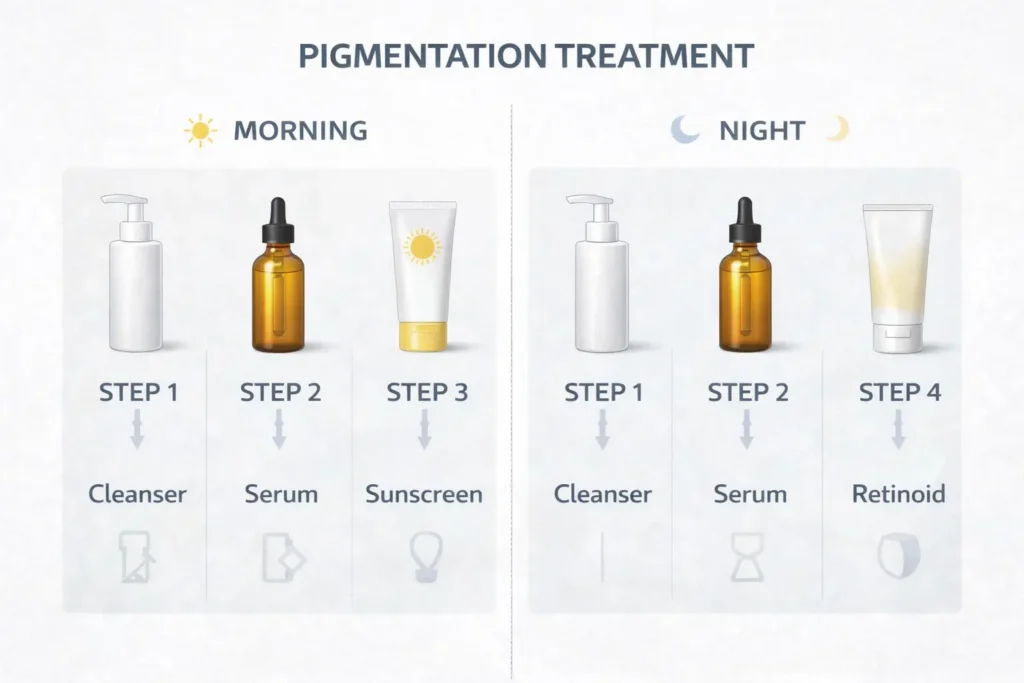
Step 1: Correct Diagnosis Comes First
Before choosing treatment, you must identify:
- Melasma
- Post-inflammatory hyperpigmentation
- Sun-induced pigmentation
- Mixed pigmentation
Each behaves differently.
👉 This is why many people feel their pigmentation treatment is not working—they are treating the wrong condition.
Step 2: Use the Right Combination of Topicals
No single ingredient can fix pigmentation alone.
The most effective approach combines:
Hydroquinone
- Reduces melanin production
- Works best short-term under supervision
Azelaic Acid
- Anti-inflammatory
- Suitable for sensitive and acne-prone skin
Retinoids
- Increase skin cell turnover
- Help remove existing pigment
Vitamin C
- Protects against oxidative damage
- Supports brightening
Tranexamic Acid
- Targets pigment pathways
- Especially effective in melasma
👉 The key is not using everything at once.
👉 It’s using the right combination, consistently and correctly.
Why Sunscreen Is the Most Important Treatment Step
If your pigmentation is not improving, this is the first thing to fix.
Not your serum. Not your cream.
👉 Choosing the best sunscreen for pigmentation is one of the most important steps in treatment.
Why It Matters So Much
Every time your skin is exposed to light:
- Melanocytes activate
- New pigment forms
- Existing treatment progress is reversed
👉 This means:
You treat at night—but undo it during the day
What Makes a Sunscreen Effective for Pigmentation
To truly support treatment, your sunscreen must:
- Be SPF 50+
- Offer broad-spectrum protection
- Protect against visible light
- Contain iron oxide (tinted sunscreen)
Application Matters More Than Product
Even the best sunscreen will fail if:
- You apply too little
- You don’t reapply
- You skip indoor protection
👉 This is one of the biggest reasons why pigmentation is not improving despite using sunscreen
When Topical Treatments Are Not Enough
If your pigmentation is not improving after months of topical treatment, you may need advanced options.
Dermatological Procedures
These help target deeper pigment:
- Chemical peels
- Laser treatments (with caution in darker skin)
- Microneedling with active ingredients
Important Note
Not all procedures are safe for all skin types.
In Pakistani skin, aggressive treatments can:
❌ Trigger inflammation
❌ Worsen pigmentation
👉 This is why professional guidance is essential.
According to the Journal of the American Academy of Dermatology, combination therapy delivers better results than single treatments:
When Your Pigmentation Is Not Improving Despite Doing Everything Right
This is one of the most frustrating situations.
You’re consistent. Careful. Informed.
And still—your pigmentation is not improving.
Why This Happens
Some pigmentation is:
- Deep (dermal)
- Strongly hormone-driven
- Chronic (especially melasma)
- Long-standing
👉 These cases require:
- Longer timelines
- Advanced treatments
- Strict maintenance
What You Should Do
- Do not stop treatment
- Do not switch products frequently
- Do not over-treat
👉 Instead:
- Refine your routine
- Stay consistent
- Seek professional guidance if needed
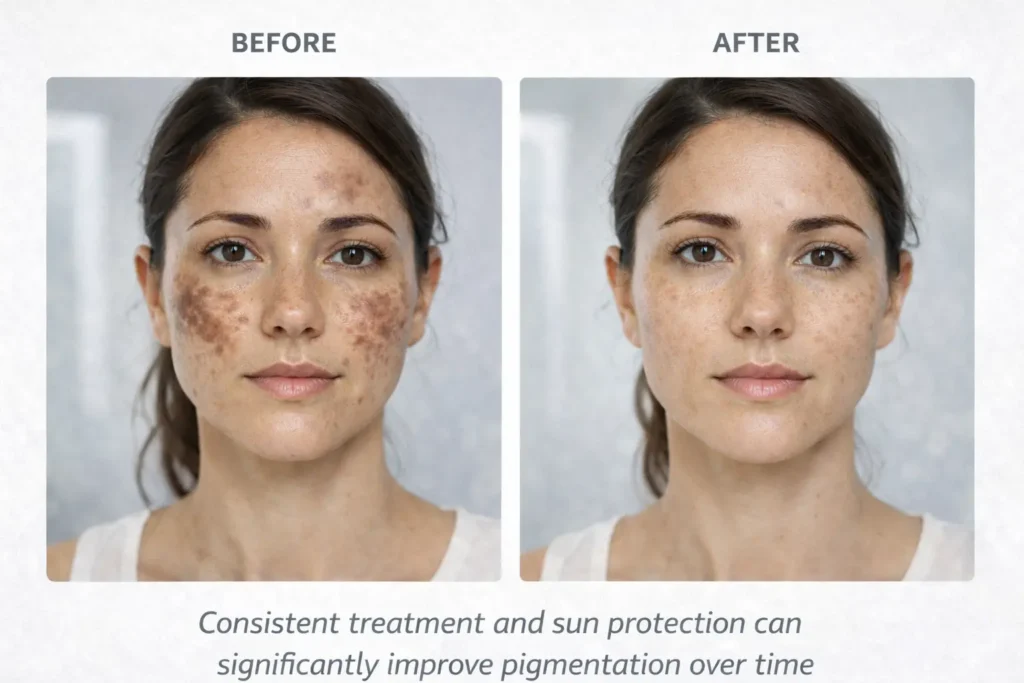
Advanced Tips to Make Pigmentation Improve Faster
If your pigmentation is not improving, small adjustments can make a major difference.
✔ Be Consistent
Results come from repetition—not intensity.
✔ Use Enough Sunscreen
At least two finger-length amount for face.
✔ Reapply Every 2–3 Hours
Especially during daylight exposure.
✔ Avoid Over-Treating
Too many actives increase irritation.
✔ Repair Your Skin Barrier
Healthy skin responds better to treatment.
✔ Control Triggers
Reduce exposure to:
- Heat
- Sunlight
- Irritation
Frequently Asked Questions
1. Why is my pigmentation not improving even after treatment?
If your pigmentation is not improving, it is usually because the root cause is still active. Common reasons include poor sunscreen use, wrong products, skin barrier damage, or ongoing triggers like sunlight, heat, or hormones.
2. Why is my melasma not improving?
Melasma is a chronic condition influenced by hormones, heat, and visible light. If these triggers are not controlled, your melasma is not improving despite treatment.
3. How long does it take for pigmentation to improve?
Pigmentation takes time to fade:
Mild: 4–8 weeks
Moderate: 3–6 months
Stubborn (melasma): 6–12 months or longer
If your pigmentation is not improving, you may need more time or a better treatment approach.
7. Can sunscreen alone improve pigmentation?
Sunscreen is essential, but not enough alone. If your pigmentation is not improving, you need a combination of treatment, sun protection, and consistency.
Key Take Aways
Pigmentation is not improving because the root cause—like sunlight, heat, or hormones—is still active.
Consistent sunscreen use, especially with visible light protection, is essential for real improvement.
Overusing products or damaging your skin barrier can worsen pigmentation instead of fixing it.
The right treatment, patience, and long-term maintenance are key to controlling stubborn pigmentation.
Address: Block C, Punjab University Employees Housing Scheme Phase-II, Lahore, Pakistan
Contact Number: +923224563810