Post-Inflammatory Hyperpigmentation (PIH): What Causes It and How to Treat It Faster
Table of Contents
- What Is Post-Inflammatory Hyperpigmentation (PIH)?
- What Causes Post-Inflammatory Hyperpigmentation
- The Science Behind PIH
- PIH vs Melasma: Key Differences
- How Long Does Post-Inflammatory Hyperpigmentation Take to Fade
- Why PIH Lasts Longer in Darker Skin Tones
- How to Treat Post-Inflammatory Hyperpigmentation Faster
- Topical Ingredients That Work for PIH
- Chemical Exfoliation for PIH
- Can Chemical Peels Help PIH
- Laser Treatment for PIH: Safety and Effectiveness
- Daily Skincare Routine to Fade PIH Faster
- Common Mistakes That Make PIH Worse
- Can PIH Turn Into Melasma
- When to See a Dermatologist for PIH
- Science-Backed Insights on Post-Inflammatory Hyperpigmentation
- Final Thoughts
- References
- FAQS
Dark spots that linger long after acne heals are one of the most frustrating skin concerns. Many people assume they are dealing with melasma or stubborn pigmentation that will never fade. In reality, most of these marks are post-inflammatory hyperpigmentation, commonly known as PIH.
PIH is not permanent.
But it does require the right approach.
This article explains what post-inflammatory hyperpigmentation is, why it happens, how it differs from melasma and other pigmentation disorders, and how to treat post-inflammatory hyperpigmentation faster using evidence-based strategies.
If you’ve already read our guides on melasma vs hyperpigmentation and why melasma keeps coming back, this article completes the picture by focusing on the most common and treatable form of pigmentation.
What Is Post-Inflammatory Hyperpigmentation (PIH)?
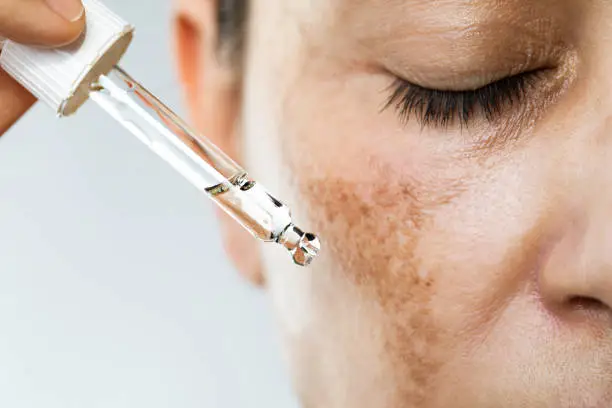
Post-inflammatory hyperpigmentation is a form of hyperpigmentation that appears after skin inflammation or injury. When the skin becomes inflamed, melanocytes respond by producing excess melanin. That pigment remains even after the original problem heals.
PIH is not a disease.
It is a reaction.
It commonly appears as:
- Brown, dark brown, or gray spots
- Flat patches rather than raised lesions
- Marks exactly where acne, burns, rashes, or injuries occurred
PIH can affect all skin tones, but it is more common and more persistent in deeper skin tones because melanocytes are naturally more active.
What Causes Post-Inflammatory Hyperpigmentation?
PIH always follows inflammation. The trigger can be mild or severe.
Common causes include:
- Acne (the most common cause)
- Eczema or dermatitis
- Burns or insect bites
- Allergic reactions
- Over-exfoliation
- Laser or cosmetic procedures
- Picking, scratching, or squeezing acne
The more intense the inflammation, the darker and longer-lasting the PIH tends to be.
This is why acne cysts often leave darker marks than whiteheads.
The Science Behind PIH
When skin becomes inflamed, inflammatory mediators such as prostaglandins and cytokines stimulate melanocytes. These pigment cells increase melanin production and transfer pigment to surrounding keratinocytes.
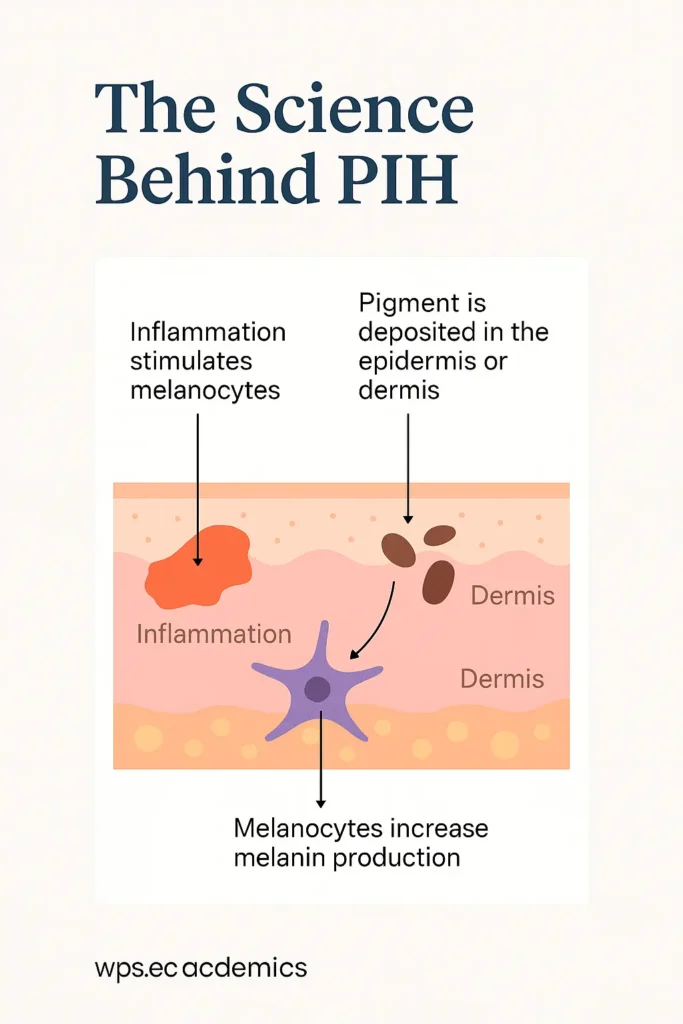
In PIH:
- Melanin may be deposited in the epidermis (surface)
- Or in the dermis (deeper layer)
- Or in both layers
Epidermal Post-Inflammatory Hyperpigmentation fades faster.
Dermal PIH takes much longer and may appear grayish or bluish.
Research shows that inflammation-induced melanogenesis is amplified in skin of color, which explains why PIH lasts longer in brown and deeper skin tones.
PIH vs Melasma: Why They Are Not the Same
Many people confuse PIH with melasma, but they behave very differently.
If you’ve read our detailed guide on melasma vs hyperpigmentation, here is the key difference in simple terms:
PIH is trigger-based.
Melasma is trigger-sensitive and chronic.
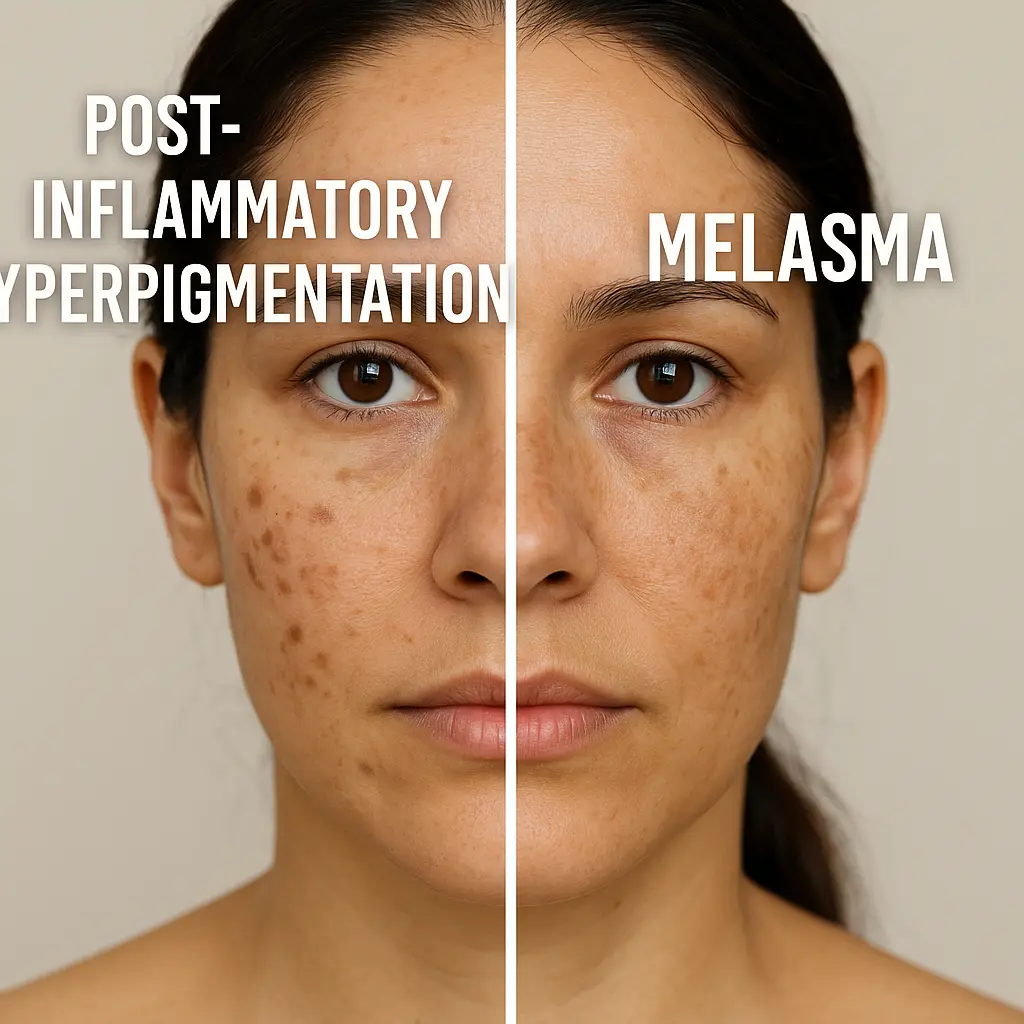
PIH:
- Appears exactly where inflammation occurred
- Is not symmetrical
- Has no hormonal trigger
- Responds well to treatment
- Eventually fades
Melasma:
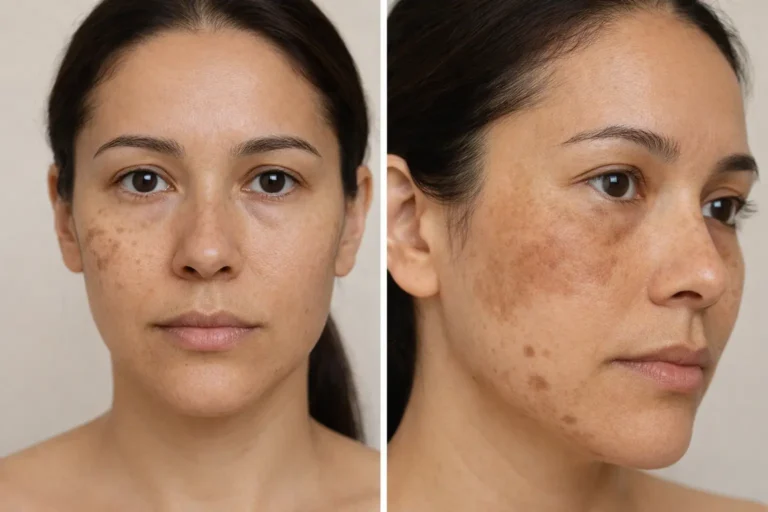
- Appears symmetrically
- Is hormone- and heat-sensitive
- Often recurs
- Requires long-term management
Understanding this difference prevents overtreatment and unnecessary frustration.
How Long Does Post-Inflammatory Hyperpigmentation Take to Fade?
This is one of the most searched questions related to PIH.
The answer depends on three factors:
- Depth of pigment
- Skin tone
- Sun exposure
On average:
- Mild epidermal PIH: 4–8 weeks
- Moderate PIH: 3–6 months
- Deep dermal PIH: 6–12 months or longer
With proper treatment and sun protection, Post-Inflammatory Hyperpigmentation fades significantly faster.
Without treatment, it can persist for years.
Why PIH Lasts Longer in Darker Skin Tones
People with brown and deeper skin tones often notice that PIH:
- Appears darker
- Covers a larger area
- Takes longer to fade
This happens because:
- Melanocytes are more active
- Inflammation triggers a stronger pigment response
- UV exposure worsens pigment retention
This does not mean PIH is untreatable in darker skin.
It simply means treatment must be gentle and consistent.
How to Treat Post-Inflammatory Hyperpigmentation Faster
The goal of PIH treatment is simple:
- Reduce inflammation
- Slow melanin production
- Speed up skin turnover
- Protect skin from UV
Below are evidence-based strategies that work.
Topical Ingredients That Actually Work for PIH
1. Azelaic Acid
Reduces inflammation and tyrosinase activity.
Safe for acne-prone and sensitive skin.
Effective for Post-Inflammatory Hyperpigmentation in darker skin tones.
2. Vitamin C
Brightens existing pigment and protects against UV-induced darkening.
Works best when used consistently with sunscreen.
3. Niacinamide
Reduces pigment transfer and strengthens the skin barrier.
Ideal for sensitive skin and long-term use.
4. Retinoids
Increase cell turnover and speed pigment removal.
Must be introduced slowly to avoid irritation-induced PIH.
5. Tranexamic Acid
Interrupts inflammation-induced melanogenesis.
Effective for stubborn PIH and post-acne pigmentation.
6. Alpha Arbutin & Kojic Acid
Tyrosinase inhibitors that help fade dark spots gradually.
Chemical Exfoliation for PIH
Gentle exfoliation accelerates pigment removal.
Best options:
- Mandelic acid
- Lactic acid
- Low-strength glycolic acid
Avoid aggressive peels if you are prone to PIH.
Over-exfoliation causes inflammation, which worsens pigmentation.
Can Chemical Peels Help PIH?
Yes, when done correctly.
Superficial peels using:
- Glycolic acid
- Lactic acid
- Salicylic acid
can help PIH fade faster.
However:
- Medium or deep peels increase PIH risk in darker skin
- Peels must be spaced properly
- Sun protection is mandatory
Laser Treatment for PIH: Is It Safe?
Lasers can help PIH, but they are not first-line treatment.
In darker skin tones:
- Incorrect laser settings can worsen pigmentation
- Heat can trigger rebound hyperpigmentation
Lasers should only be used:
- After inflammation is controlled
- By experienced professionals
- With strict post-procedure sun protection
Daily Routine to Fade PIH Faster
Morning
- Gentle cleanser
- Vitamin C or niacinamide
- Broad-spectrum sunscreen SPF 30–50
Evening
- Gentle cleanser
- Azelaic acid or tranexamic acid
- Retinoid (2–3 nights per week)
- Moisturizer
Consistency matters more than product strength.
What Makes PIH Worse (And Slows Healing)
Avoid these common mistakes:
- Picking acne
- Scrubbing dark spots
- Using too many actives at once
- Skipping sunscreen
- Treating PIH like melasma
- Frequent product switching
Inflammation delays healing.
Can PIH Turn Into Melasma?
No.
PIH does not turn into melasma.
However:
- Both can coexist
- Both worsen with UV exposure
- Treating one incorrectly can aggravate the other
This is why proper diagnosis matters.
When to See a Dermatologist for PIH
Seek professional help if:
- PIH lasts longer than one year
- Pigment appears gray or blue
- Pigmentation worsens despite treatment
- You have underlying skin conditions
Science-Backed Insights on PIH
Recent dermatology research shows:
- Inflammation severity predicts PIH duration
- UV exposure prolongs pigment retention
- Barrier repair accelerates pigment resolution
- Gentle treatment outperforms aggressive therapy
These findings guide modern PIH management.
Final Thoughts
Post-inflammatory hyperpigmentation is common, treatable, and temporary. Unlike melasma, PIH does not require lifelong management. With the right skincare, sun protection, and patience, PIH fades.
Treat inflammation first.
Protect your skin daily.
Be consistent.
That’s how you treat post-inflammatory hyperpigmentation faster.
To understand the basics of how skin color forms and why dark patches appear, start with our detailed guide on what is skin pigmentation.
References
- Taylor S.C. et al., Post-Inflammatory Hyperpigmentation in Skin of Color, Journal of Clinical and Aesthetic Dermatology, 2022–2023.
- Grimes P.E. et al., Management of PIH and Acne-Related Pigmentation, Dermatologic Clinics, 2021–2024.
- Draelos Z.D., Pigmentary Disorders and Treatment Strategies, Journal of Cosmetic Dermatology, 2022–2024.
FAQS
1. What is the main difference between PIH and melasma?
The main difference between PIH and melasma is the trigger. PIH (post-inflammatory hyperpigmentation) develops after inflammation like acne or injury, while melasma is driven by hormones, heat, and UV exposure and often appears symmetrically on the face.
2. How can I tell if my dark spots are PIH or melasma?
If dark spots appear exactly where acne or irritation occurred and fade over time, they are likely PIH. If the pigmentation forms symmetrical patches on the cheeks, upper lip, or forehead and worsens with heat or hormonal changes, it is more likely melasma.
3. Does post-inflammatory hyperpigmentation go away on its own?
Yes, PIH can fade on its own, especially superficial PIH. However, without proper treatment and sun protection, it may take months or even years to resolve. Using targeted hyperpigmentation treatments can significantly speed up fading.
4. Can PIH turn into melasma over time?
No, PIH does not turn into melasma. They are biologically different conditions. However, a person can have both at the same time, which is why correct diagnosis is important before starting treatment.
5. What is the fastest way to treat post-inflammatory hyperpigmentation?
The fastest way to treat PIH is by controlling inflammation, using ingredients like azelaic acid, niacinamide, retinoids, and vitamin C, and wearing broad-spectrum sunscreen daily. Consistency matters more than aggressive treatments.
Address: Block C, Punjab University Employees Housing Scheme Phase-II, Lahore, Pakistan
Contact Number: +923224563810