Why Pigmentation Looks Darker Before It Improves: The Biology Behind the “Getting Worse” Phase
Table of Contents
Introduction: “My Pigmentation Is Getting Darker—Should I Stop?”
This is one of the most common and most alarming moments in a pigmentation journey.
You start treatment with hope.
You follow instructions carefully.
And then, instead of fading, the pigmentation looks darker.
For many people, this is the point where panic sets in. Treatments are stopped. Products are abandoned. Trust is lost.
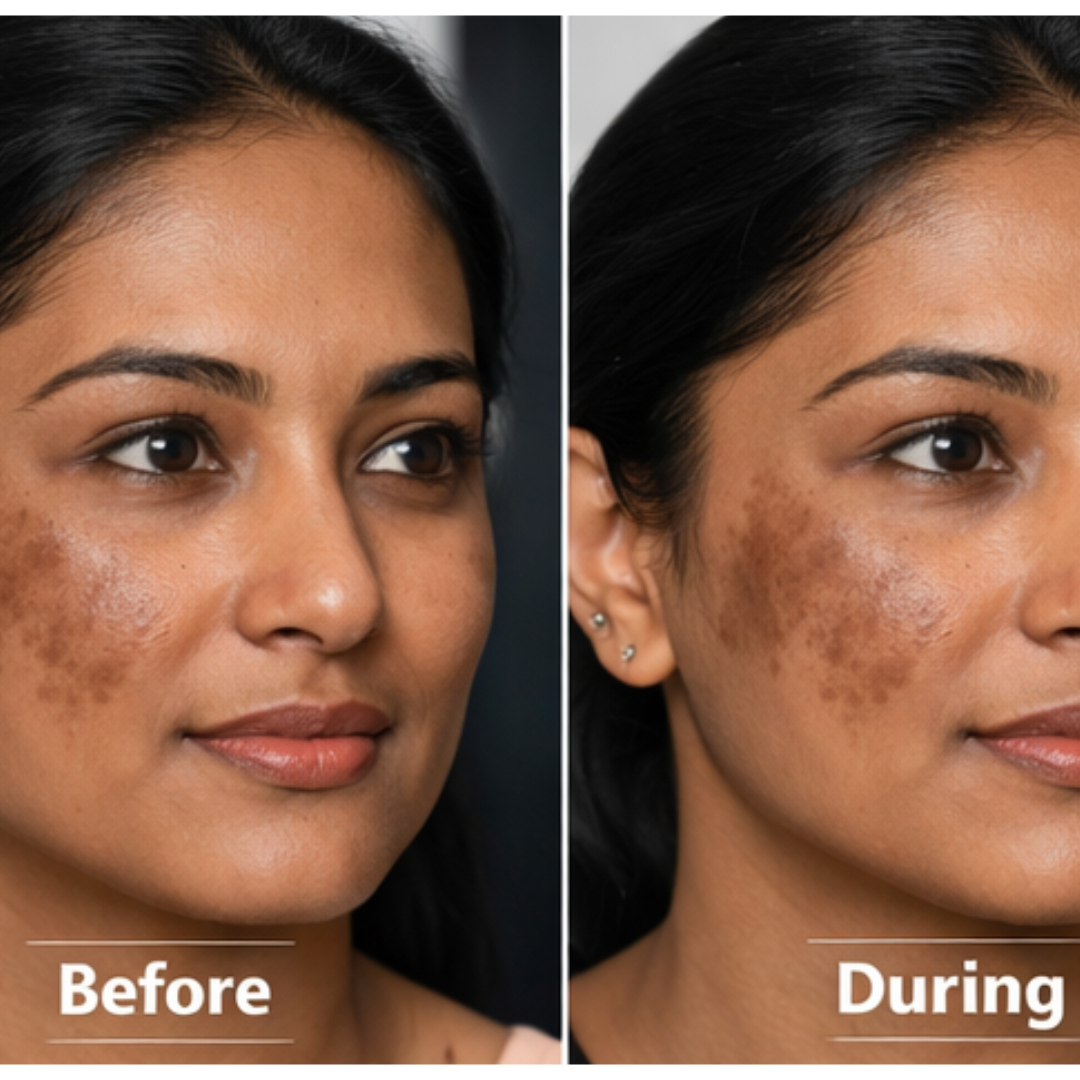
But in many cases, this “getting worse” phase is not failure.
It is biology in motion.
Learn why pigmentation treatments fail despite good products.
Pigmentation improvement is rarely linear—especially in melanin-rich skin. Understanding why pigmentation can look darker before it improves can prevent unnecessary setbacks and help patients stay consistent long enough to see real results.
Pigmentation Does Not Fade the Way We Expect
Most people imagine pigmentation fading like a stain slowly disappearing.
In reality, pigmentation behaves more like a dynamic biological process.
Melanin:
- Is produced in response to signals
- Moves through skin layers
- Changes appearance based on light, inflammation, and contrast
As treatment begins to work, what you see on the surface does not always reflect what is happening underneath.
Reason 1: Oxidation of Existing Pigment
One of the earliest reasons pigmentation may look darker is oxidation.
When treatments:
- Increase cell turnover
- Expose deeper pigment
- Shift melanin toward the surface
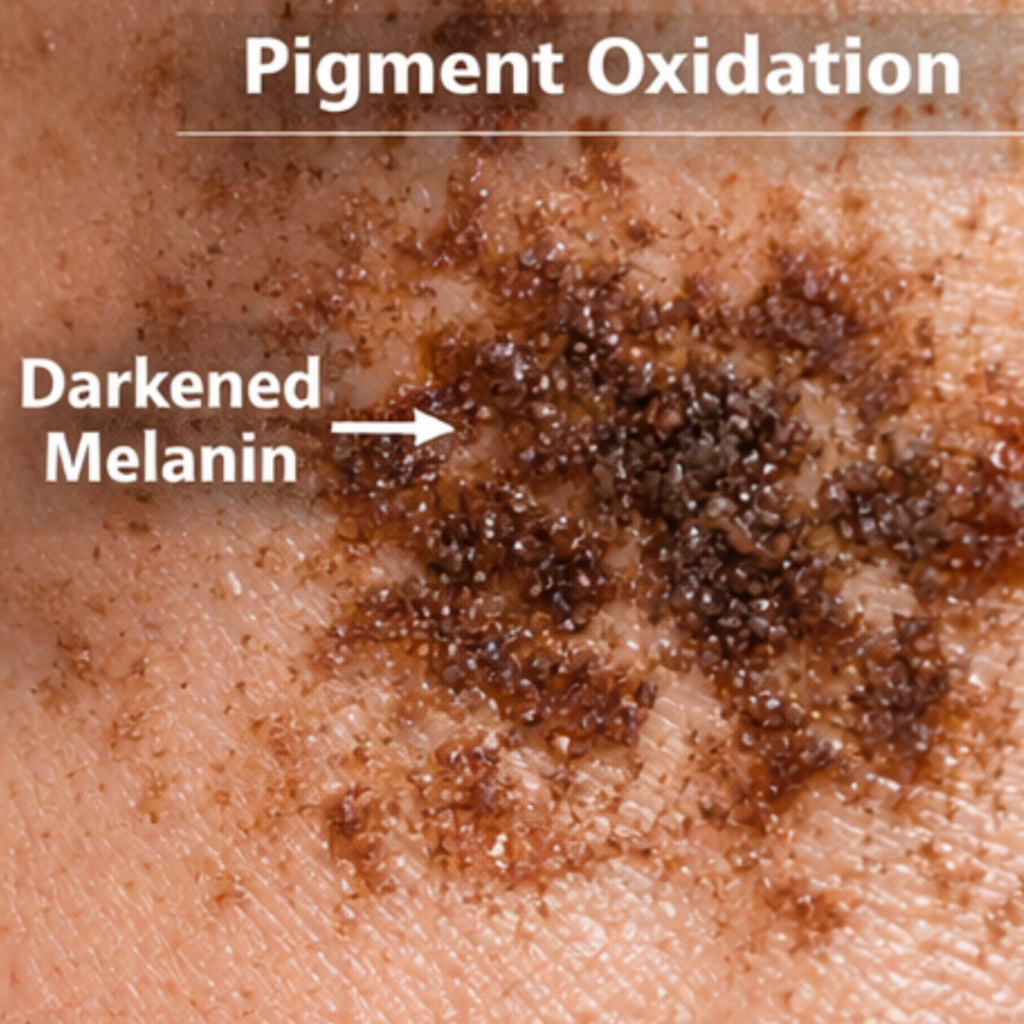
That pigment can temporarily appear darker or more defined, especially in brown skin.
This does not mean more pigment is being produced.
It means existing pigment is becoming more visible before it sheds.
Learn why pigmentation behaves differently in Indian and brown skin?
This is particularly noticeable in:
- Melasma
- Post-inflammatory hyperpigmentation in brown skin
- Areas with long-standing pigment
Reason 2: Increased Contrast as Surrounding Skin Improves
This is a visual illusion—but a powerful one.
As treatment begins:
- Surrounding skin brightens or evens out
- Pigmented areas remain temporarily unchanged
The result?
The contrast increases, making pigmentation appear sharper and darker, even if pigment levels haven’t increased.
Patients often interpret this as worsening, when in fact:
- Healthy skin is responding first
- Pigmented skin is slower to normalize
This contrast effect is extremely common and often misunderstood.
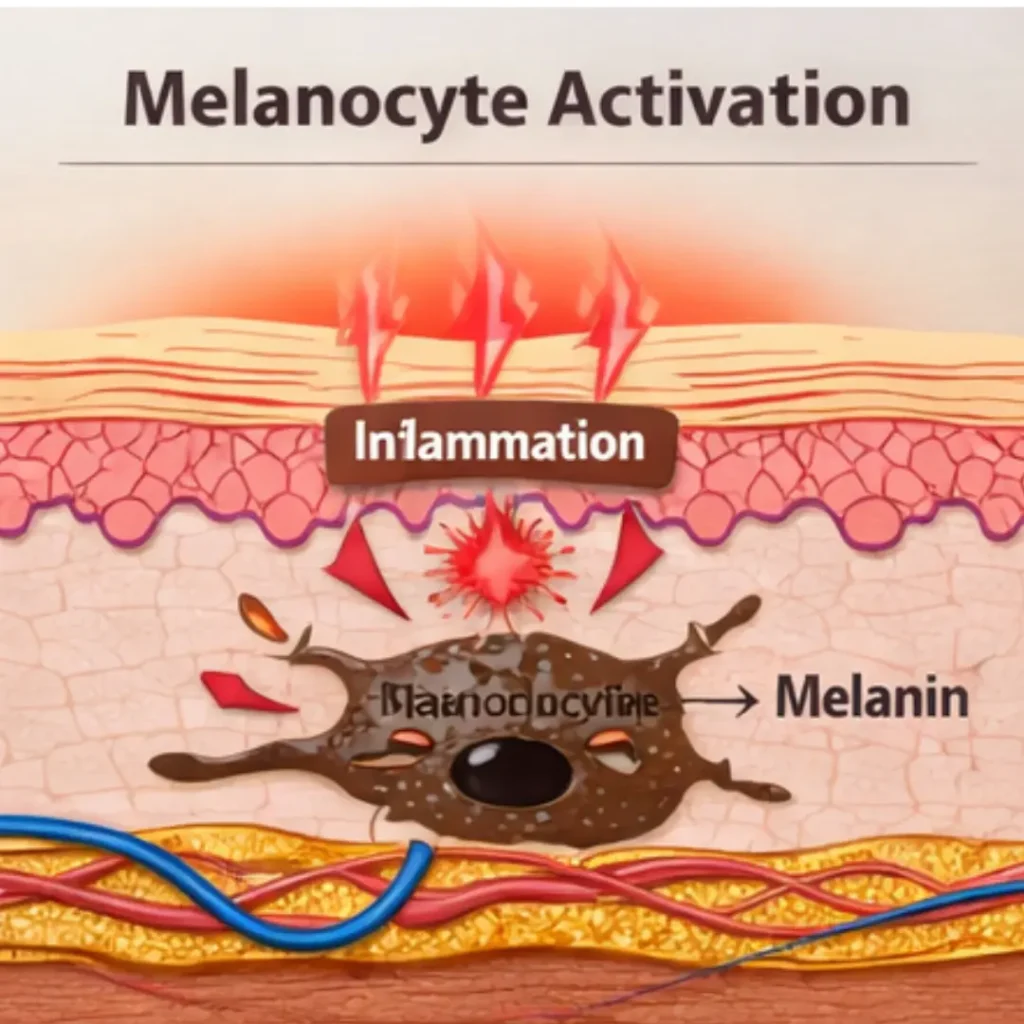
Reason 3: Inflammation-Induced Darkening
Even gentle treatments can cause microscopic inflammation.
In melanin-rich skin, inflammation:
- Sends signals to melanocytes
- Temporarily increases pigment activity
- Delays visible improvement
This does not always show up as redness or irritation.
Sometimes, the only visible sign is deepening pigmentation.
As Dr. Faiza Shams explains:
“In brown skin, inflammation doesn’t always look red. It often looks darker. This is why early treatment phases can be misleading.”
Once inflammation settles, pigmentation pathways quiet down—and improvement follows.
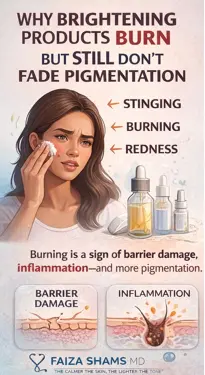
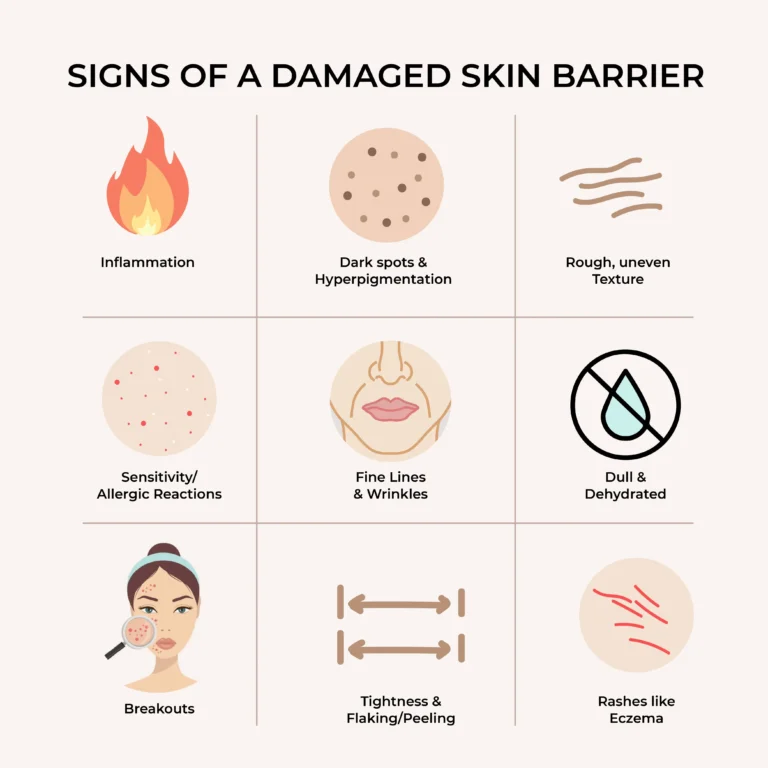
Reason 4: Dehydration and Barrier Disruption
During treatment phases, especially when:
- Actives are introduced
- Exfoliation increases
- Weather is dry
The skin barrier can become compromised.
A weakened barrier:
- Reflects light unevenly
- Makes pigment appear more pronounced
- Increases sensitivity to triggers
Dry, stressed skin often magnifies pigmentation visually, even when biologically things are improving.
Learn how visible light protection during pigmentation treatment affects.
This is why barrier repair is essential—not optional—during pigment treatment.
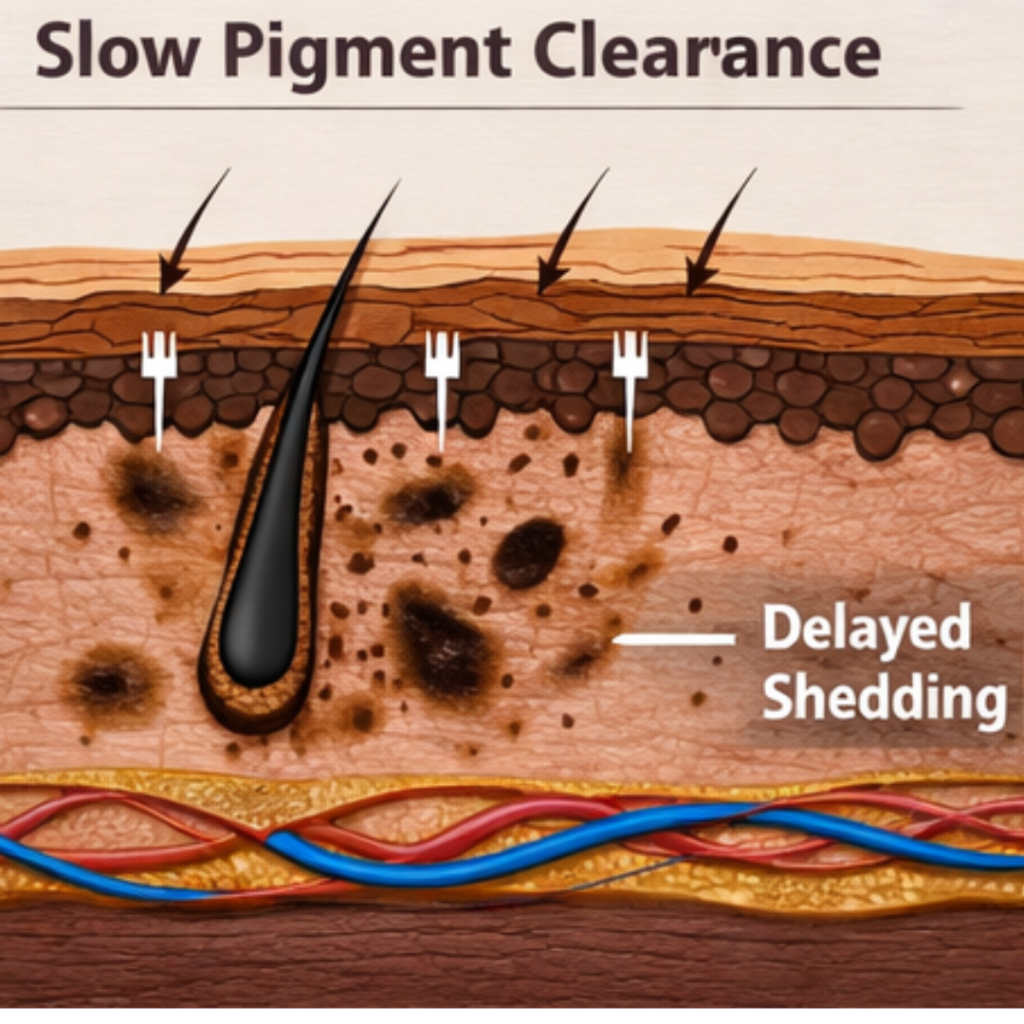
Reason 5: Delayed Melanin Clearance in Brown Skin
Brown skin produces melanin efficiently—but clears it slowly.
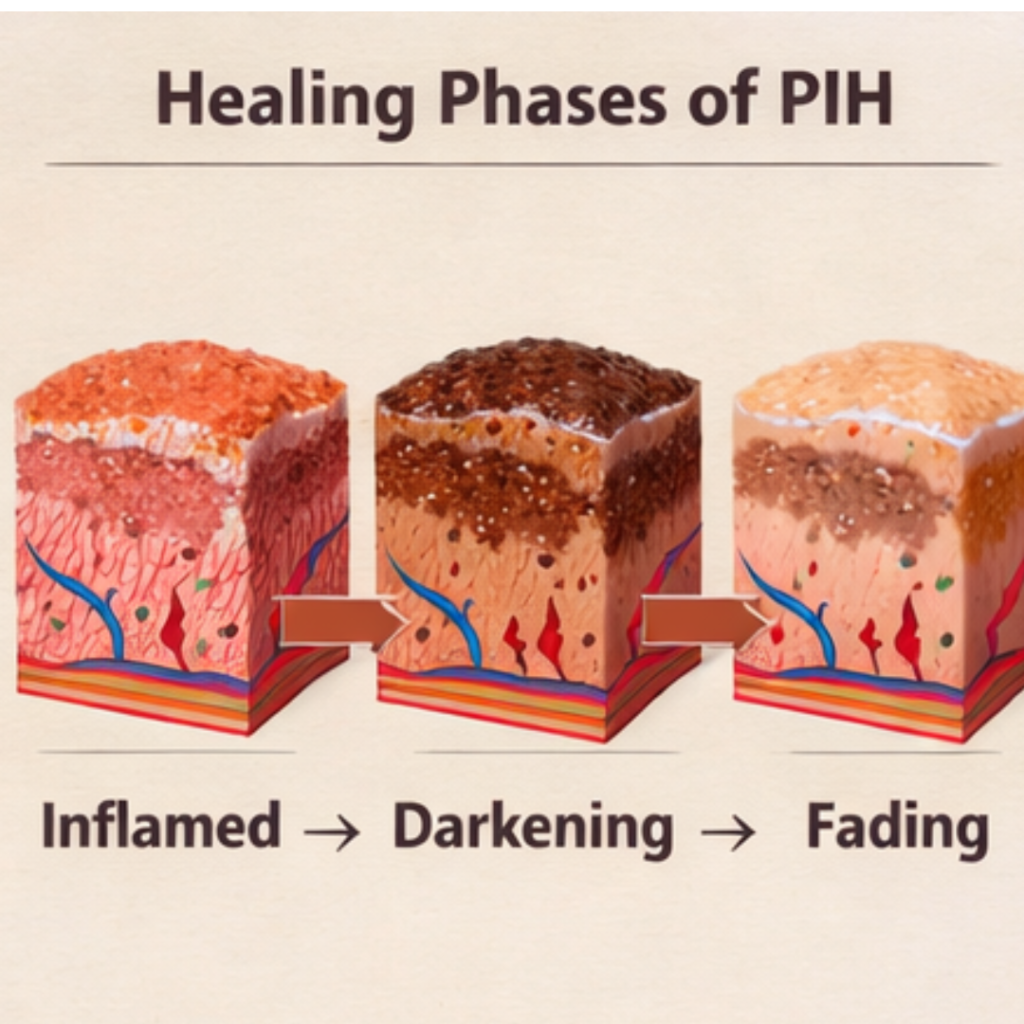
Once pigment is deposited:
- It takes longer to move upward and shed
- It resists rapid fading
- It responds cautiously to change
This is not a flaw.
It is a protective evolutionary feature.
The downside is that improvement requires time and consistency, not rapid escalation.
Why This Phase Leads to Treatment Failure
Many pigmentation treatments fail not because they don’t work—but because they are stopped too early.
Patients often:
- Increase strength prematurely
- Add multiple actives at once
- Abandon treatment during the “darkening phase”
This leads to:
- More inflammation
- Barrier damage
- True worsening of pigmentation
Which reinforces the belief that “nothing works.”
How to Tell the Difference Between Normal Darkening and True Worsening
Normal “Getting Worse” Phase
- No burning or severe irritation
- Pigmentation edges become clearer
- Surrounding skin looks healthier
- Texture improves before color
True Worsening
- Persistent irritation or stinging
- New pigment spreading beyond original area
- Patchy or blotchy darkening
- Skin feels fragile or reactive
Understanding this distinction is crucial.
What to Do During This Phase
Stay Consistent, Not Aggressive
Do not escalate treatments impulsively.
Consistency allows melanocyte signaling to settle.
Prioritize Barrier Repair
Hydration, ceramides, and gentle care reduce inflammatory signaling.
Protect From Light Triggers
Even during treatment, daily protection remains essential to prevent reactivation.
Learn from a complete guide how light-induced pigmentation triggers.
Give Skin Time
Pigmentation improvement often lags behind texture and tone improvements.
The Bigger Picture: Pigmentation Is a Process, Not a Switch
Pigmentation doesn’t fade overnight.
It responds gradually to:
- Reduced triggers
- Lower inflammation
- Stable routines
The “getting worse” phase is often a transition, not a destination.
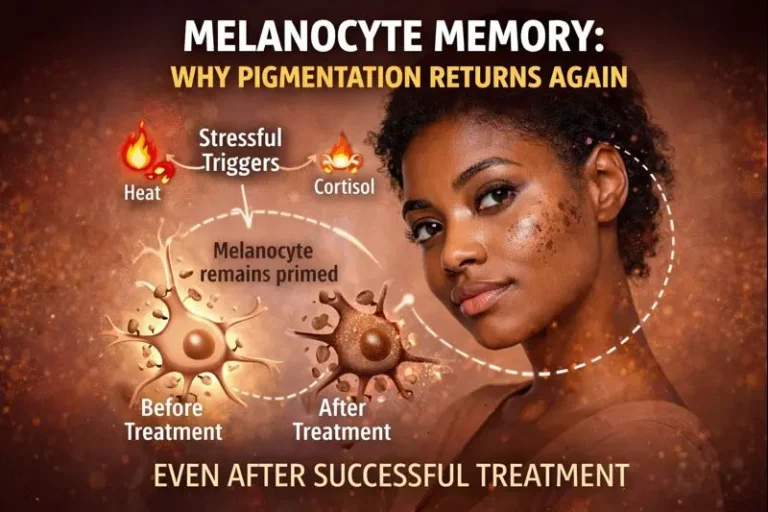
Learn why melasma keeps returning after initial improvement?
As Dr. Faiza Shams notes:
“Pigmentation improves when skin feels safe again. Rushing the process usually does the opposite.”
Final Takeaway: Don’t Judge Too Early
If your pigmentation looks darker early in treatment, it doesn’t automatically mean failure.
It often means:
- Old pigment is surfacing
- Skin is adjusting
- Biology is recalibrating
Understanding this phase protects patients from abandoning effective care too soon.
Pigmentation management is not about force.
It is about timing, patience, and respecting how melanin-rich skin heals.
FAQS
Is it normal for pigmentation to look darker after starting treatment?
Yes. In many cases, pigmentation can appear darker initially due to oxidation of existing pigment, increased contrast as surrounding skin improves, or mild inflammation. This phase is common in melanin-rich skin and does not automatically mean the treatment is failing.
How long does the “getting worse” phase usually last?
This phase is usually temporary and can last a few weeks, depending on skin type, treatment intensity, and barrier health. Texture and overall skin quality often improve first, while visible pigment takes longer to fade.
When should I stop treatment if pigmentation looks darker?
Treatment should only be reconsidered if there is persistent irritation, burning, spreading pigmentation, or increased sensitivity. If darkening occurs without these warning signs, it is often better to focus on barrier repair and consistency rather than stopping abruptly.
Address: Block C, Punjab University Employees Housing Scheme Phase-II, Lahore, Pakistan
Contact Number: +923224563810