Uneven Pigmentation Face Causes
Table of Contents
Introduction: The Most Common Pigmentation Frustration (Uneven Pigmentation Face Causes)
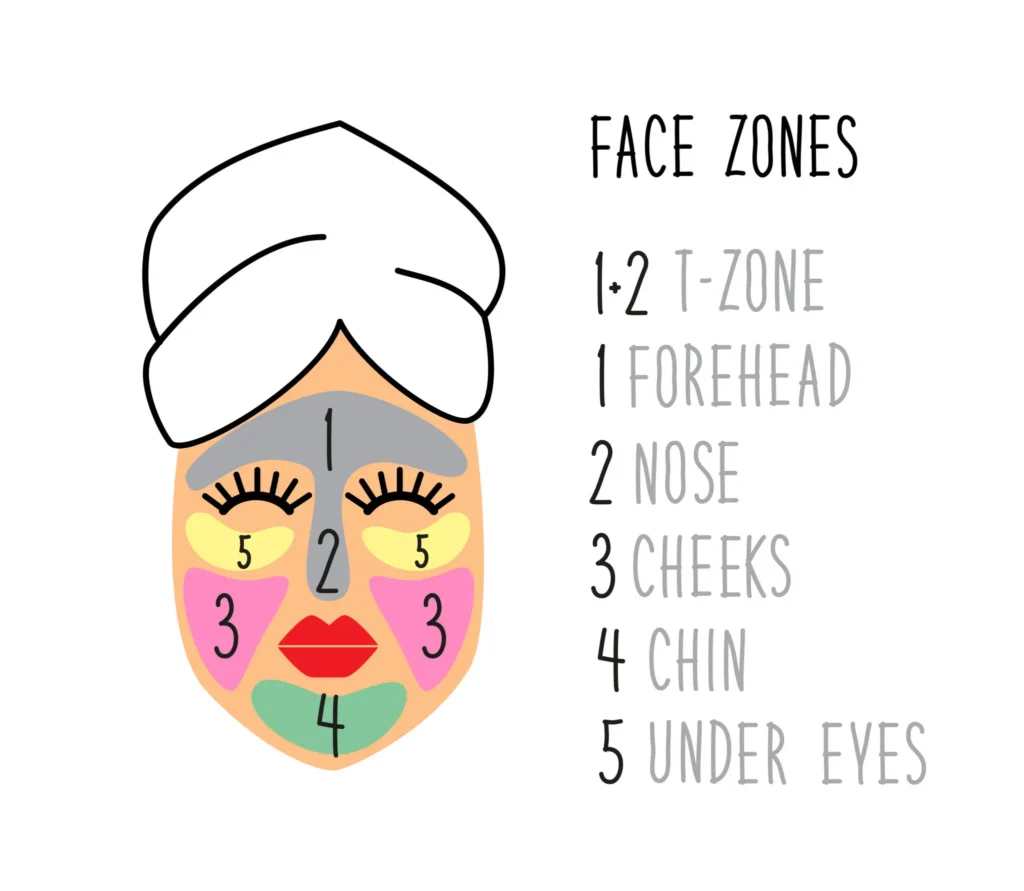
One of the most frequent concerns patients raise is this: pigmentation improves in some areas of the face but refuses to budge in others. Cheeks may lighten, while the upper lip, temples, or jawline remain stubbornly dark. This uneven response often leads to confusion, frustration, and overtreatment.
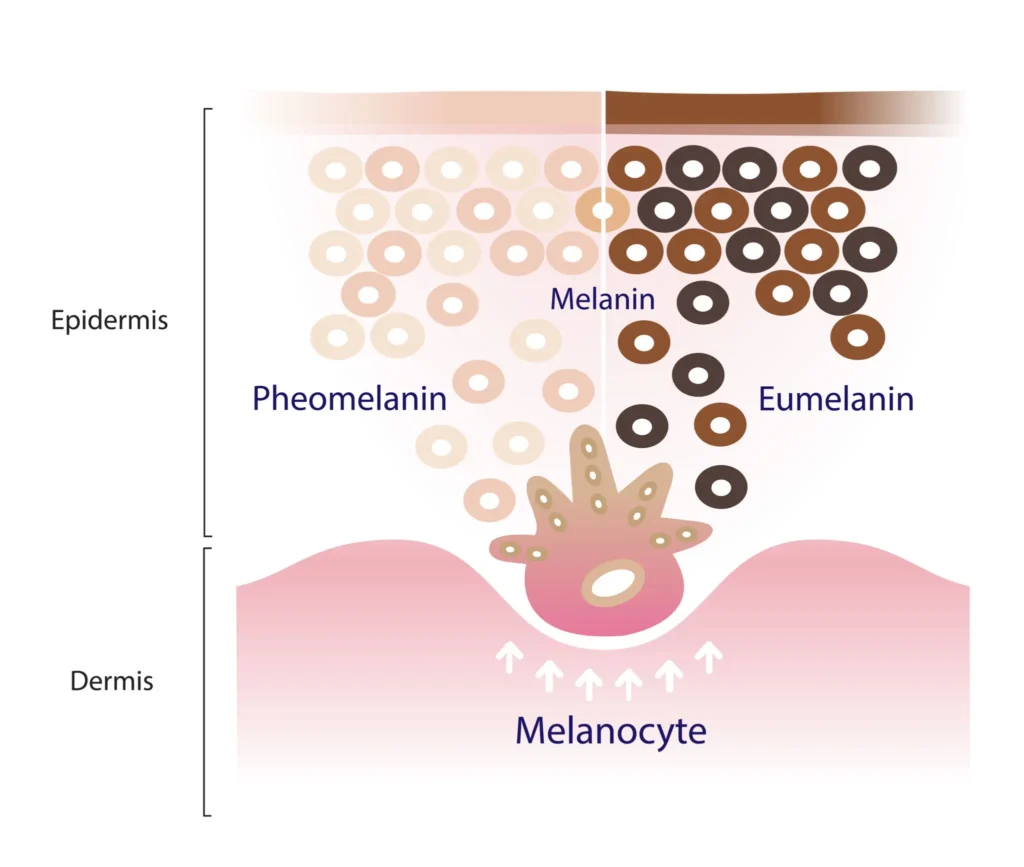
This pattern is not random. Facial skin is not biologically uniform, and pigmentation behaves differently depending on melanocyte density, vascular activity, hormonal influence, heat exposure, and barrier thickness in each area.
Understanding why pigmentation improves unevenly is essential for setting realistic expectations and choosing the right treatment strategy.
The Face Is Not One Uniform Skin Surface
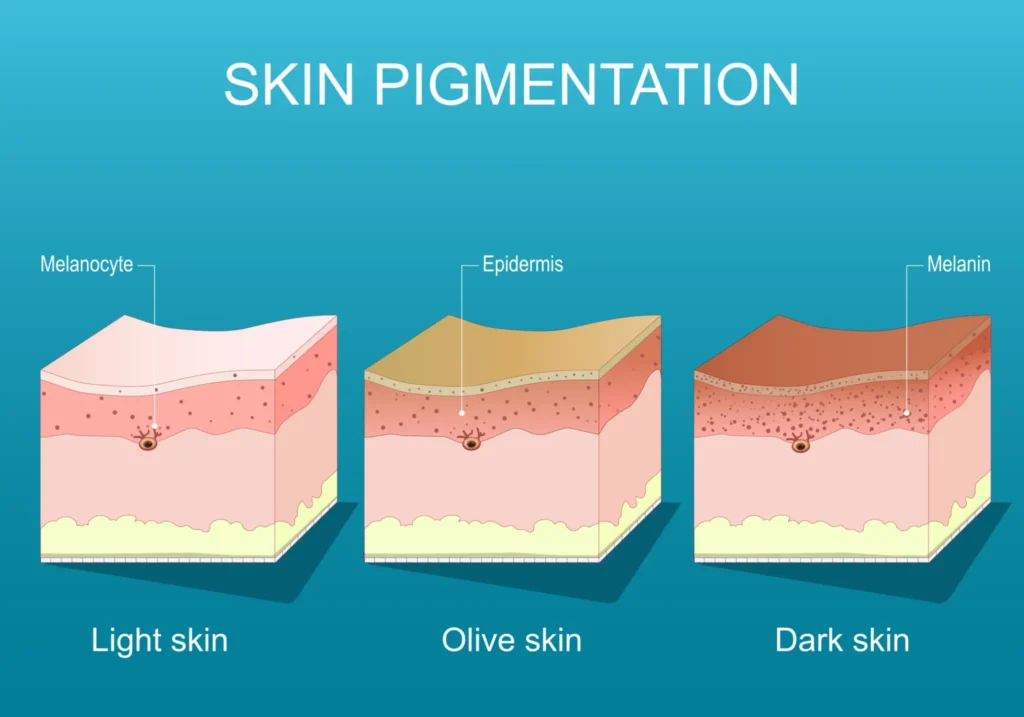
Although the face appears continuous, each region differs in:
- Skin thickness
- Blood vessel density
- Sebaceous activity
- Heat exposure
- Hormonal sensitivity
These differences directly affect how melanocytes behave and how pigment responds to treatment.
Why Cheeks Often Improve Faster
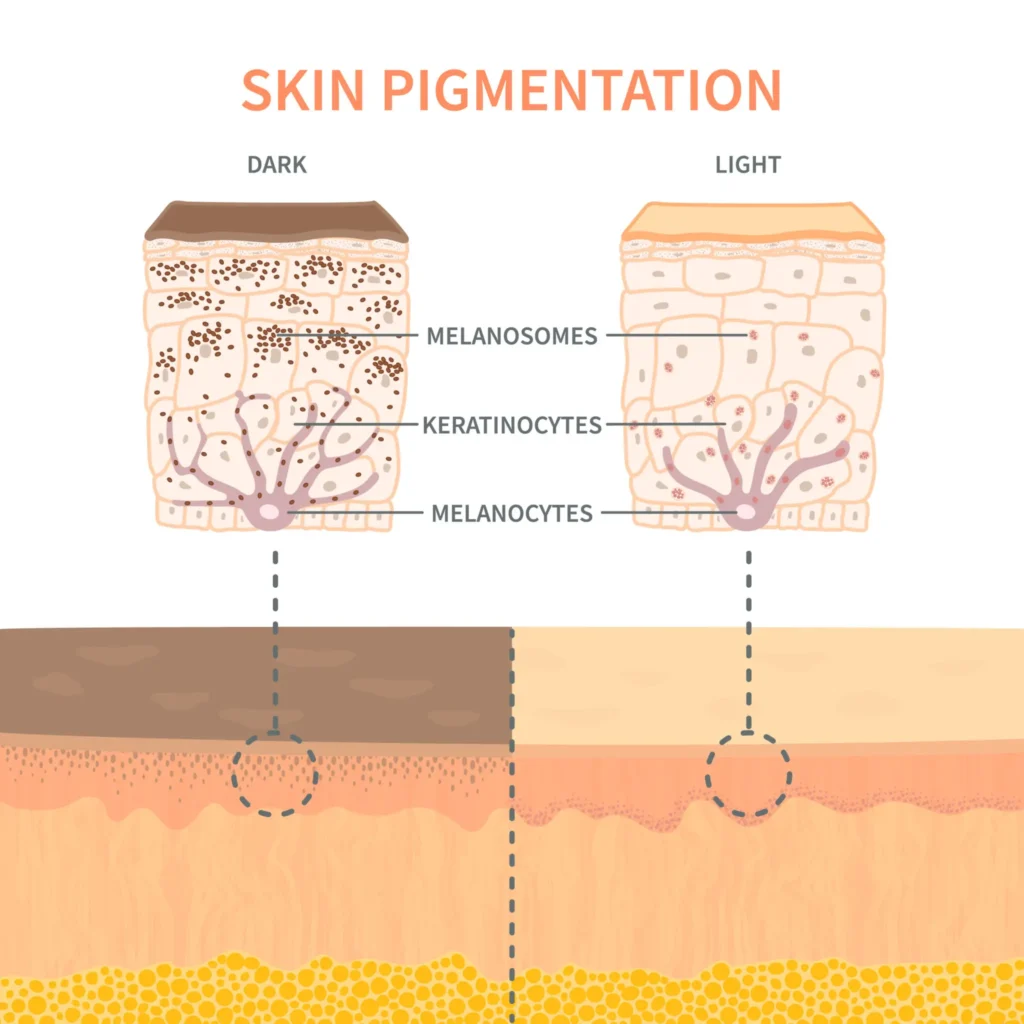
The cheeks typically respond best to pigmentation treatment because they:
- Have relatively thicker skin
- Experience less friction
- Are less hormonally reactive
- Have more even blood flow
As a result, inflammation resolves faster and pigment clearance is more predictable.
Why Upper-Lip Pigmentation Is So Stubborn
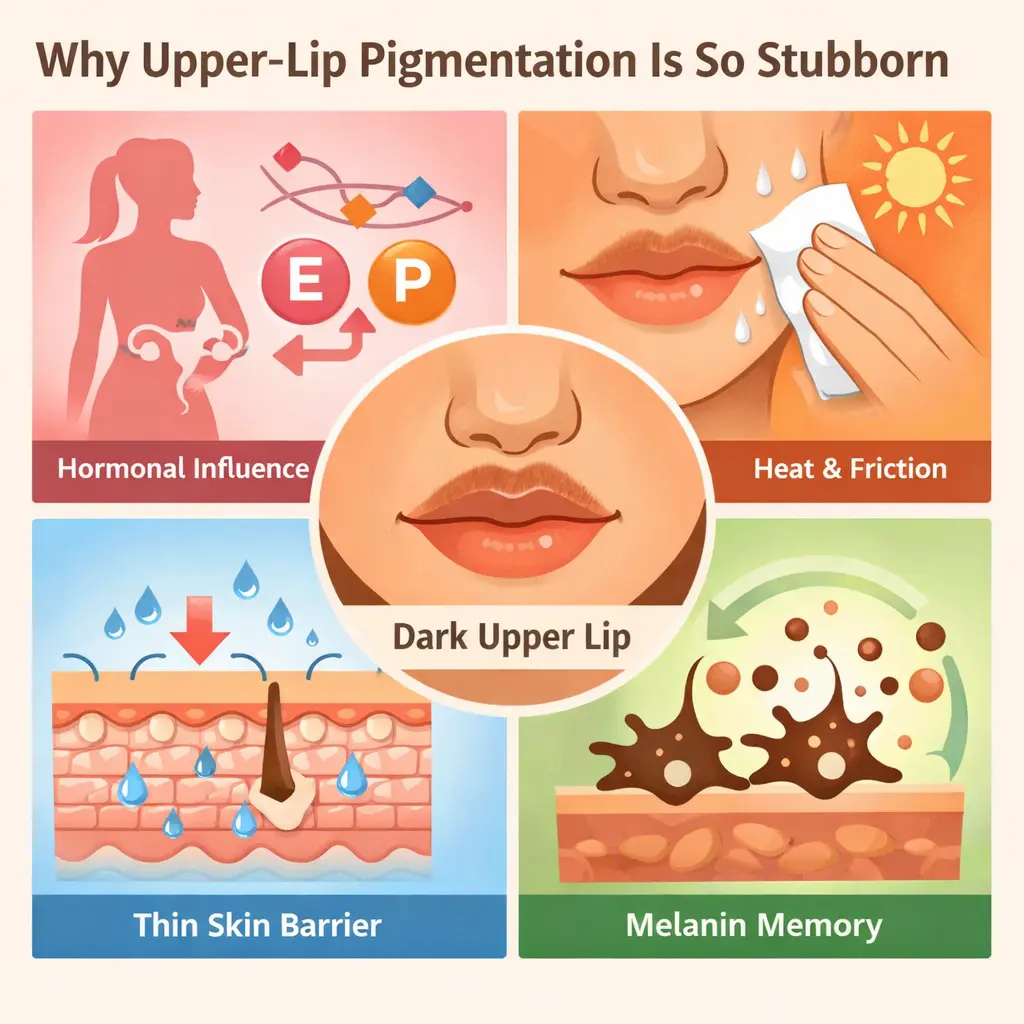
The upper lip is one of the hardest areas to treat due to multiple overlapping factors:
- High vascularity and heat
- Frequent friction from hair removal
- Strong hormonal sensitivity
- Thin skin barrier
A 2024 review in Journal of Cosmetic Dermatology highlighted that upper-lip melanocytes show heightened responsiveness to both hormonal and inflammatory signals.
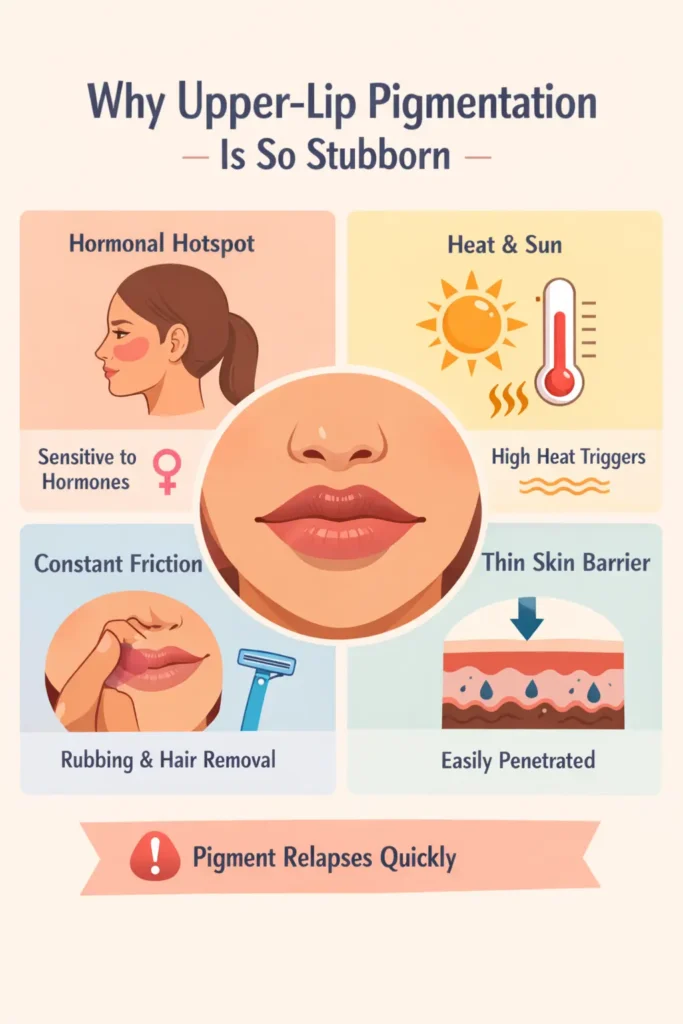
Dr. Faiza Shams explains: “Upper-lip pigmentation is rarely just melanin. It’s a combination of heat, hormones, and repeated micro-inflammation.”
Temples and Forehead: The Heat and Sun Zones
The temples and forehead are exposed to:
- Continuous sun exposure
- Higher heat accumulation
- Thinner skin in certain areas
This leads to persistent photodamage, which keeps melanocytes activated even during treatment.
Hormonal Mapping of the Face
Certain facial areas are more sensitive to hormonal fluctuations. The upper lip, jawline, and chin often reflect estrogen and progesterone-driven pigmentation patterns. Understanding what breakouts and pigmentation in specific areas mean can help refine your treatment approach—see this acne face mapping guide.
A 2023 endocrinology-dermatology review confirmed that facial pigmentation distribution often mirrors underlying hormonal sensitivity rather than overall melanin levels.
Friction and Daily Habits Matter More Than You Think
Repeated friction triggers low-grade inflammation that sustains pigmentation. Common triggers include:
- Threading and waxing
- Mask use
- Resting the face on hands
- Aggressive cleansing
Areas exposed to frequent friction improve more slowly.
Skin Barrier Thickness Influences Pigment Clearance
Barrier thickness varies across the face. Areas with a thinner or compromised barrier are:
- More sensitive
- More inflamed
- Slower to recover
This directly impacts pigment resolution.
Why Treating the Whole Face the Same Way Fails
Using identical treatments across all facial zones ignores biological differences. What works for the cheeks may irritate the upper lip or temples.
Uneven pigmentation requires area-specific patience, not stronger products.
How Dermatologists Approach Uneven Facial Pigmentation
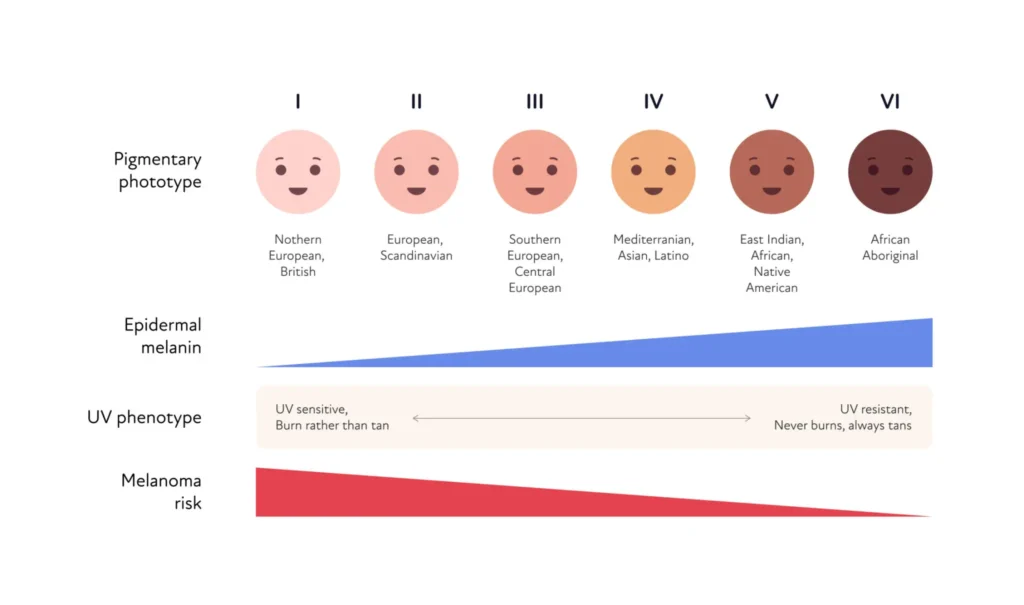
A successful approach includes:
- Protecting heat- and sun-prone zones aggressively
- Minimizing friction in sensitive areas
- Supporting barrier repair
- Regulating hormones when necessary
- Adjusting expectations for stubborn zones
Dr. Faiza Shams notes: “The goal is not uniform aggression, but intelligent adjustment based on facial biology.”
Addressing the root cause along with targeted products is key. Explore serums for uneven skin tone and pigmentation.
Final Thoughts: Uneven Improvement Is Biological, Not Failure
Pigmentation does not improve evenly because facial skin is not uniform. Recognizing this prevents frustration, overtreatment, and long-term damage.
When treatment respects facial differences, outcomes become safer, steadier, and more predictable.
FAQ
Why does my upper lip stay darker than my cheeks?
Because it is more hormonally sensitive, heat-prone, and frequently irritated.
Should I use stronger products on stubborn areas?
No. Stronger products often worsen inflammation and delay improvement.
Can uneven pigmentation eventually improve?
Yes. With time, protection, and barrier support, improvement often continues gradually.
Address: Block C, Punjab University Employees Housing Scheme Phase-II, Lahore, Pakistan
Contact Number: +923224563810