Acne Face Map: What Your Breakouts Are Really Telling You (And What Actually Works)
What Is Acne Face Mapping?
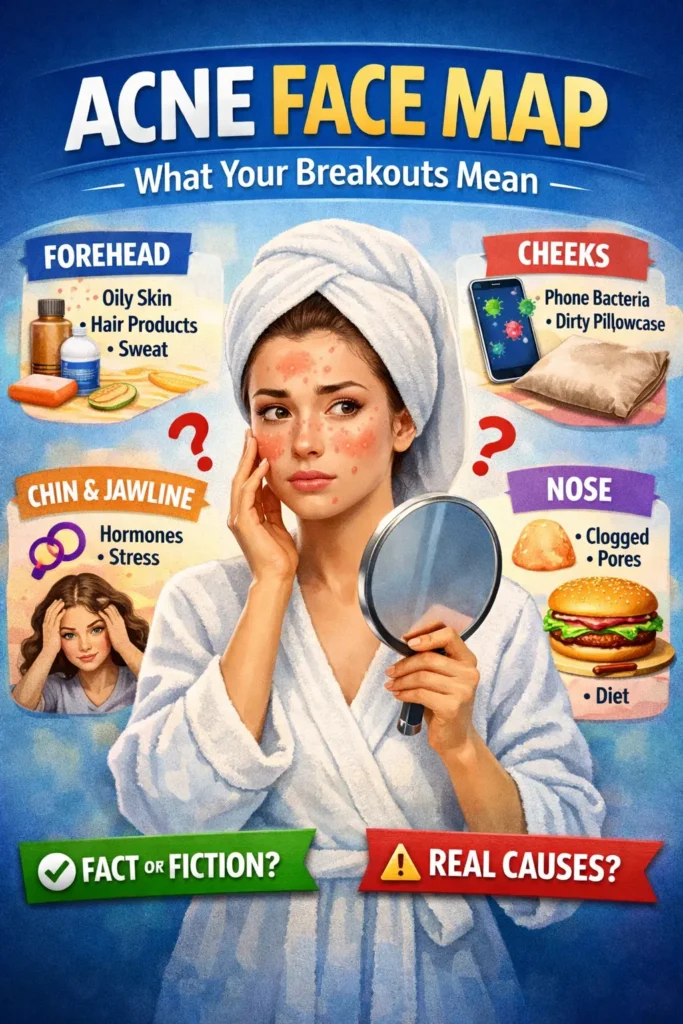
The idea behind acne face maps
What if your breakouts could actually tell you what’s wrong inside your body? That’s the promise behind the popular acne face map—and it’s exactly why so many people search for answers when acne keeps coming back in the same spots.
The concept suggests that different areas of your face are linked to internal issues. For example, forehead acne is often blamed on digestion, cheek breakouts on lungs, and chin acne on hormones. It feels logical. It feels like a shortcut. And most importantly—it feels like control.
But here’s the uncomfortable truth: this idea oversimplifies a complex skin condition. It gives you explanations that sound convincing—but don’t actually solve the problem.
If you’ve been wondering “what does acne location mean?” or “why do I get acne in the same place?”, you’re asking the right question—but you’ve likely been given the wrong answers.
Is acne face mapping scientifically accurate?
Let’s address this clearly—is acne face mapping real?
No, not in the way it’s commonly presented.
There is no scientific evidence linking specific areas of your face to internal organ dysfunction. Modern dermatology shows that acne is caused by a combination of oil production, clogged pores, bacteria, inflammation, and hormones.
Yes, patterns exist—but they are driven by skin behavior, not organ signals.
For example:
- Chin breakouts are often linked to hormonal acne chin, not “reproductive organ issues”
- Cheek acne is commonly caused by bacterial acne from phones or pillowcases—not lungs
- Forehead acne is usually due to oil, sweat, or hair products—not digestion
As Dr. Faiza Shams explains, “Patients often delay effective treatment because they rely on face mapping myths instead of understanding real triggers.”
Bottom line: acne face mapping may sound helpful—but relying on it can keep you stuck.
Acne Face Map Explained (By Area)
If you’re trying to understand what causes acne in different areas, this is where things finally become clear. Your acne does follow patterns—but those patterns are linked to oil, hormones, bacteria, and lifestyle—not a map of your organs.
While acne location can indicate underlying causes, using targeted treatments is essential. Explore acne treatment serums for different skin types to address breakouts effectively.
Forehead Acne – Causes and Triggers
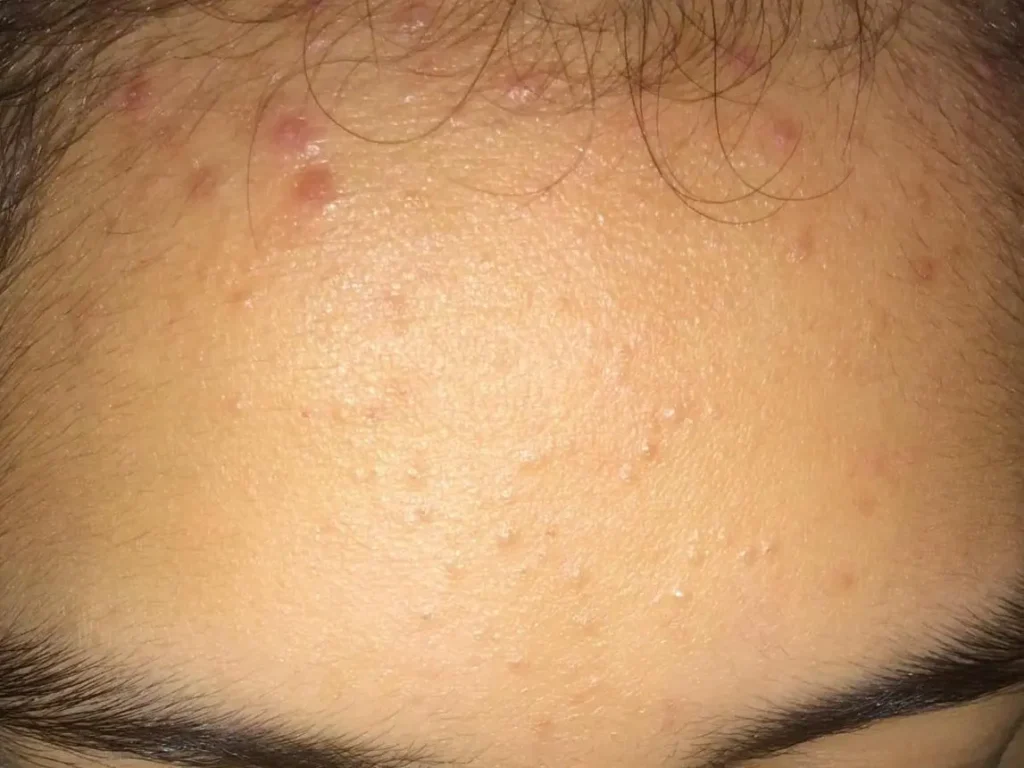
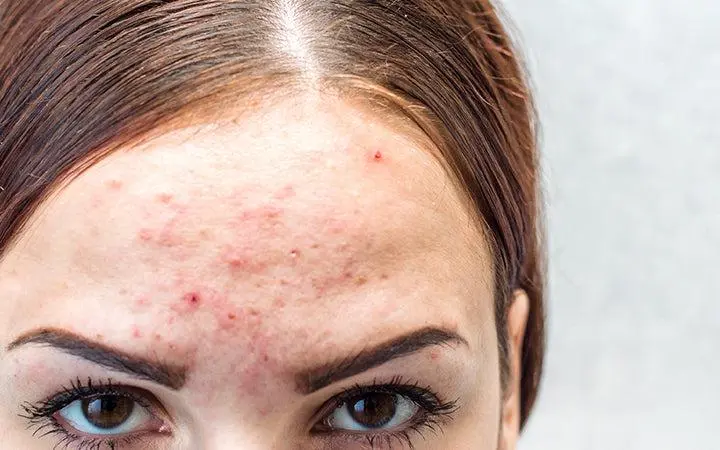
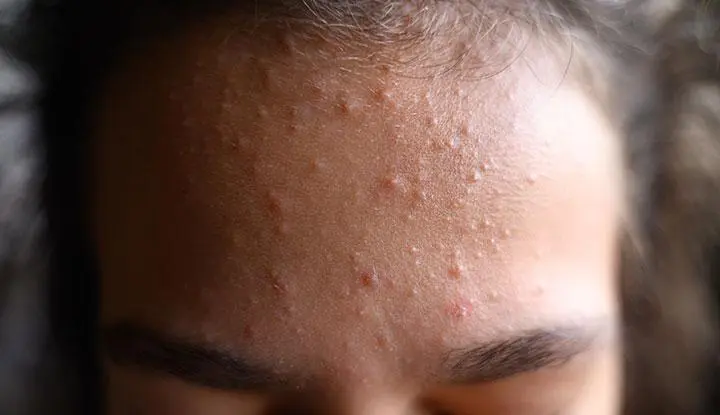
When it comes to forehead acne causes, the answer is usually external.
This area produces more oil, making it prone to clogged pores. But the biggest triggers are hair products, oils, and conditioners transferring onto your skin. Add sweat buildup, especially after workouts or under caps, and breakouts become almost inevitable.
What your breakouts are telling you: your skin is reacting to oil and buildup—not your gut.
Learn more on best ingredients for acne for face.
Acne on Cheeks – What It Means
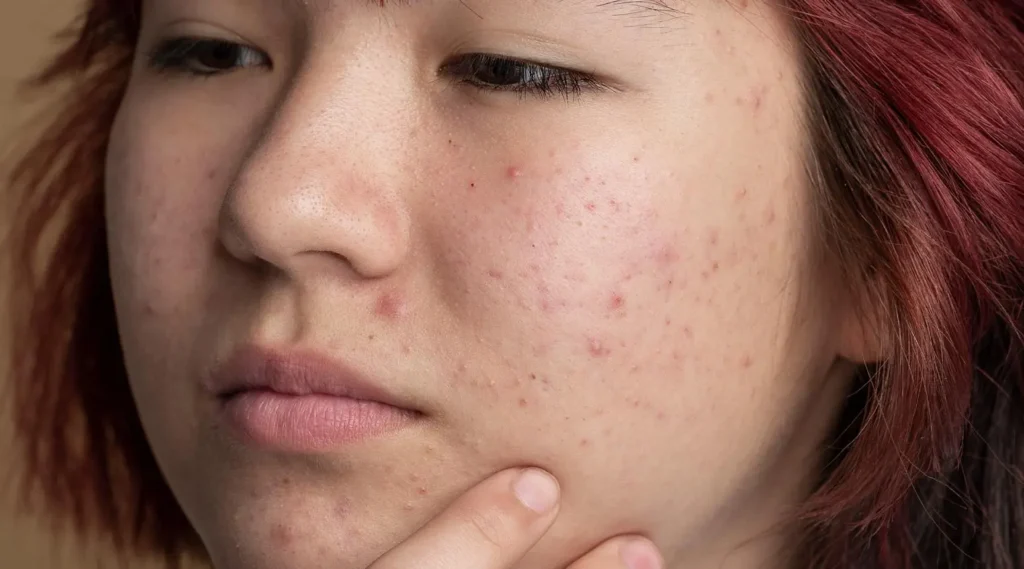
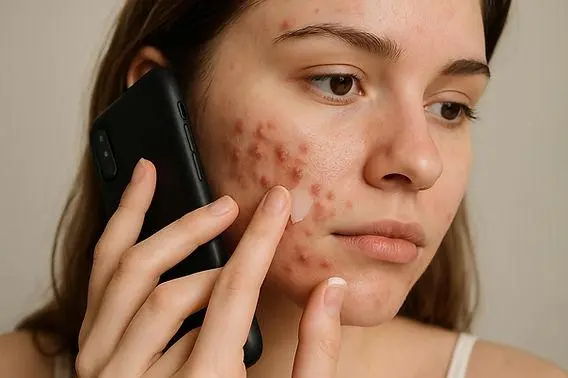
If you’re struggling with acne on cheeks, the most common reason is bacterial acne caused by contact.
Your phone, pillowcases, makeup brushes, and even your hands transfer bacteria and oil throughout the day. Combined with environmental exposure, this leads to clogged pores and inflammation.
What this means: cheek acne is often a hygiene issue—not an internal health signal.
Acne on Chin and Jawline – Hormonal Link
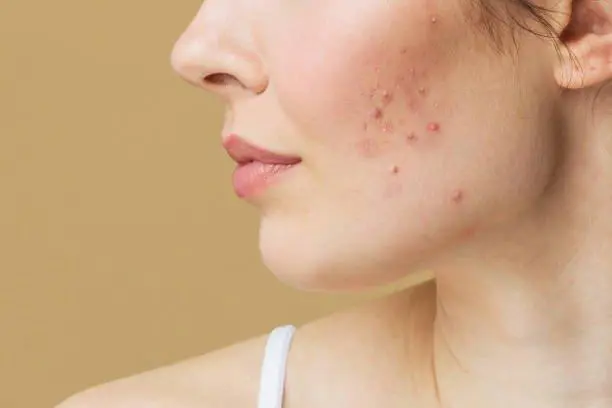
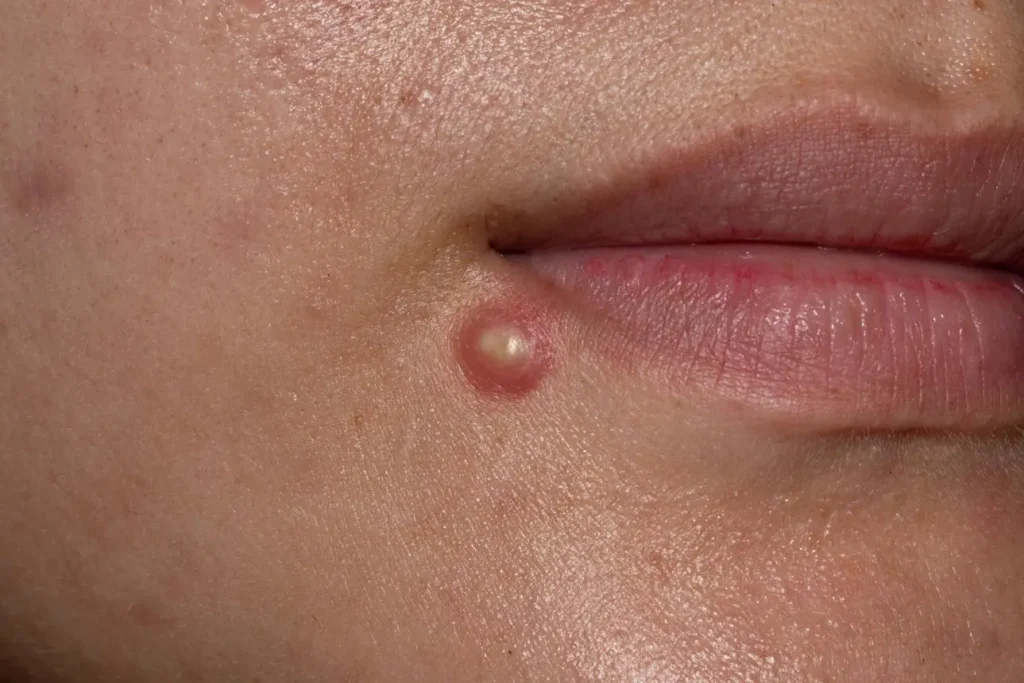
This is where acne patterns actually have scientific backing.
Acne on chin and jawline is strongly linked to hormones. Fluctuations during your menstrual cycle, increased androgen levels, or stress can trigger excess oil production—leading to hormonal acne chin.
This is also why many people experience adult acne causes, especially acne in their 20s and 30s.
What your breakouts are telling you: your skin is responding to hormones—not an “organ imbalance.”
Nose Acne – Oil and Pores
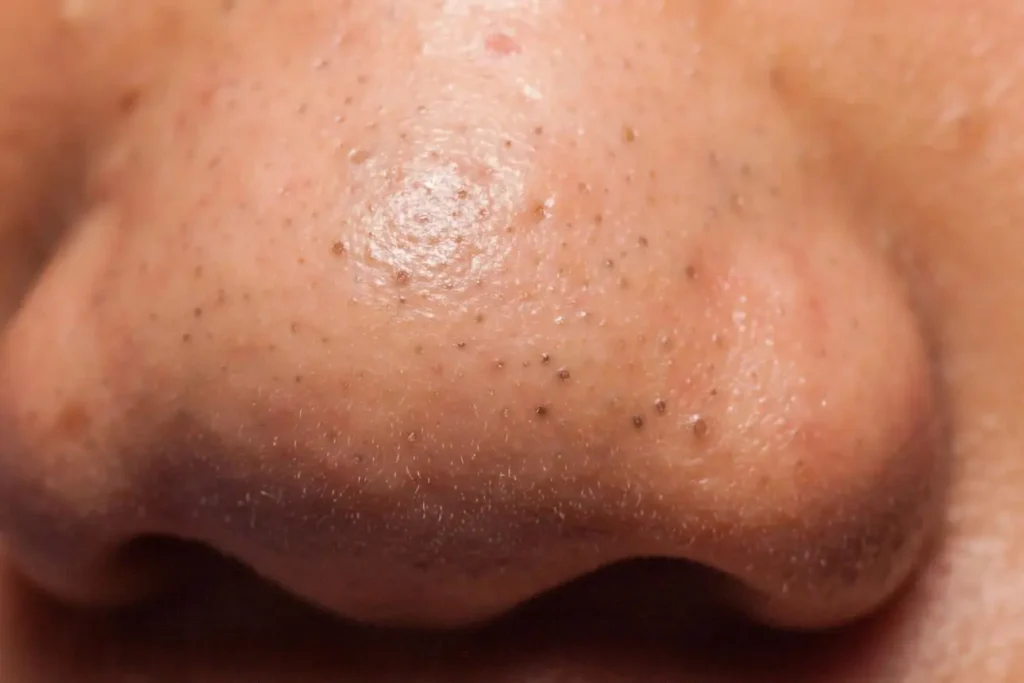
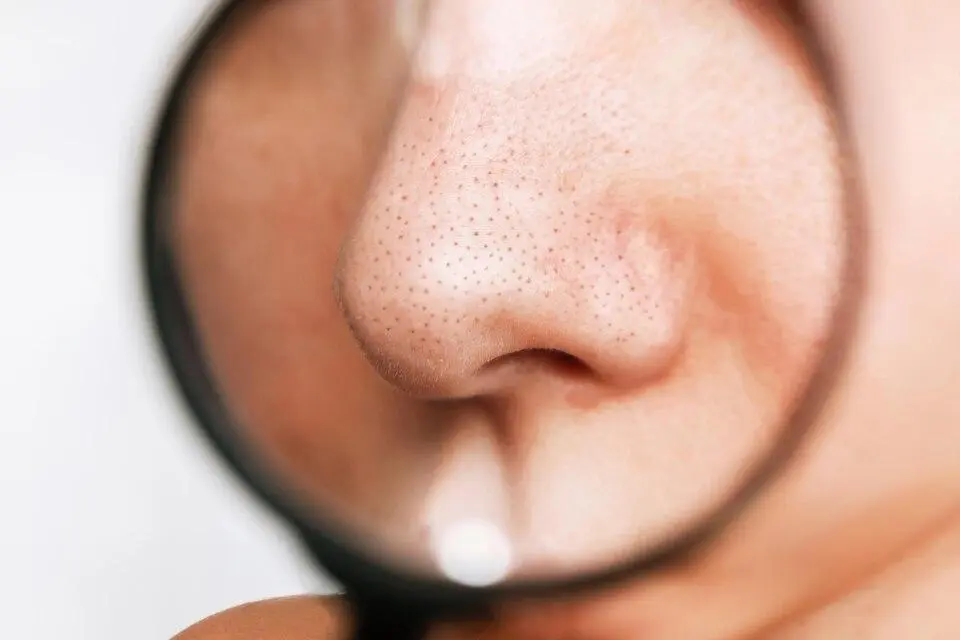
The nose is part of the T-zone, where sebum production is naturally high. That’s why clogged pores, blackheads, and breakouts are common here.
Despite popular claims, this has nothing to do with heart health.
What this means: this is purely an oil-control issue.
Learn how to treat blackheads on nose.
Acne Around Mouth – Skincare & Diet Triggers
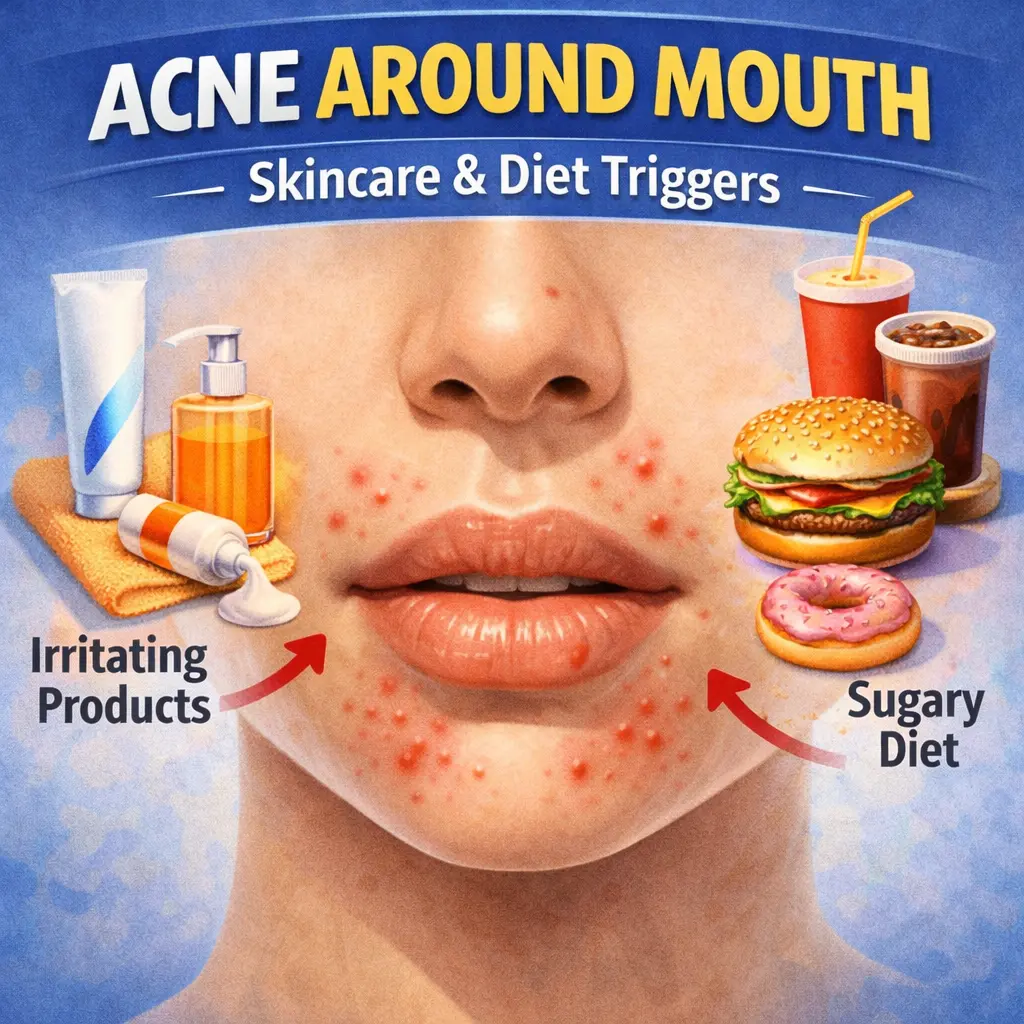
Breakouts around the mouth are often triggered by product irritation and occlusion.
Heavy skincare, pore-clogging ingredients, and even toothpaste can irritate this sensitive area. Using the wrong products—or not knowing acne ingredients to avoid—can keep this acne recurring.
What this means: your routine—not your diet—is usually the cause.
While acne face mapping can offer basic clues, dermatology research shows that breakouts are primarily driven by oil production, clogged pores, bacteria, and hormones—not internal organ issues, as also explained by the American Academy of Dermatology.
Is Acne Face Mapping Real or a Myth?
If you’ve ever searched “is acne face mapping real?”, you’re not alone. The idea that your breakouts follow a pattern—and reveal internal issues—sounds convincing. But here’s the truth: acne face mapping sits somewhere between partially useful and largely misunderstood.
Let’s separate fact from fiction.
What dermatology actually says
Modern dermatology does not support acne face mapping as a diagnostic tool.
There is no scientific evidence proving that acne in specific areas is directly linked to internal organs. Instead, research shows that acne is driven by a combination of excess oil (sebum), clogged pores, bacterial acne, inflammation, and hormones.
When people ask “what causes acne in different areas?”, the answer lies in skin biology—not organ mapping. For example:
- Forehead acne causes often include oil production, sweat, and hair products
- Acne on cheeks causes are usually linked to bacteria and external contact
- Hormonal acne chin is influenced by androgen activity and stress
So while patterns exist, they are explained by how your skin behaves, not what your organs are “signaling.”
Where face mapping is helpful
Here’s where the idea of an acne face map can still offer some value.
It helps people notice patterns—like why do I get acne in the same place? And that awareness can lead to identifying real triggers. For example:
- Repeated cheek acne → possible bacterial acne from phone or pillowcase
- Jawline breakouts → likely hormonal acne chin pattern
- Forehead acne → product buildup or sweat
In this sense, face mapping works as a starting point for observation, not a diagnosis.
It encourages you to ask the right questions—even if it doesn’t provide the right answers.
Where it becomes misleading
The problem starts when face mapping is treated as medical truth instead of a general guide.
Believing that your acne reflects internal organ problems can lead to:
- Ignoring actual triggers like pore-clogging or acne ingredients to avoid
- Following unnecessary diets or detox routines
- Delaying effective treatment
Search queries like “what your breakouts are telling you” or “acne on jawline meaning” often push oversimplified explanations that sound helpful—but aren’t scientifically accurate.
The reality: acne is a skin condition influenced by oil, bacteria, hormones, and lifestyle—not a map of internal health.
Why You Keep Getting Acne in the Same Area
If you keep asking “why do I get acne in the same place?”, you’re not imagining it. Acne often shows up in predictable patterns—but not because of an acne face map. It’s usually because the same triggers keep affecting the same skin zones repeatedly.
Understanding this is the turning point. Because once you identify the pattern, you can finally break it.
Repeated Triggers
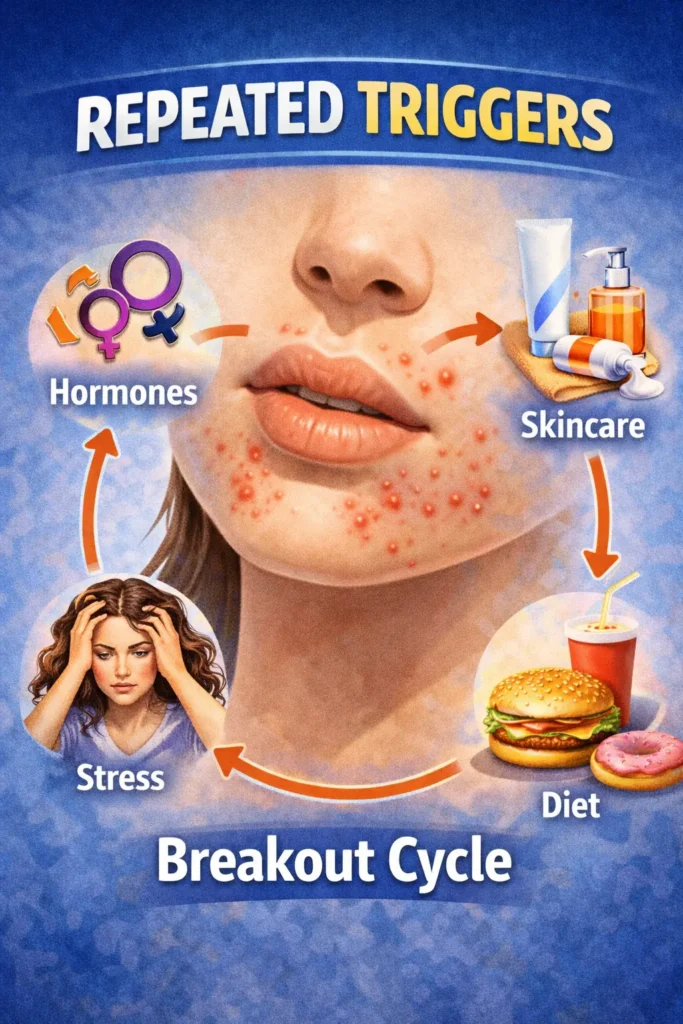
One of the biggest reasons acne keeps coming back in the same area is repeated exposure to the same trigger.
For example:
- Consistently touching your cheeks → bacterial acne
- Hair products transferring to your forehead → clogged pores
- Resting your chin on your hand → recurring chin breakouts
Your skin has “habit zones.” If a pore gets clogged once and the trigger continues, it becomes a cycle.
What this means: your acne isn’t random—it’s repeating a pattern you haven’t interrupted yet.
Hormonal Cycles
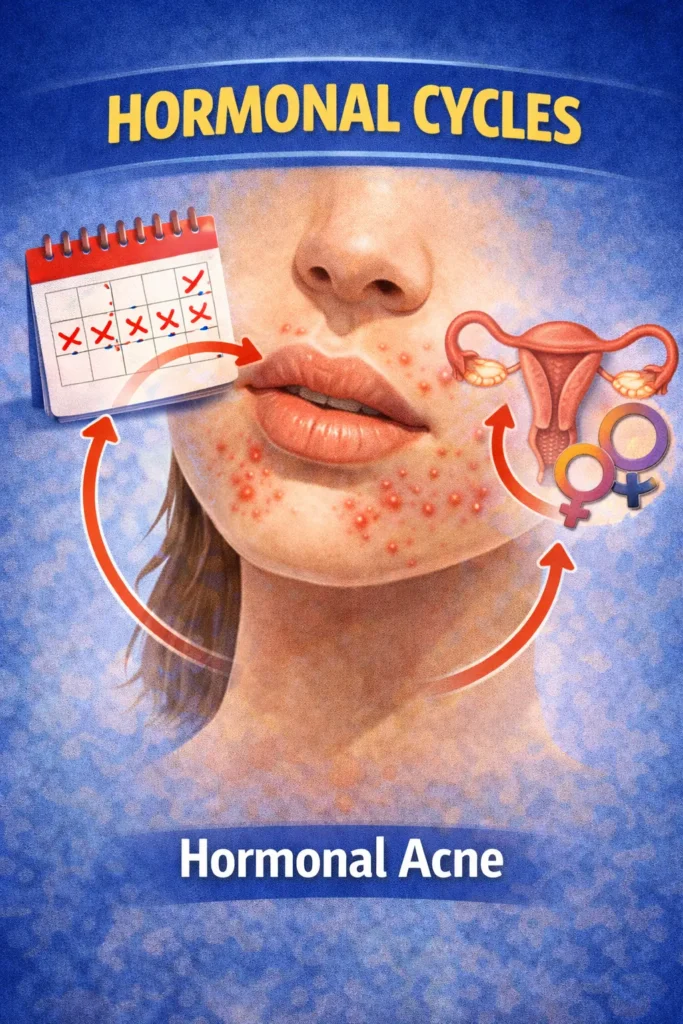
If your acne shows up in the same place at the same time every month, hormones are likely involved.
Hormonal acne chin and jawline breakouts are strongly linked to fluctuations in androgen levels—especially around your menstrual cycle or during periods of stress. These hormones increase oil production, leading to deeper, recurring acne.
This is also a common reason behind adult acne causes, especially in your 20s and 30s.
What this means: your skin is responding to internal hormonal rhythms—not random breakouts.
Learn how retinol works for breakouts.
Skincare Mistakes
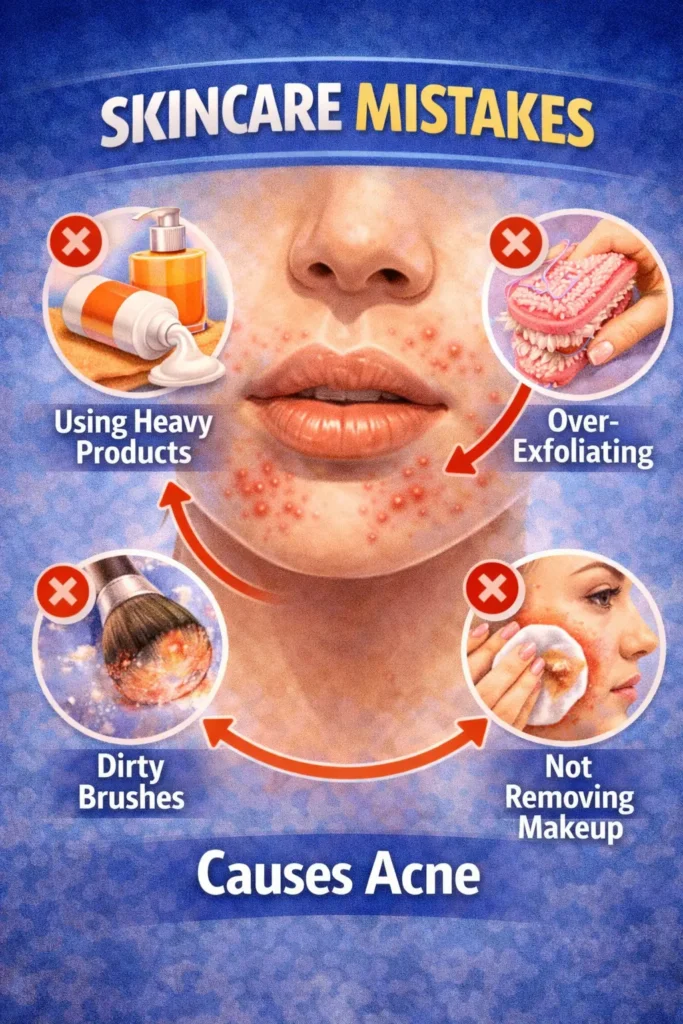
Sometimes, your own routine is keeping the cycle going.
Using the wrong products—or not knowing the acne ingredients to avoid—can repeatedly clog the same pores. Heavy creams, comedogenic makeup, or overly harsh treatments can damage your skin barrier and trigger breakouts in specific areas.
Even small habits—like not removing makeup properly or layering too many products—can lead to recurring acne.
What this means: if your acne won’t go away, your routine might be part of the problem.
Learn complete acne treatment guide.
1. Is acne face mapping actually accurate?
Acne face mapping is partly helpful but not entirely scientific. While certain areas like the chin and jawline are often linked to hormones, most breakouts are caused by factors like oil production, clogged pores, bacteria, and skincare habits rather than internal organ issues.
2. What does acne on different parts of the face mean?
Acne location can give clues about triggers. Forehead acne is often linked to oil and hair products, cheek acne to bacteria and environmental exposure, and chin or jawline acne to hormonal changes. However, multiple factors can overlap.
3. Why do I keep getting acne in the same spot?
Recurring acne in the same area is usually caused by repeated triggers such as hormonal cycles, pore-clogging products, or ongoing irritation. These breakouts often happen in areas where your skin is already prone to congestion.
4. Does chin acne always mean hormonal imbalance?
Chin acne is commonly associated with hormones, especially during menstrual cycles or stress. However, it can also be caused by skincare products, diet, or friction, so it’s not always purely hormonal.
5. How can I treat acne based on its location?
Treatment depends more on the cause than the location. For example, oily forehead acne may need oil control and gentle exfoliation, while hormonal chin acne may require targeted treatments like retinoids or lifestyle adjustments. Identifying triggers is key.
Address: Block C, Punjab University Employees Housing Scheme Phase-II, Lahore, Pakistan
Contact Number: +923224563810