Niacinamide vs Salicylic Acid: Stop Guessing—Here’s What Works for Your Skin
Table of Contents
- What Are Niacinamide and Salicylic Acid?
- Why Pore Size and Skin Type Matter in Pakistan’s Climate
- How Niacinamide Helps Control Oil and Reduce Pore Appearance
- How Salicylic Acid Unclogs Pores and Treats Acne
- Niacinamide vs. Salicylic Acid — Full Comparison for Pores
- Can You Use Niacinamide and Salicylic Acid Together?
- How to Choose the Right Serum for Your Skin Type in Pakistan
- Why This Comparison Matters for Pakistani Skin Conditions
- Final Verdict — Which Ingredient Is Better for Pores?
- FAQS
Niacinamide vs salicylic acid — which one is actually better for pores, acne, and oily skin?
If you’re confused between the two, you’re not alone. Most people choose the wrong ingredient — which is why pores look larger, acne keeps coming back, and skin never fully improves.
In this guide, you’ll learn exactly which one to use based on your skin type, concerns, and Pakistan’s climate.
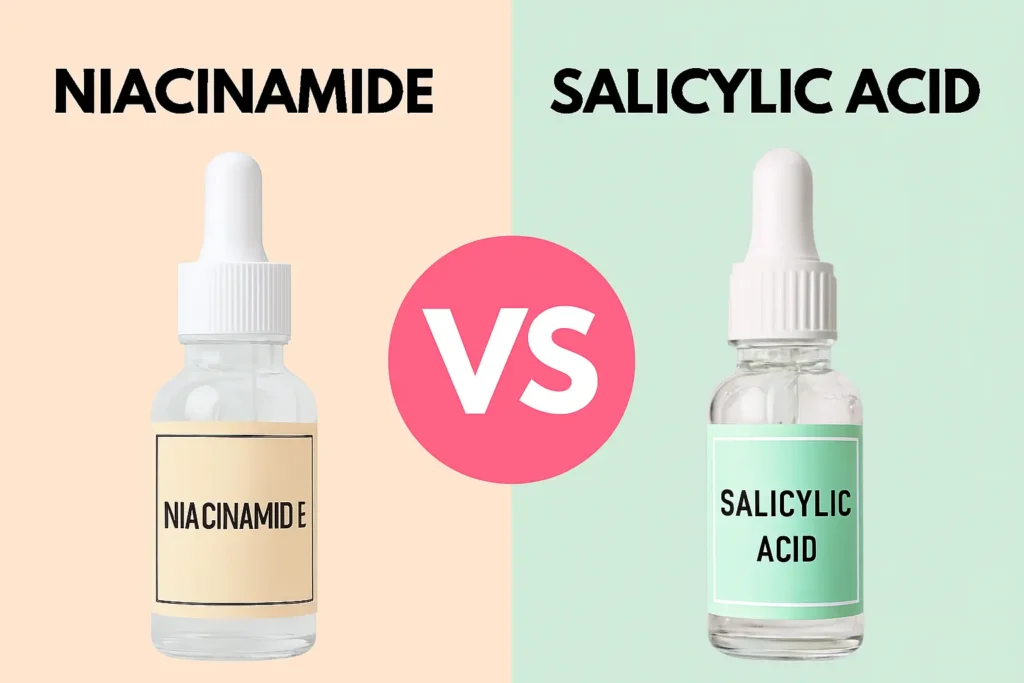
Difference Between Niacinamide and Salicylic Acid
Quick Verdict:
Niacinamide = oil control + barrier repair
Salicylic acid = exfoliation + pore cleaning
Niacinamide
Niacinamide is a form of vitamin B3, known for multiple skin benefits:
It works by:
- Regulating oil production
- Strengthening the skin barrier
- Reducing redness and inflammation
- Improving skin texture over time
👉 Best for:
- Enlarged pores
- Sensitive skin
- Pigmentation
- Oily + combination skin
Salicylic Acid
Salicylic acid is a beta-hydroxy acid (BHA) and a proven exfoliant,
Salicylic acid is an oil-soluble exfoliating acid.
It works by:
- Penetrating deep into pores
- Dissolving excess oil (sebum)
- Clearing dead skin buildup
- Unclogging blackheads and whiteheads
👉 Best for:
- Acne
- Blackheads
- Clogged pores
- Very oily skin
Niacinamide vs Salicylic Acid for Open Pores
How Niacinamide Helps: Best For Oil Control, Barrier Support & Pore Appearance
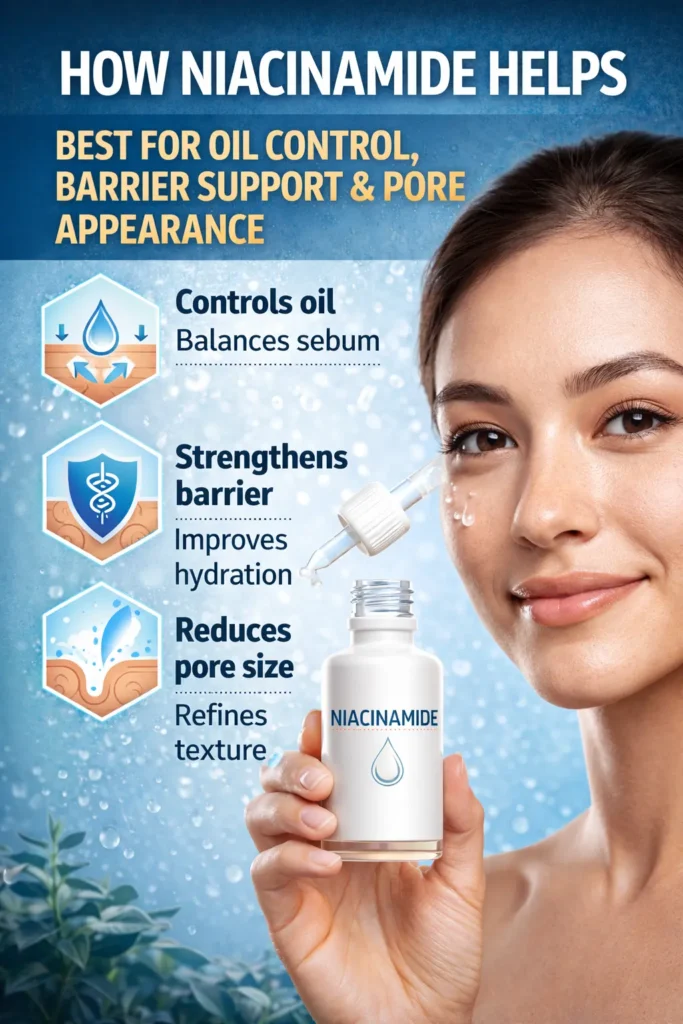
- Sebum regulation & oil control — Niacinamide helps regulate oil production, reducing shine and greasiness without stripping moisture.
- Barrier strengthening & hydration — It supports the skin’s lipid barrier, helping retain moisture and reducing chances of irritation.
- Skin tone & texture improvement — Regular use can reduce redness, even out tone, and help with post-acne marks or pigmentation.
- Pore appearance reduction over time — By controlling sebum and improving skin elasticity, niacinamide can make pores look less noticeable.
Does Niacinamide Reduce Pores?
Yes—but not by shrinking them physically.
Niacinamide:
- Controls oil → pores look smaller
- Improves elasticity → tighter appearance
- Strengthens skin → refined texture
How Salicylic Acid Helps: Best for Clogged Pores, Acne & Deep Cleansing
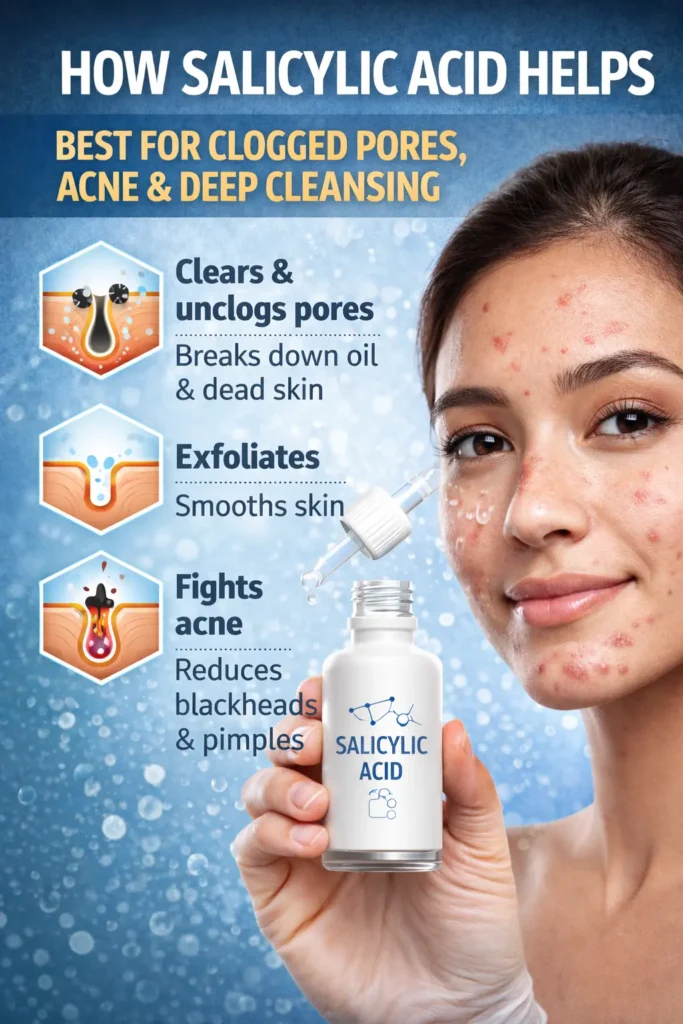
- Deep pore cleansing & unclogging — As an oil-soluble BHA, salicylic acid dissolves the sebum and dead skin that build up inside pores, which helps prevent blackheads, whiteheads, and clogged pores.
- Exfoliation & smoother skin texture — It exfoliates the inner pore lining and outer skin surface, improving texture and reducing roughness.
- Acne and breakout control — Effective for acne-prone and oily skin, salicylic acid reduces inflammation, whiteheads and pimples by clearing out pore blockage.
- Improved clarity & reduced congestion — Over weeks of consistent use, many notice fewer comedones and more balanced skin.
According to the American Academy of Dermatology, salicylic acid is one of the most effective ingredients for acne because it penetrates oil and unclogs pores.
Does Salicylic Acid Minimize Pores?
Not exactly.
Salicylic acid:
- Cleans pores deeply
- Removes oil + debris
- Prevents clogging
BUT:
👉 It does NOT shrink pore size long-term
Final Verdict for Pores
👉 Niacinamide is better for reducing pore appearance
👉 Salicylic acid helps keep pores clean
Best strategy = use both
Niacinamide vs Salicylic Acid for Acne (Which Is Better?)
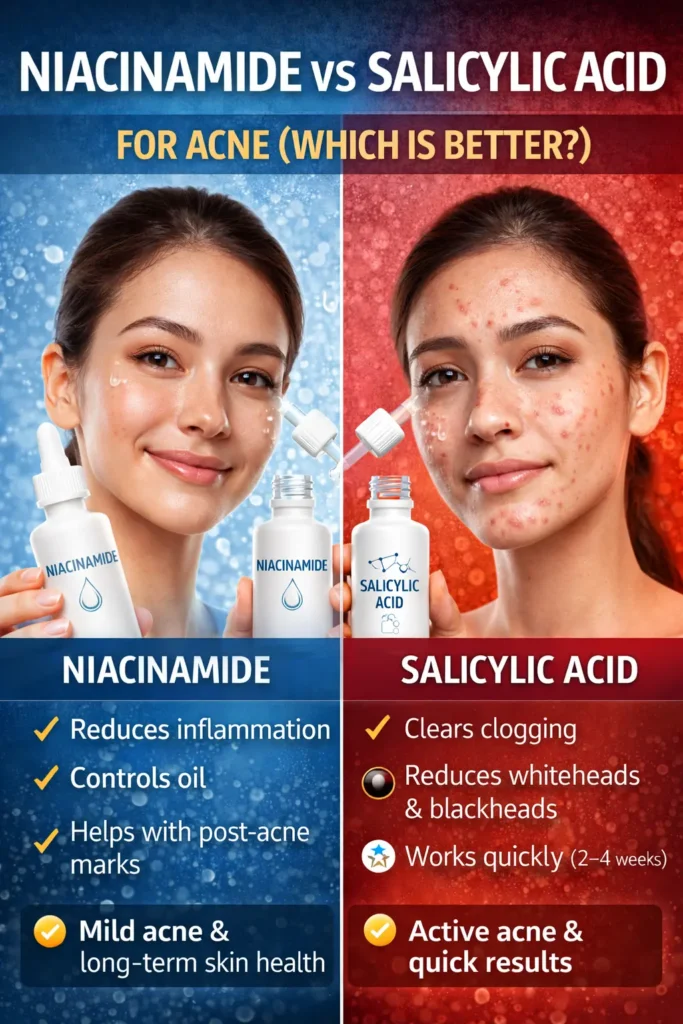
Salicylic Acid for Acne
- Clears clogged pores
- Reduces whiteheads + blackheads
- Works quickly (2–4 weeks)
👉 Best for active acne
Niacinamide for Acne
- Reduces inflammation
- Controls oil
- Helps with post-acne marks
👉 Best for mild acne + long-term skin health
Final Verdict for Acne
👉 Salicylic acid is stronger for treating acne
👉 Niacinamide supports healing + prevention
Why Pore Size & Skin Type Matters — Especially in Pakistan’s Climate
Visible pores often appear bigger due to several factors: excess oil, clogging, dead skin build up, or loss of skin elasticity (common under sun exposure, heat, humidity, and pollution).
In Pakistan — with its high UV index, heat, urban pollution, and humidity (especially in summers) — pore-clogging and oil overproduction are common issues. This makes using the right active ingredients even more important for clear, smooth skin. Additionally, many people overlook how visible light contributes to pigmentation—learn more about this often-ignored trigger in our detailed guide on visible light and pigmentation.
So Pakistan’s environment makes this decision even more important:
- High heat → more oil production
- Humidity → clogged pores
- Pollution → skin congestion
- UV exposure → enlarged pores
Dermatologist Insight
According to Dr. Faiza Shams:
“Patients often believe pores can be permanently shrunk with exfoliation. In reality, oil regulation and skin barrier repair are the key—this is where niacinamide becomes essential.”
She adds:
“Salicylic acid is excellent for acne and clogged pores, but overuse can damage the skin barrier—especially in hot climates like Pakistan.”
Niacinamide vs. Salicylic Acid — Side-by-Side Comparison
| Concern | Niacinamide | Salicylic Acid |
|---|---|---|
| Open pores | ✅ Reduces appearance | ⚠️ Cleans only |
| Acne | ⚠️ Mild | ✅ Strong |
| Dark spots | ✅ Effective | ⚠️ Limited |
| Oily skin | ✅ Controls oil | ✅ Deep cleans |
| Sensitive skin | ✅ Safe | ⚠️ Can irritate |
Who Should Use Niacinamide vs Salicylic Acid?
Choose niacinamide if:
- You have large pores
- Sensitive or combination skin
- Pigmentation + redness
If your concern is oil control, enlarged pores, or skin sensitivity, a well-formulated niacinamide serum for daily use can help improve skin texture without causing irritation.
Choose salicylic acid if:
- You have acne, blackheads
- Very oily skin
- Frequent breakouts
Use both if:
- You have clogged pores + pigmentation
Since both niacinamide and salicylic acid can make your skin more sensitive to light, using the best sunscreen for pigmentation is essential to prevent dark spots from worsening.
Can You Use Niacinamide and Salicylic Acid Together — And How?
Yes — when used carefully and with proper timing, the two can complement each other very well. Salicylic acid provides deep pore cleansing, while niacinamide supports barrier repair, reduces inflammation, and maintains hydration.
Suggested Routine Example (for oily / acne-prone skin):
- 2–3 nights per week: Cleanser → Salicylic acid serum → Light moisturizer → Sunscreen (day)
- On other nights or mornings: Cleanser → Niacinamide serum → Moisturizer → Sunscreen
This way you clear pores without over-exfoliating or damaging barrier. For sensitive skin, start with once per week salicylic acid, and slowly increase as tolerance builds.
For those dealing with stubborn or recurring pigmentation, our melasma treatment guide provides a more comprehensive treatment roadmap.
Common Mistakes When Using Niacinamide or Salicylic Acid
- Overusing salicylic acid → irritation
- Skipping sunscreen
- Expecting instant pore shrinkage
- Using both incorrectly
Biggest Myth About Pores
Most people get this completely wrong.
Salicylic acid does NOT shrink pores.
It only cleans them by dissolving oil and debris inside.
That’s why pores may look smaller temporarily — but their actual size doesn’t change.
So what does make pores look smaller over time?
👉 Niacinamide.
It works differently:
- Regulates oil production
- Improves skin elasticity
- Strengthens pore walls
This makes pores appear tighter and less visible long-term.
How to Choose — Which Serum is Best for You (Pakistan Skin Guide)
- If you have oily, acne-prone skin with blackheads/whiteheads or frequent breakouts: Start with salicylic acid serum.
- If you have oily-combination or sensitive skin and want to control oil + reduce redness / large pores gently: Start with niacinamide serum.
- If you are new to active skincare or have never had irritation: Begin with niacinamide; add salicylic acid gradually.
- If you face clogged pores + uneven tone + occasional breakouts: Use both — salicylic acid 2–3×/week, niacinamide daily or on alternate days.
When Will You See Results (The Timeline)?
- Niacinamide → 4–8 weeks
- Salicylic acid → 2–4 weeks (acne)
- Combination → Best results in 6–8 weeks
Why Niacinamide vs Salicylic Acid Comparison Matters for Pakistani Skin & Climate
The hot weather, high humidity (in some regions), pollution, dust, sweat, and hard water — all common in Pakistani cities — make pores more prone to clogging, breakouts, and oil imbalance.
Using a serum like Salicylic Acid Serum helps clear deep clogs and prevent breakouts. Meanwhile, Niacinamide Serum supports your skin barrier, reduces oil overproduction, improves skin texture, and helps pores appear smaller over time under challenging climate conditions.
Together (used smartly), they form a powerful, dermatology-approved combo ideal for local skin concerns of oily, acne-prone, or sensitive skin types in Pakistan.
Final Verdict — There Is No “One-Size-Fits-All,” But You Can Find What Works
Neither niacinamide nor salicylic acid is strictly “better” — each serves different needs. For deep cleansing, unclogging pores, and acne control, salicylic acid is unmatched. For barrier support, oil regulation, sensitivity, and long-term health of the skin, niacinamide shines.
Many dermatologists and skin experts agree that a balanced routine — combining occasional salicylic acid with daily niacinamide — often delivers the best results: cleaner pores, fewer breakouts, smoother texture, and healthier glow.
If you’re choosing between ingredients, you can explore serums for acne-prone skin based on your concern to find what suits your routine best.
If you want to target pores, oiliness, and acne — try Salicylic Acid Serum for Acne.
For a gentle, multi-benefit daily serum that refines pores and improves skin health — go for best Serum for Open Pores.
And remember: give your skin time. Visible improvements (less oil, clearer pores, smoother texture) often appear in 4–8 weeks with consistent, correct use.
FAQS
1. Can I use niacinamide and salicylic acid together for open pores?
Yes. Niacinamide and salicylic acid work very well together for reducing pore size and controlling oil. Salicylic acid cleans deep inside the pores, while niacinamide strengthens the skin barrier and minimizes pore appearance over time. Use salicylic acid 2–3 times a week and niacinamide daily.
2. Is niacinamide or salicylic acid better for acne-prone skin in Pakistan?
Salicylic acid is usually better for oily, acne-prone skin because it unclogs pores, reduces blackheads, and prevents breakouts. Niacinamide is better for sensitive or combination skin because it reduces redness, regulates oil, and strengthens the barrier. Many dermatologists recommend using both for best results.
3. Can niacinamide reduce large pores permanently?
Niacinamide cannot permanently shrink pores, but it significantly reduces their appearance by controlling oil, improving elasticity, and strengthening the skin barrier. With consistent use (6–8 weeks), pores look tighter and less visible.
4. Which product should I start with — niacinamide vs salicylic acid serum?
If you have clogged pores, blackheads, whiteheads, or active acne, start with salicylic acid.
If you have oily-combination skin, sensitivity, redness, or want gentle pore reduction, start with niacinamide.
For many people, the best routine combines both: salicylic acid at night a few times weekly + niacinamide daily.
Address: Block C, Punjab University Employees Housing Scheme Phase-II, Lahore, Pakistan
Contact Number: +923224563810