7 Skin Allergy Types You Must Know: Identify Symptoms, Causes & the Right Treatment Fast
Table of Contents
Most people ignore a skin rash until it spreads, itches more, or suddenly turns into a full allergic reaction rash. If you’re here, you’re not looking for vague advice—you want to know exactly what is happening to your skin and what to do about it.
And here’s the truth most articles won’t tell you:
Most people misidentify their skin allergy—and end up treating it wrong.
That’s why rashes don’t improve.
That’s why itching keeps coming back.
That’s why “home remedies” fail.
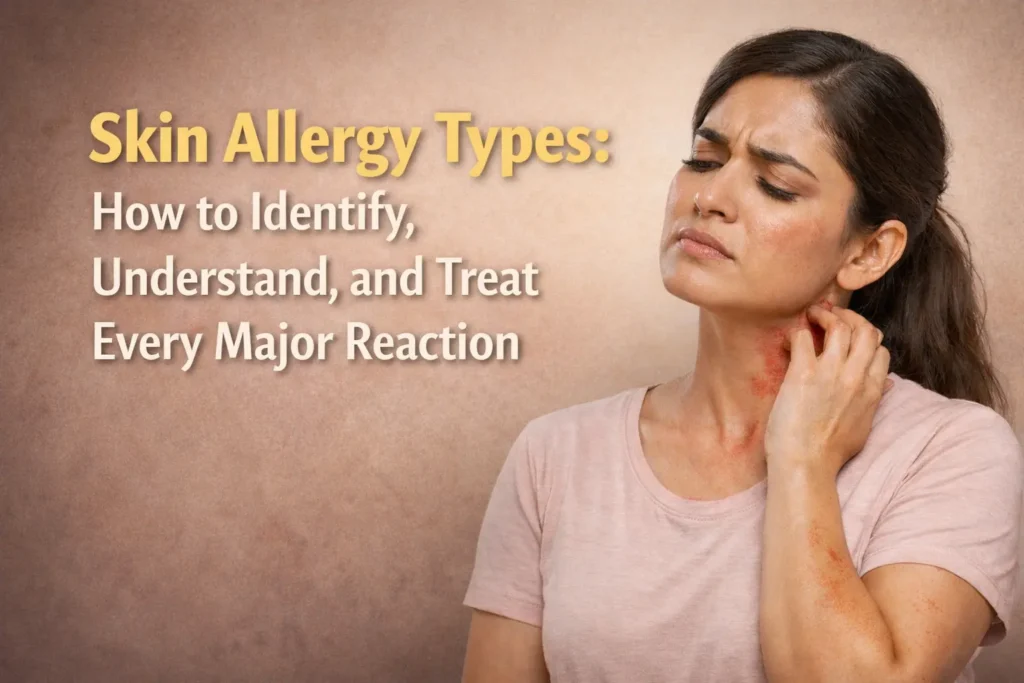
This guide fixes that.
By the end of this page, you will be able to:
- Identify different skin allergy types
- Understand what your symptoms actually mean
- Distinguish between allergy rash vs other skin conditions
- Know what works—and what wastes your time
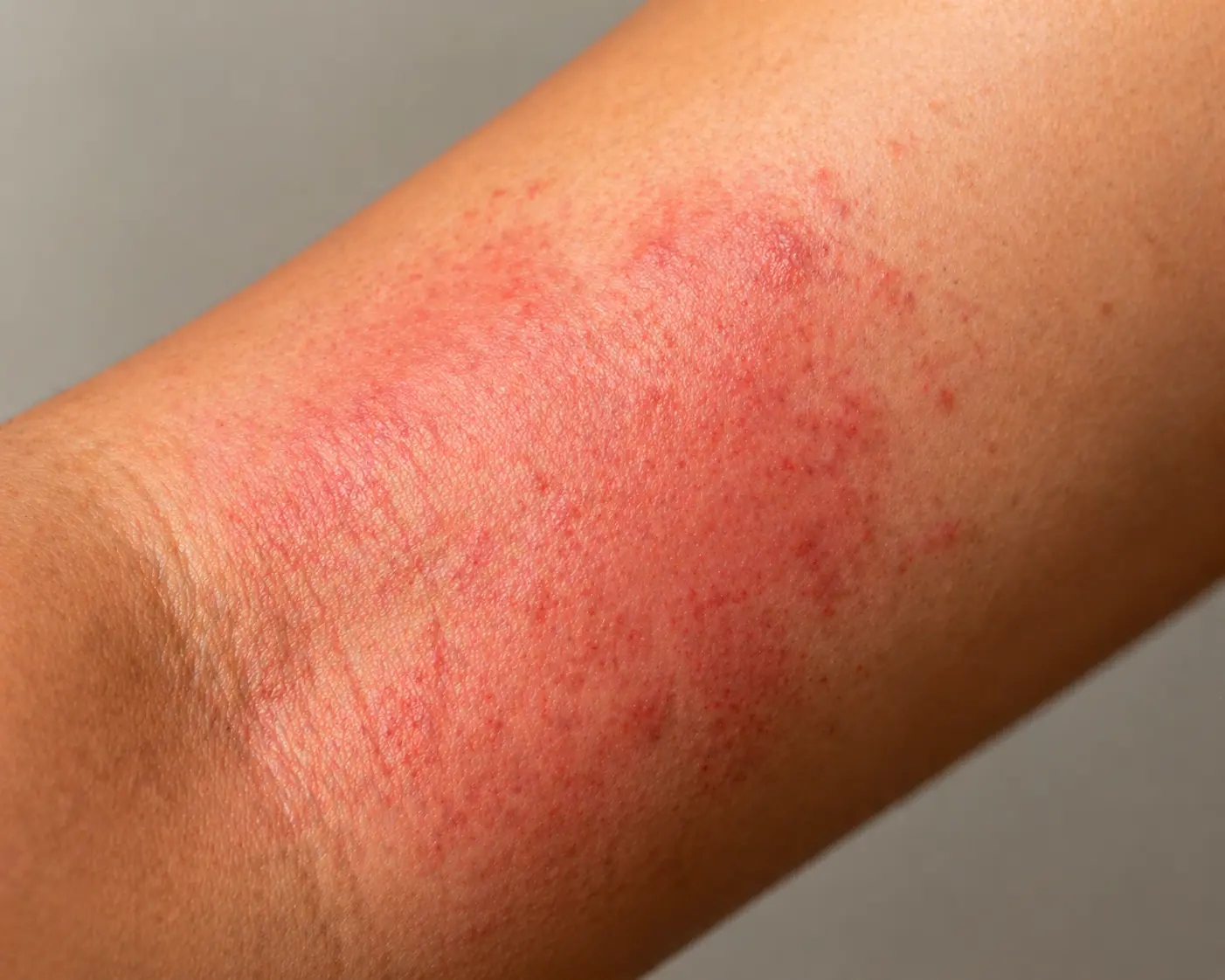
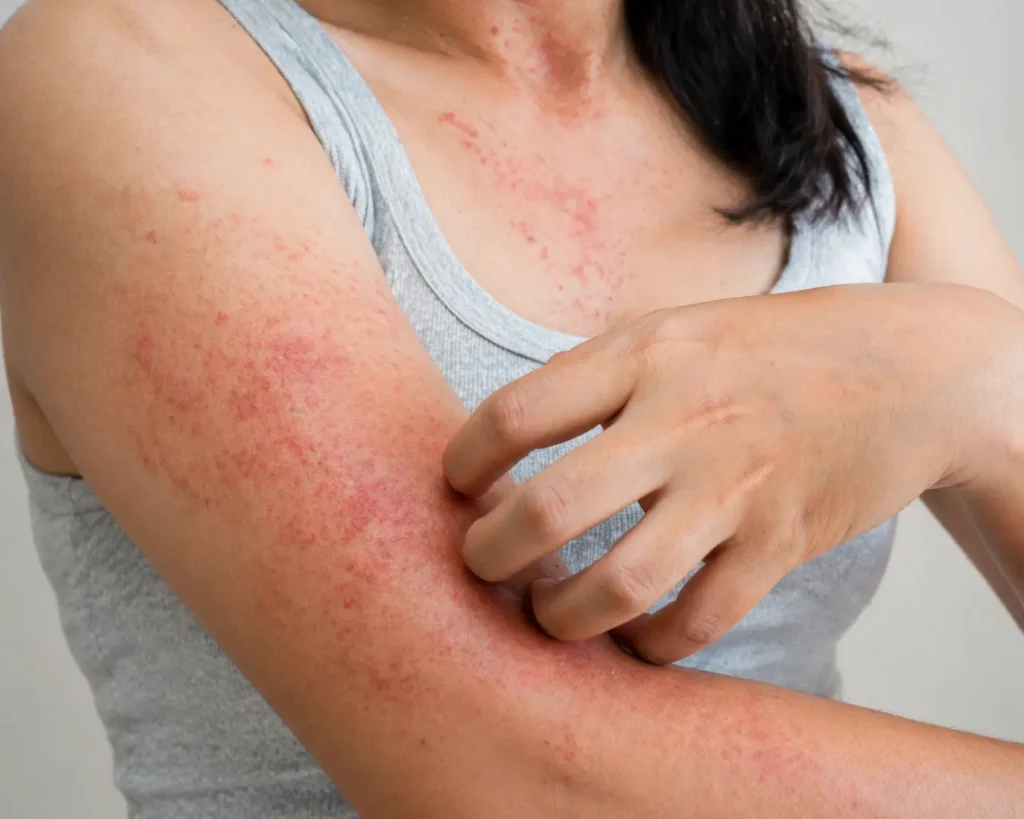
What Is a Skin Allergy? (And Why It’s Often Misunderstood)
A skin allergy happens when your immune system overreacts to something that is usually harmless.
This reaction shows up on your skin as:
- Itching
- Redness
- Swelling
- Bumps or rash
- Burning or irritation
But here’s where people get it wrong:
👉 Not every skin rash is an allergy
👉 Not every itching is caused by an allergic reaction
This confusion leads to misdiagnosis.
Skin Allergy vs Skin Rash: Stop Confusing These
Many people confuse general skin rashes with specific skin allergy types, which leads to incorrect treatment and delayed recovery. One of the most searched (and misunderstood) topics is this:
Is a skin rash the same as a skin allergy?
No.
A skin rash is a broad term.
A skin allergy is a specific cause.
Think of it like this:
- “Skin rash” = symptom
- “Skin allergy” = one possible cause
Common causes of skin rashes include:
- Allergic reaction
- Fungal infections
- Heat rash
- Acne
- Irritation
- Autoimmune conditions
This is why treating every rash as an “allergy rash” is a mistake.
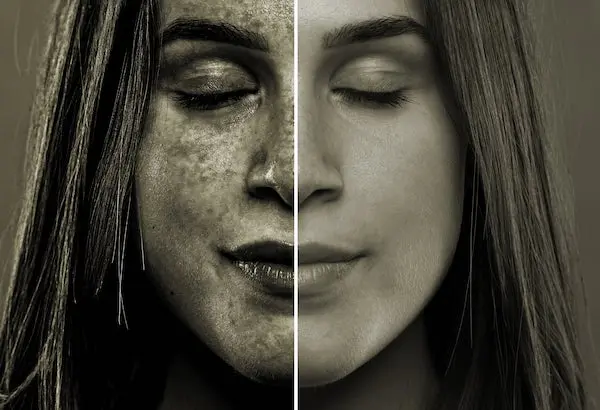
👉 And if not managed properly, a rash can leave behind long-term marks like post-inflammatory hyperpigmentation after skin rash.
How to Recognize an Allergy Rash
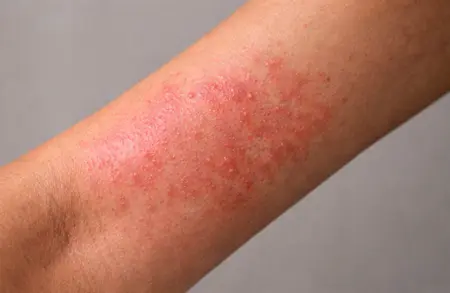
A true allergic reaction rash usually has these features:
- Intense itching (key sign)
- Sudden onset after exposure
- Red, inflamed patches
- Small raised bumps or hives
- May spread beyond the contact area
Common areas affected:
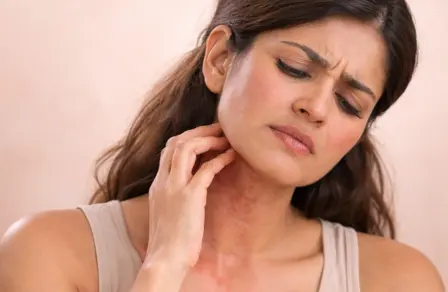
- Face (especially cheeks, eyelids)
- Neck
- Hands
- Arms
- Areas exposed to products or fabrics
If your rash matches this pattern, you’re likely dealing with a skin allergy—not something else.
Different Skin Allergy Types (The Core Breakdown)
Different skin allergy types can look similar on the surface, but each requires a completely different treatment approach.
This is where most articles become shallow.
We won’t.
Skin allergies are not one condition—they are different mechanisms with different treatments.
1. Allergic Contact Dermatitis (Most Common Type)
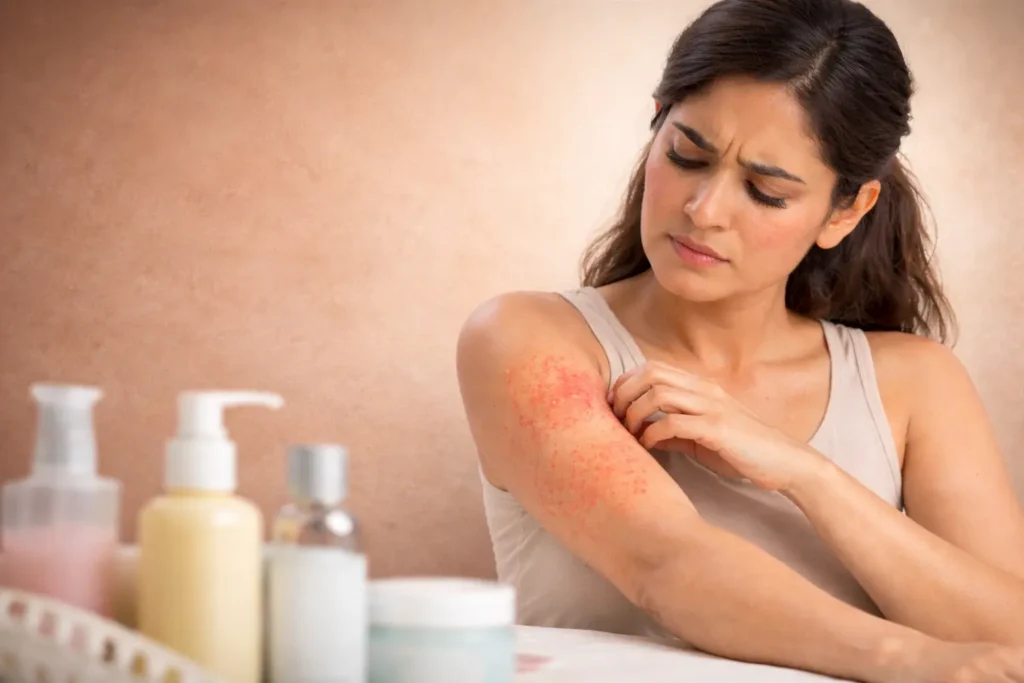
This is what most people mean when they say “skin allergy.”
It happens when your skin reacts to a substance after direct contact.
Common triggers:
- Cosmetics and skincare
- Fragrances
- Nickel (jewelry, watches)
- Hair dye
- Soaps and detergents
Symptoms:
- Red, itchy rash
- Dry or scaly skin
- Burning sensation
- Rash appears hours to days after exposure
👉 Key insight:
This is a delayed reaction, which is why people often don’t connect it to the cause.
Want to understand the trigger? Learn why skincare products can irritate or burn skin and how it leads to allergic contact dermatitis.
2. Irritant Contact Dermatitis (Often Misdiagnosed as Allergy)
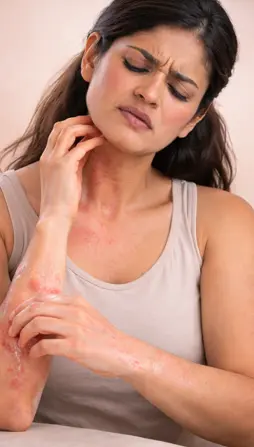
This is NOT a true allergy—but it looks very similar.
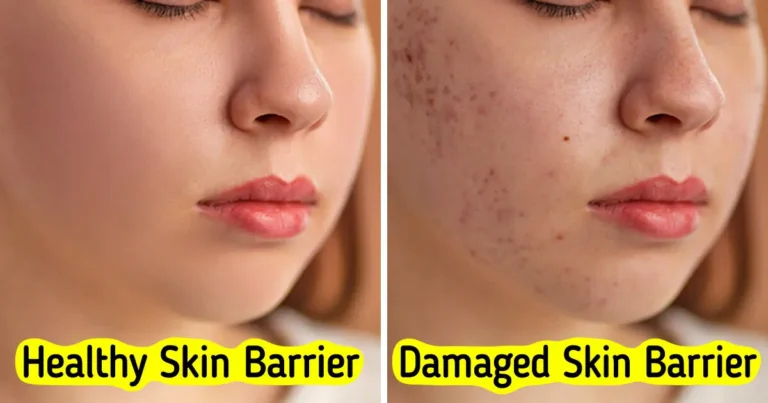
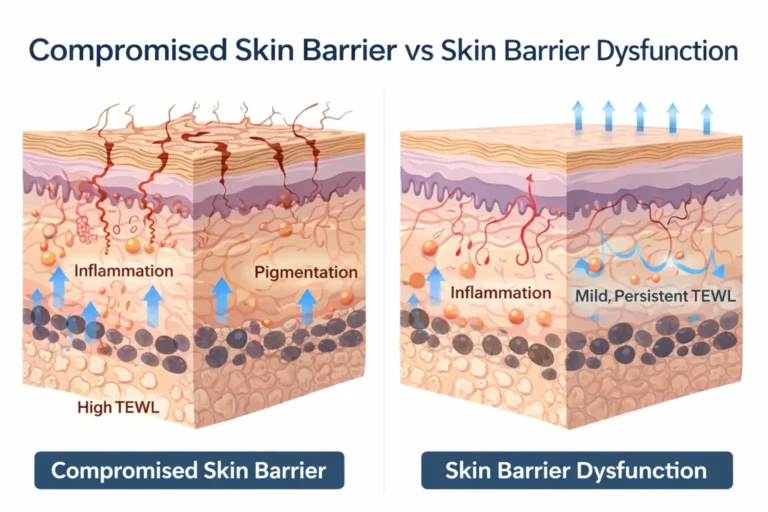
Instead of an immune reaction, this happens when something damages your skin barrier.
Often linked to a damaged skin barrier, which makes your skin more reactive to everyday irritants.
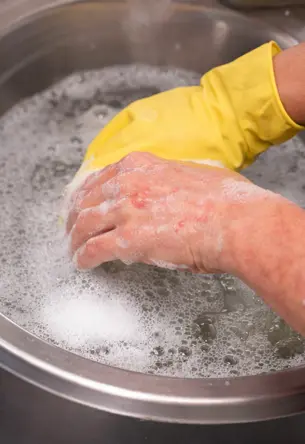
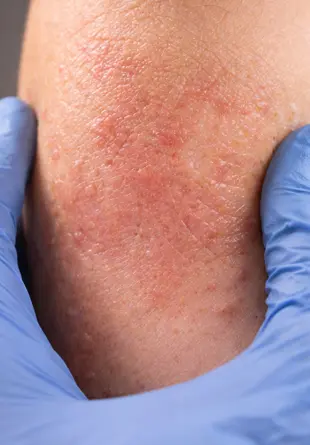
Common triggers:
- Harsh soaps
- Over-exfoliation
- Strong acids or actives
- Frequent hand washing
Symptoms:
- Dry, tight skin
- Burning or stinging
- Redness without clear borders
- Less itching, more irritation
👉 Brutal truth:
Many people think they have a “skin allergy” when they’ve actually destroyed their skin barrier.
3. Urticaria (Hives)
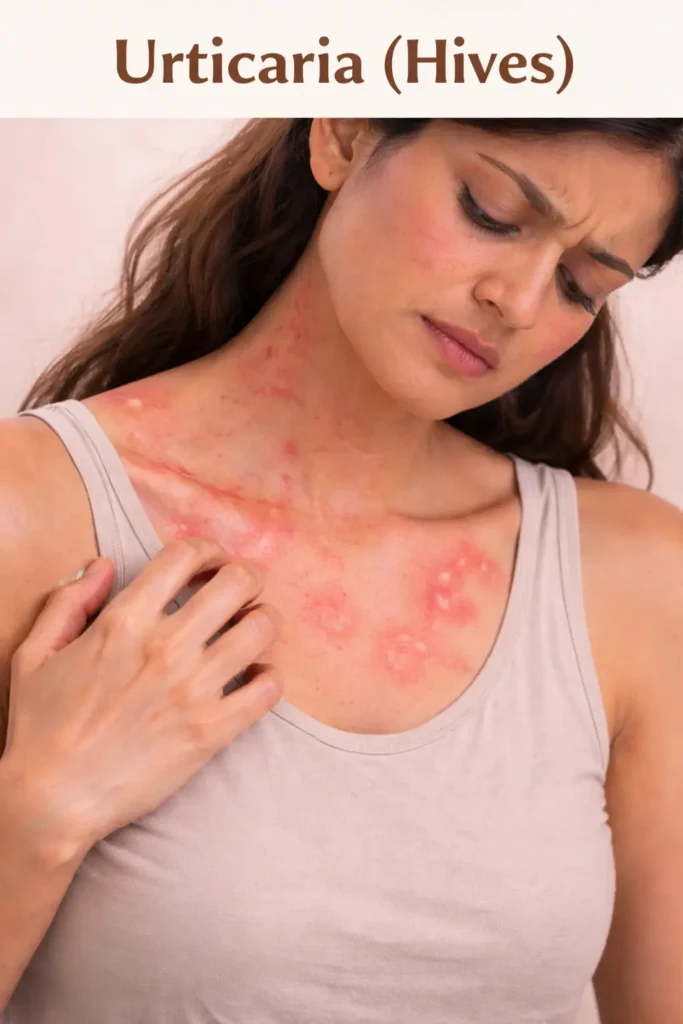
This is a rapid allergic reaction—completely different from contact dermatitis.
What it looks like:
- Raised, swollen bumps
- Extremely itchy
- Comes and goes quickly
- Moves around the body
Common triggers:
- Food allergies
- Medications
- Heat or stress
- Infections
👉 Key pattern:
If your rash appears suddenly and disappears within hours, it’s likely urticaria—not contact allergy.
4. Atopic Dermatitis (Chronic Allergy-Prone Skin)
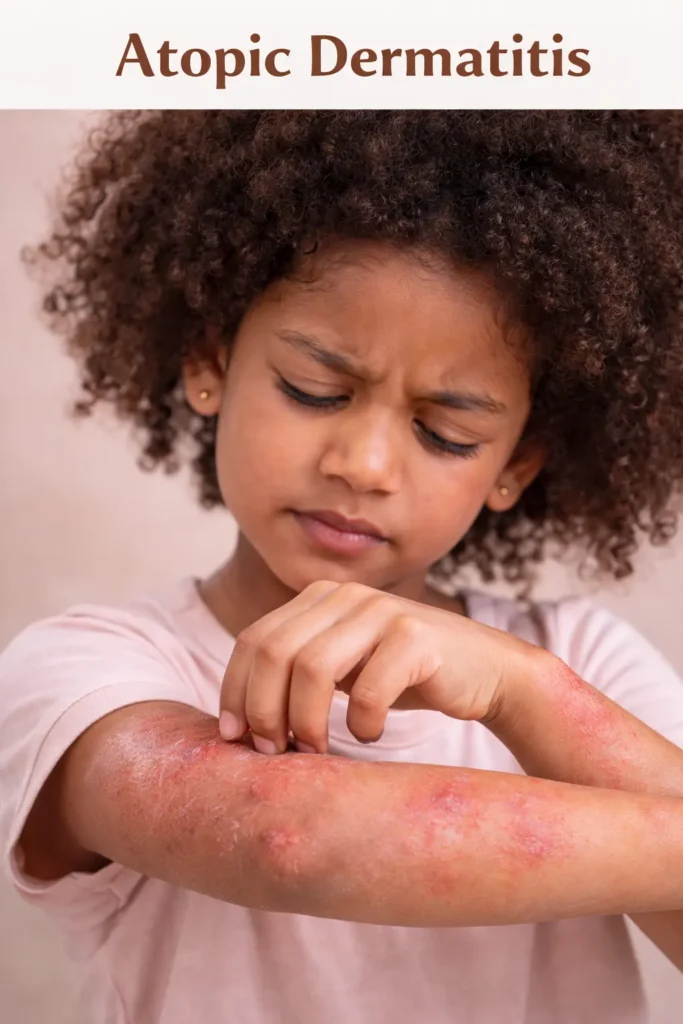
This is a chronic condition, not a one-time reaction.
It’s often linked with:
- Sensitive skin
- Asthma
- Allergies
Symptoms:
- Persistent itching
- Dry, rough patches
- Thickened skin over time
- Flare-ups triggered by environment
👉 Important distinction:
This is not caused by one product—it’s a long-term skin condition with allergic tendencies.
5. Photoallergic Reactions (Sun + Product Reaction)
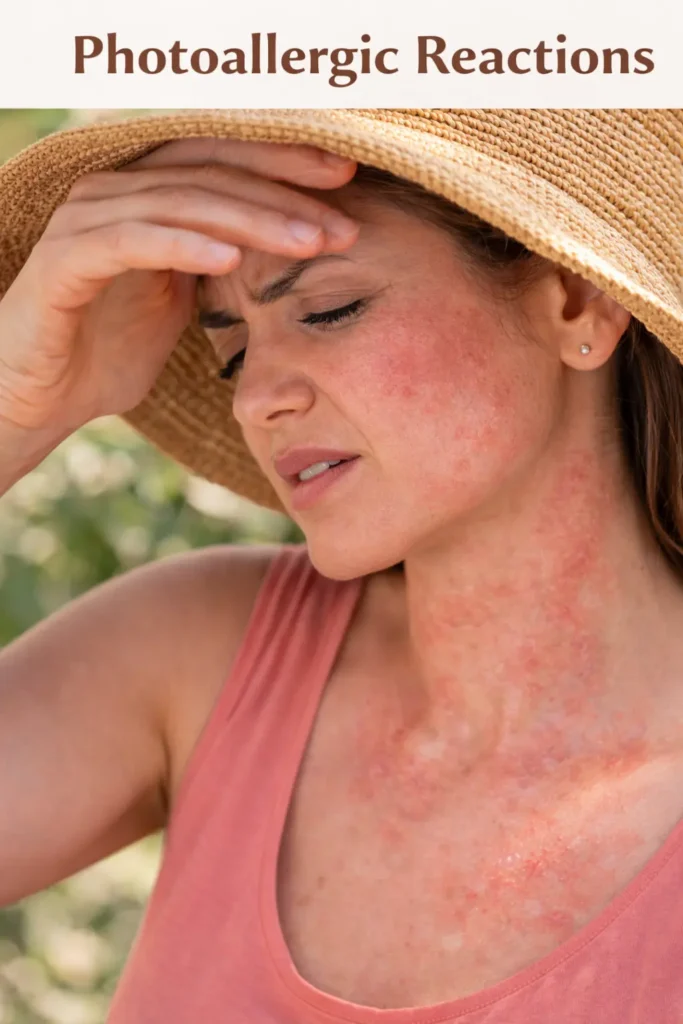
This is where things get tricky.
The reaction only happens when:
👉 A substance on your skin + sunlight interact
Common triggers:
- Sunscreens
- Perfumes
- Certain medications
Symptoms:
- Rash only on sun-exposed areas
- Redness and itching
- Delayed reaction
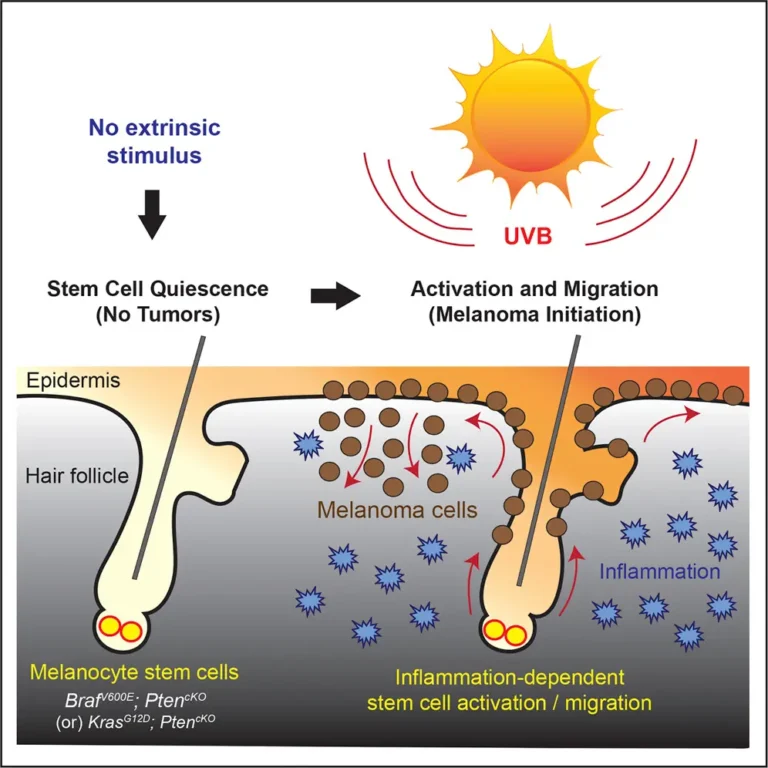
Learn how visible light and skin reactions can trigger photoallergic responses, and why iron oxide sunscreens for sensitive skin offer better protection.
👉 This is massively underdiagnosed—especially in hot climates.
What Most People Get Wrong About Skin Allergies
Let’s be blunt.
You don’t struggle because skin allergies are “complicated.”
You struggle because of wrong assumptions:
- Treating fungal infections as allergy
- Using steroids randomly
- Overusing skincare products
- Ignoring triggers
- Switching products too fast
If you misidentify your skin condition, you may treat the wrong skin allergy types and unintentionally worsen the reaction.
How to Start Identifying Your Skin Allergy (Step-by-Step)
Before jumping to treatment, you need clarity.
Ask yourself:
- Did this start after using a new product?
- Is the itching severe or mild?
- Does the rash come and go quickly?
- Is it limited to one area or spreading?
- Is your skin dry and damaged—or inflamed and reactive?
Your answers already narrow down the type.
Expert Insight
“Most patients don’t fail treatment—diagnosis fails first. If you misidentify the type of skin allergy, every treatment that follows becomes ineffective.”
— Dr. Faiza Shams
What Comes Next (And Why It Matters)
Now that you understand different skin allergy types, the next step is critical:
👉 Identifying triggers
👉 Choosing the right treatment
👉 Avoiding common mistakes that worsen reactions
Because knowing the type without knowing what to do next is useless.
Common Skin Allergy Triggers (Especially Relevant in Pakistan)
Most guides give generic triggers. That’s useless. Understanding different skin allergy types also helps you identify triggers faster and avoid repeated flare-ups.
You need real-world triggers that actually apply to your environment.
1. Skincare & Cosmetic Products (Top Hidden Cause)
Some common skincare actives can be too strong for reactive skin—learn more about active ingredients that may irritate sensitive skin and how azelaic acid for sensitive and reactive skin is often a gentler alternative.
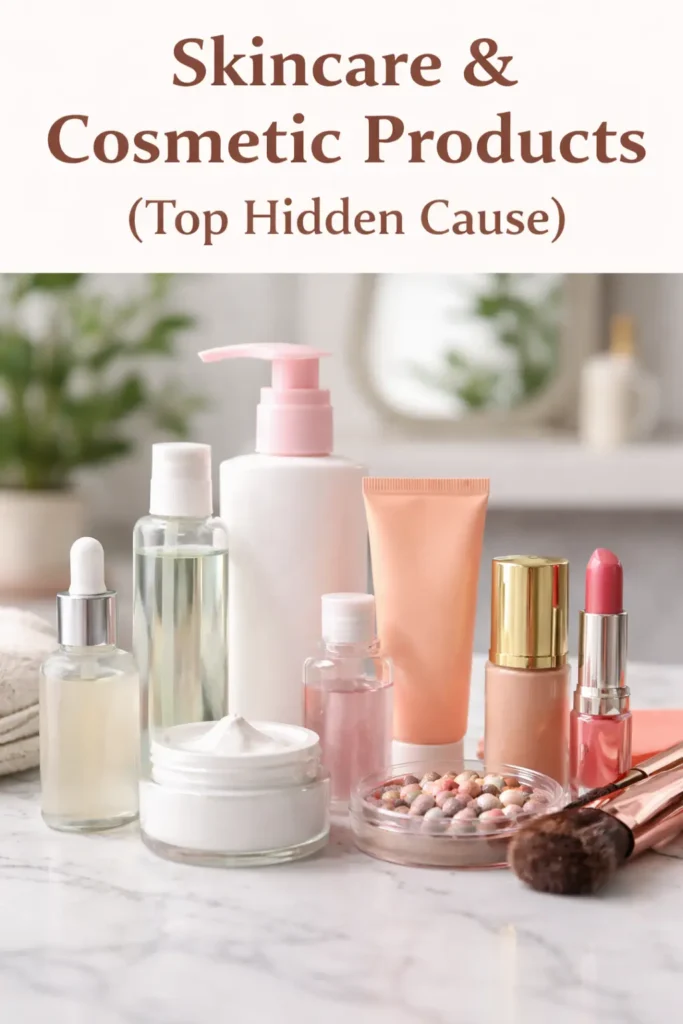
This is the biggest trigger—and the most ignored.
High-risk ingredients:
- Fragrance (perfumes, scented creams)
- Preservatives
- Hair dyes
- Essential oils
- Overuse of actives (acids, retinoids)
👉 Brutal truth:
Many “skincare routines” are just slowly damaging your skin barrier, not helping it.
2. Detergents, Fabrics & Household Chemicals

You won’t fix your allergy if the trigger is still in your environment.
Common culprits:
- Laundry detergents
- Fabric softeners
- Synthetic fabrics
- Cleaning chemicals
👉 Key pattern:
Rash appears in areas of friction (neck, waist, hands)
3. Heat, Sweat & Environment

In hot climates, this is huge.
What happens:
- Sweat irritates skin
- Heat triggers inflammation
- Existing allergies worsen
Understand more about why heat worsens skin conditions and how it can trigger flare-ups in sensitive or reactive skin.
👉 This is why many people think their skin allergy gets worse in summer
4. Food & Internal Triggers

Not every skin issue is caused by food—but some are.
Common triggers:
- Nuts
- Shellfish
- Dairy
- Processed foods
👉 Key sign:
Sudden urticaria (hives) after eating
5. Sun + Product Reactions
You’ve already covered visible light and sunscreen—but here’s the missing angle:
👉 Some reactions only happen when UV + product interact
This explains:
- “Sunscreen made my skin worse”
- “Rash only appears outdoors”
How to Treat Skin Allergies (What Actually Works)
Let’s cut through the nonsense.
Treatment is not about trying random remedies.
It’s about matching the treatment to the type + trigger.
Step 1: Remove the Trigger (Non-Negotiable)
If you skip this, nothing works.
- Stop new skincare products
- Switch to fragrance-free basics
- Change detergent if needed
- Avoid suspected triggers for 2–3 weeks
👉 If the trigger remains, treatment is pointless.
Step 2: Repair the Skin Barrier
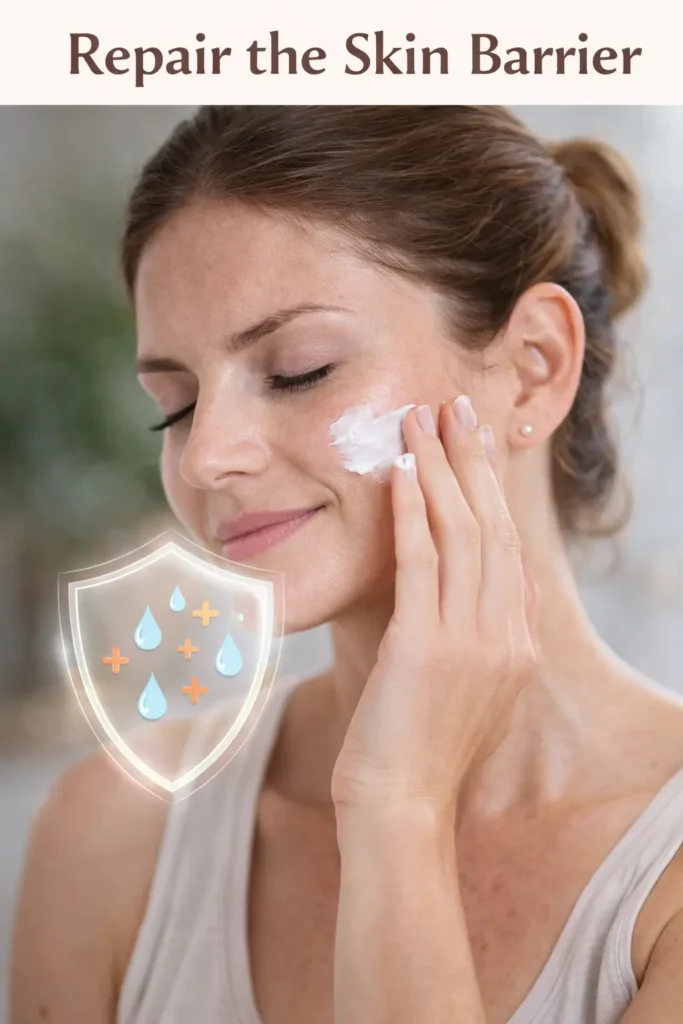
This is where your existing authority dominates.
Focus on:
- Ceramides
- Gentle moisturizers
- Minimal routine
Learn how to repair your skin barrier and explore barrier repair for sensitive skin to restore comfort, reduce reactions, and strengthen skin resilience.
👉 Internal logic:
Barrier damage = increased sensitivity = more allergies
Step 3: Control Inflammation
Depending on severity:
- Mild cases → soothing creams
- Moderate → antihistamines
- Severe → topical steroids (short-term, supervised)
👉 Reality check:
Steroids work—but misuse creates bigger long-term problems
Step 4: Treat the Specific Type
This is where most people fail.
- Contact dermatitis → avoid trigger + barrier repair
- Urticaria → antihistamines
- Atopic dermatitis → long-term maintenance
- Irritant dermatitis → stop over-exfoliation
👉 Same “rash,” completely different treatments
When to See a Dermatologist
Stop guessing if:
- Rash lasts more than 2–3 weeks
- Keeps coming back
- Spreads rapidly
- Becomes painful or infected
- You’re using steroids repeatedly
👉 Delaying proper diagnosis is why conditions become chronic
Why Your Skin Allergy Keeps Coming Back
You’ve seen this pattern before (same as pigmentation):
- You treat symptoms, not cause
- You reintroduce triggers too early
- You damage your barrier again
- You rely on short-term fixes
👉 Result: cycle repeats
Final Clarity: What You Should Do Next
If you’ve read this properly, you now know:
- Your exact skin allergy type (or at least narrowed it down)
- The likely trigger behind it
- What treatment actually matches your condition
Now act on it:
- Simplify your routine
- Remove triggers
- Focus on barrier repair
- Stop experimenting blindly
Expert Insight
“The biggest mistake patients make is chasing products instead of identifying triggers. Skin allergies don’t improve with more skincare—they improve with the right decisions.”
— Dr. Faiza Shams
Conclusion
Understanding different skin allergy types is what allows you to stop guessing, choose the right treatment, and finally break the cycle of recurring skin reactions. Skin allergies are not random.
They follow patterns.
Once you understand:
- Type
- Trigger
- Treatment
You stop guessing—and start fixing the problem.
For a deeper clinical understanding of skin allergies and contact dermatitis, refer to trusted dermatology resources like the American Academy of Dermatology.
Frequently asked Questions (FAQs)
1. What are the most common skin allergy types?
The most common skin allergy types include allergic contact dermatitis, irritant contact dermatitis, urticaria (hives), and atopic dermatitis. Each type presents differently, from an itchy skin rash to raised allergy rash or chronic dry patches.
2. How can I tell if my skin rash is an allergic reaction?
An allergic reaction rash usually appears suddenly, causes intense itching, and may spread beyond the contact area. If your skin rash develops after using a product, eating certain foods, or exposure to allergens, it is likely a skin allergy.
3. What does a skin allergy look like on the face?
A skin allergy on face can appear as redness, swelling, itchy bumps, or a burning sensation. In some cases, it may look like a rash on face or small itchy skin rash patches, especially after using cosmetics or skincare products.
4. Can itching occur without a visible skin rash?
Yes, itching without a rash can still be a sign of a developing skin allergy or internal trigger. In some cases, itching appears before a visible skin rash or may be linked to conditions like urticaria or systemic allergic reactions.
5. What is the best treatment for skin allergies and rashes?
The best skin allergy treatment depends on the cause. Most cases improve by removing triggers, repairing the skin barrier, and using appropriate medication. For persistent allergy rash or severe itchy skin rash, medical evaluation is recommended.
Address: Block C, Punjab University Employees Housing Scheme Phase-II, Lahore, Pakistan
Contact Number: +923224563810