Tranexamic Acid vs Alpha Arbutin for Melasma: Which Works Faster? (Dermatologist Guide)
Table of Contents
Introduction: Why This Comparison Matters for Melasma
Melasma is not like ordinary dark spots — and choosing between Tranexamic Acid vs Alpha Arbutin is one of the most common decisions patients get wrong. Both ingredients target pigmentation, but they work through completely different pathways. One fails where the other succeeds. And using them incorrectly — or choosing only one — is exactly why most melasma treatments give partial results.
Learn about different types of hyperpigmentation and how to treat them.
Both ingredients are widely used for pigmentation, yet they work very differently. Understanding those differences—and knowing how to use them together correctly—can completely change your results.
Understanding Melasma Before Choosing Actives
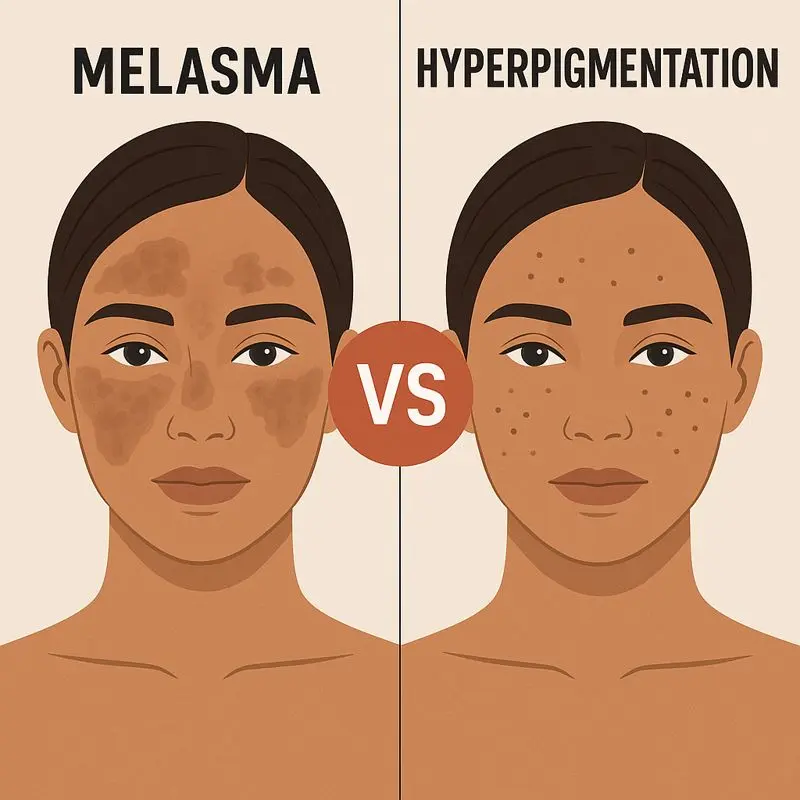

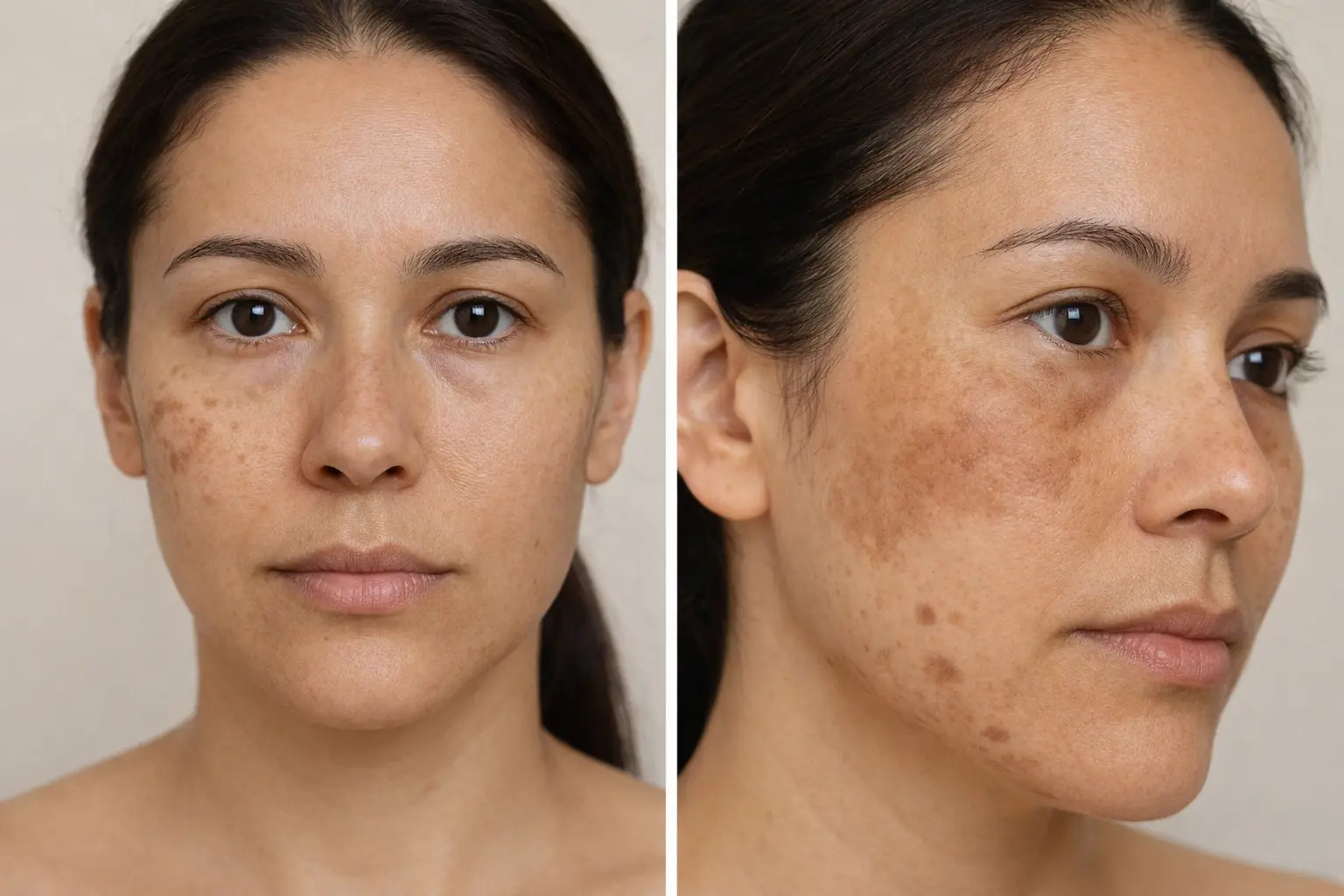
Melasma is a hormonal and vascular-linked hyperpigmentation disorder.
Unlike post-acne marks, it is influenced by:
- UV and visible light exposure
- Hormonal fluctuations
- Heat and inflammation
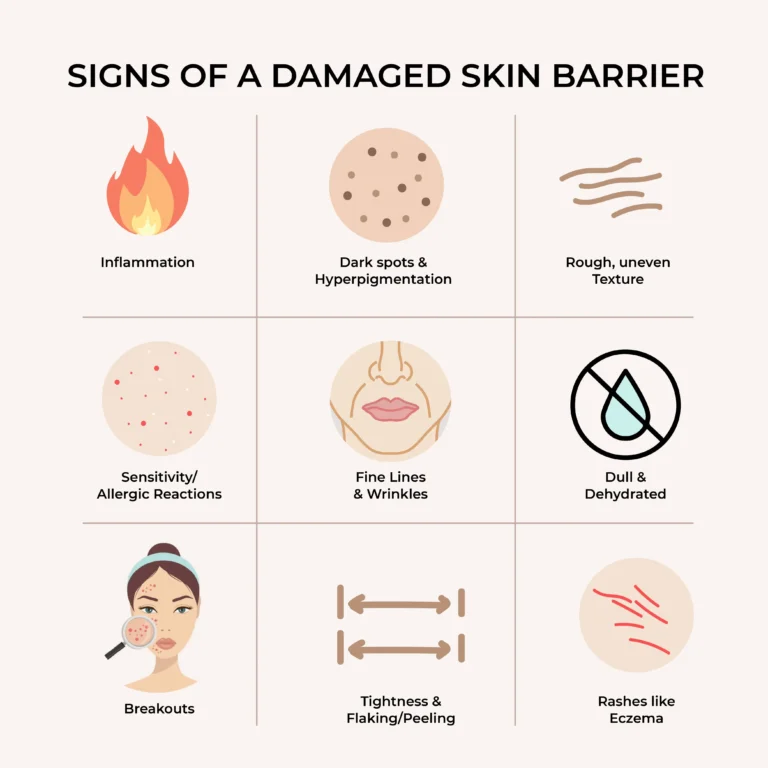
- Barrier dysfunction
Lear more about post-inflammatory hyperpigmentation (PIH) treatment.
This means ingredients that only block melanin production often give partial results.
That’s where tranexamic acid and alpha arbutin differ—and complement each other.
What Is Tranexamic Acid and Why Dermatologists Use It for Melasma
How Tranexamic Acid Works
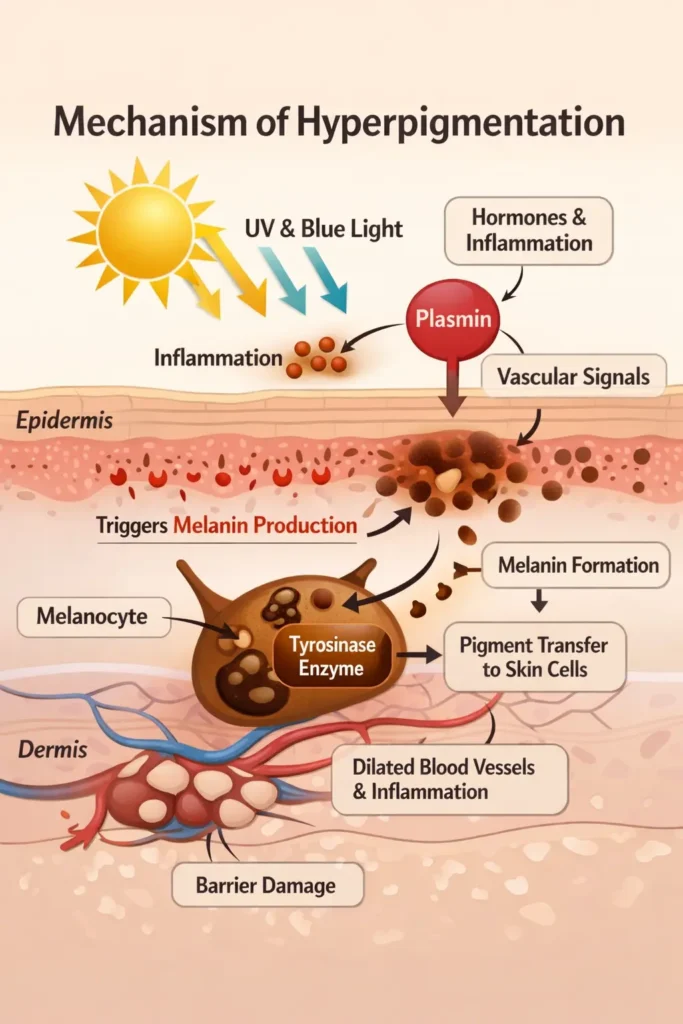
Tranexamic acid works upstream in the pigmentation pathway.
It inhibits the plasminogen–plasmin system, which reduces:
- UV-induced inflammation
- Vascular signaling that triggers melanocytes
- Excess melanin transfer
In simpler terms, tranexamic acid calms the root triggers of melasma, not just the pigment itself.
Why It’s Especially Effective for Melasma
Research consistently shows tranexamic acid to be effective for:
- Epidermal melasma
- Mixed melasma
- Recurrent pigmentation resistant to hydroquinone
According to dermatologist Dr. Faiza Shams,
“Tranexamic acid is one of the most valuable non-hydroquinone ingredients we use for melasma because it targets inflammation and vascular pathways, which are central to melasma persistence.”
Typical Effective Concentrations
- Topical: 2–5%
- Best formats: serums, emulsions, essences
What Is Alpha Arbutin and How It Targets Pigmentation
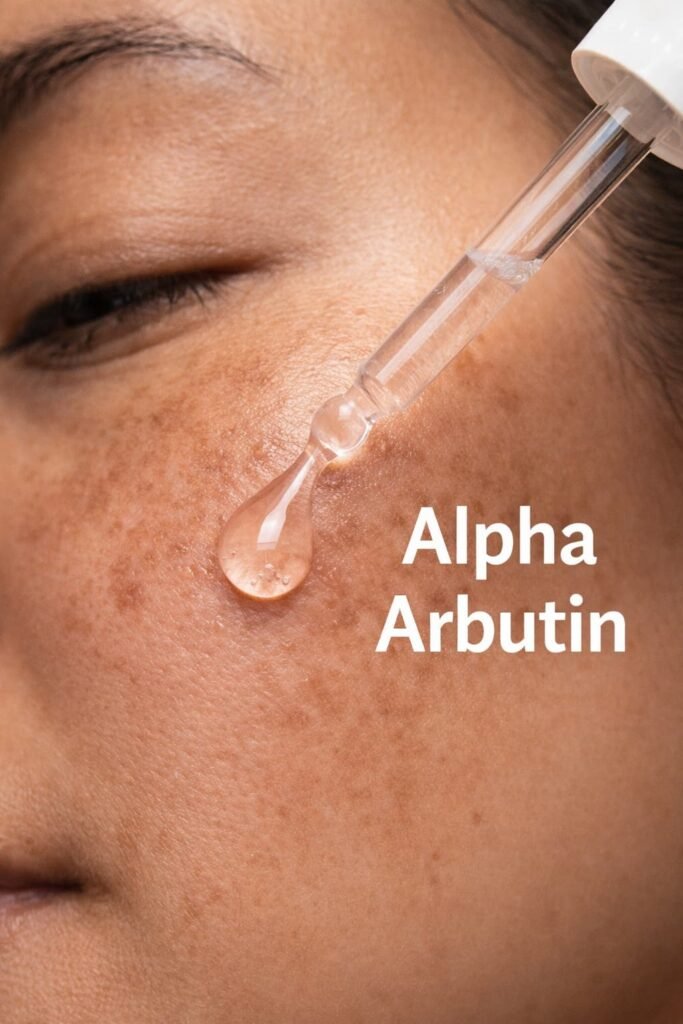
How Alpha Arbutin Works
Alpha arbutin is a tyrosinase inhibitor.
It slows down melanin production by reducing the enzyme responsible for pigment formation.
Unlike older brighteners, alpha arbutin:
- Works gradually
- Has a lower irritation risk
- Is suitable for long-term use
Where Alpha Arbutin Performs Best
Alpha arbutin works particularly well for:
- Surface-level pigmentation
- Sun-induced dark patches
- Maintenance after melasma improvement
Dr. Faiza Shams explains:
“Alpha arbutin is ideal for controlling melanin synthesis once inflammation is under control. It helps maintain results, especially in melasma-prone skin.”
Effective Concentration Range
- 1–2% is optimal
- Higher concentrations do not increase efficacy
Tranexamic Acid vs Alpha Arbutin: Side-by-Side Comparison
| Feature | Tranexamic Acid | Alpha Arbutin |
|---|---|---|
| Primary action | Reduces inflammation & vascular triggers | Inhibits melanin production |
| Best for melasma | Yes (strong evidence) | Supportive |
| Speed of results | Moderate but stable | Gradual |
| Relapse prevention | Strong | Moderate |
| Irritation risk | Low | Very low |
| Long-term use | Safe | Safe |
Which Ingredient Works Better for Melasma?
If melasma is your main concern, tranexamic acid has the advantage.
It addresses:
- UV-induced inflammation
- Hormonal trigger amplification
- Vascular contribution to pigmentation
Alpha arbutin alone may improve brightness, but rarely controls melasma relapse on its own.
This is why modern melasma protocols increasingly use both ingredients together.
Using Tranexamic Acid and Alpha Arbutin Together: The Right Way
How to Layer Them: The Correct Order
The most common mistake is applying both ingredients at the same time in the same step. The correct approach is to separate them by time of day — not because they conflict chemically, but because their functions align with different phases of skin activity.
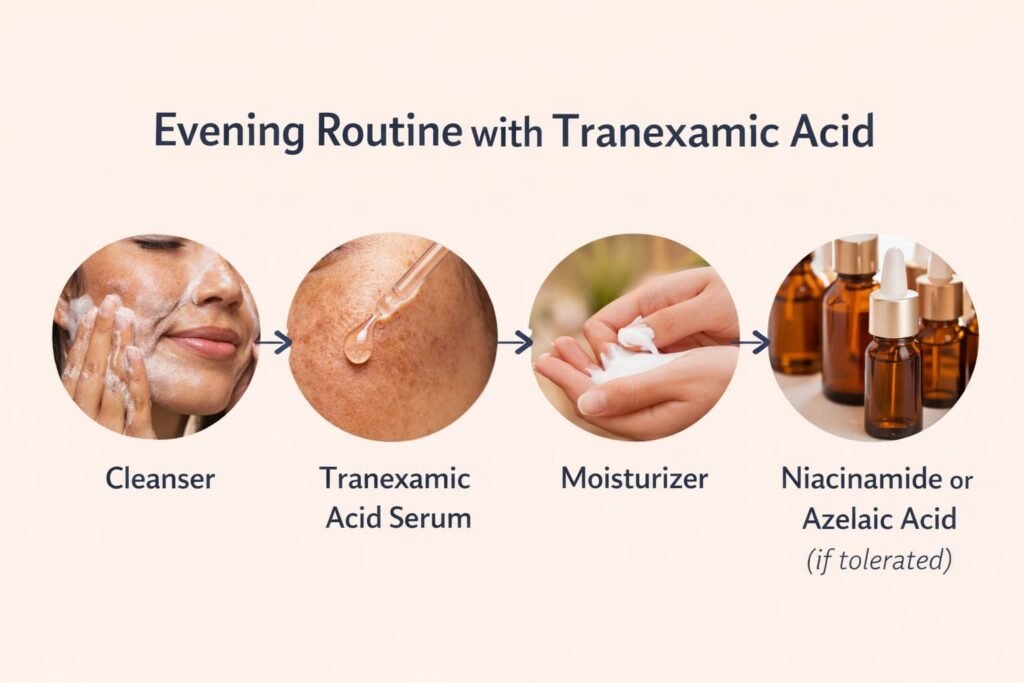
Morning — Alpha Arbutin: Alpha arbutin belongs in your morning routine because it actively prevents new melanin from forming during the day when UV exposure is highest. Applying it before sunscreen creates a dual defence — alpha arbutin slows melanin production at the enzymatic level while SPF blocks the UV trigger at the surface.
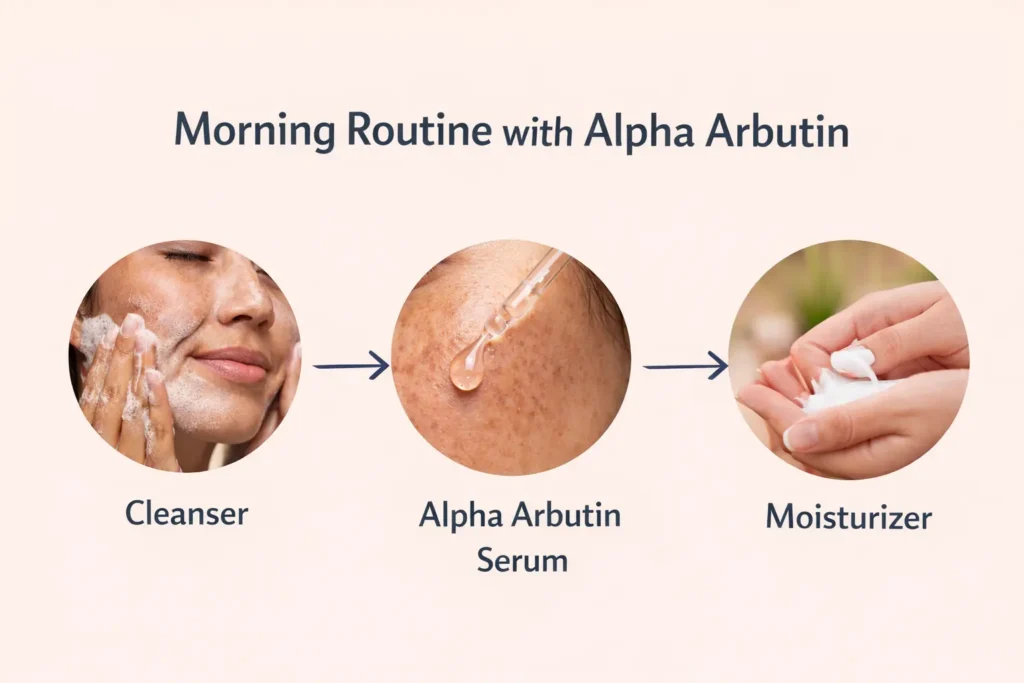
Evening — Tranexamic Acid: Tranexamic acid belongs at night because skin repair and cellular recovery peak during sleep. Applying it in the evening allows it to work on the inflammatory and vascular pathways without competing with SPF or UV exposure. It also pairs well with niacinamide or azelaic acid in the evening routine for enhanced melasma control.
Why Combination Therapy Works Better
Melasma is multi-factorial. No single ingredient addresses all its triggers simultaneously. Tranexamic acid works upstream — calming the inflammation and vascular signals that activate melanocytes in the first place. Alpha arbutin works downstream — slowing the enzyme that converts those signals into visible pigment.
Think of it this way: tranexamic acid turns down the fire, alpha arbutin stops the smoke. Using only one means half the problem goes untreated, which is why melasma fades temporarily and then returns.
Dr. Faiza Shams explains:
“In melasma management, combination therapy is almost always more effective than relying on a single active. Each ingredient addresses a different stage of the pigmentation pathway — together they create a more complete intervention.”
Step-by-Step Combination Routine for Melasma
Morning routine:
- Gentle, sulphate-free cleanser
- Alpha arbutin serum — 1 to 2%, apply to slightly damp skin
- Barrier-supporting moisturiser
- Broad-spectrum SPF 50 with iron oxides — non-negotiable
Evening routine:
- Double cleanse if wearing SPF or makeup
- Tranexamic acid serum — 2 to 5%, apply to clean dry skin
- Allow 60 seconds to absorb before the next step
- Moisturiser — fragrance-free, barrier-focused
- Optional on alternate nights: niacinamide 5% or azelaic acid 10%
How Long Until You See Results
This is the question every patient asks — and the answer requires honesty.
Weeks 1–2: No visible change. Both ingredients are working at a cellular level — calming inflammation and slowing melanin signals before they reach the surface. Patience is essential here.
Weeks 3–6: Initial brightening begins. Surface-level pigment starts to fade as alpha arbutin reduces new melanin deposits. Existing patches may appear slightly more defined before fading — this is normal and not a sign of worsening.
Weeks 8–12: Meaningful improvement in even skin tone. Melasma patches reduce in intensity. Consistency with SPF during this phase is critical — sun exposure will restart the pigmentation cycle regardless of active ingredient use.
Weeks 12 and beyond: Maintenance phase. Continue both ingredients at reduced frequency — 4 to 5 times per week — to sustain results and prevent relapse. Melasma is a chronic condition, not a curable one.
What to Combine With — and What to Avoid
Safe to add:
- Niacinamide 5% — pairs well with both, reduces inflammation, strengthens barrier
- Azelaic acid 10% — alternate evenings with tranexamic acid for enhanced results
- Centella asiatica — supports barrier and calms inflammation
Avoid combining with:
- High-dose Vitamin C (L-ascorbic acid) in the same routine — creates oxidative instability and can worsen inflammation in melasma-prone skin
- Retinoids in early weeks — introduce only after skin has adjusted, and only on nights when tranexamic acid is not applied
- Multiple exfoliating acids — over-exfoliation disrupts the barrier, triggers post-inflammatory pigmentation, and worsens melasma
Who Should Not Use This Combination
This combination is well-tolerated by most skin types but is not appropriate for everyone:
- Pregnant or breastfeeding women — tranexamic acid topical safety in pregnancy has not been fully established. Consult your dermatologist before use.
- Very sensitive or compromised skin barriers — start with alpha arbutin alone for 4 weeks to stabilise the barrier before introducing tranexamic acid.
- Active inflammatory skin conditions — eczema, rosacea, or open wounds. Allow the skin to heal before introducing actives.
Morning Routine for Melasma (Global Climate Friendly)
- Gentle cleanser
- Alpha arbutin serum (1–2%)
- Barrier-supporting moisturizer
- Broad-spectrum sunscreen (mandatory)
The One Mistake That Cancels Both Ingredients
Skipping sunscreen.
No amount of tranexamic acid or alpha arbutin will produce lasting results if UV exposure continues unchecked. SPF is not optional in a melasma protocol — it is the foundation that makes every other step work. Without it, melanocytes remain in a stimulated state regardless of what you apply.
Always chose best sunscreens for melasma-prone skin.
Use a broad-spectrum SPF 50 with iron oxides every morning, reapply every 2 hours in direct sun, and choose a tinted formula if possible — visible light also triggers melasma, and standard SPF does not block it.
Evening Routine for Melasma
- Gentle cleanser
- Tranexamic acid serum (2–5%)
- Moisturizer
If your skin tolerates actives well, tranexamic acid can also be paired with:
- Niacinamide
- Azelaic acid (on alternate nights)
Common Mistakes That Reduce Results
Overusing Brightening Actives
More is not better. Over-application increases inflammation, which worsens melasma.
Skipping Sunscreen
No melasma treatment works without sun protection—none.
Expecting Fast Results
Melasma improvement is gradual. Visible changes usually take 8–12 weeks.
What Recent Research Says
Recent clinical studies have shown:
- Topical tranexamic acid significantly improves melasma severity scores
- Combination regimens outperform monotherapy
- Alpha arbutin improves brightness and maintenance when used long-term
Research increasingly supports non-hydroquinone, combination-based protocols for safer, sustained melasma management.
Final Verdict: Tranexamic Acid vs Alpha Arbutin for Melasma
If you must choose one:
- Tranexamic acid is more effective for melasma control
If you want best results:
- Use both together, correctly layered
Tranexamic acid targets the cause.
Alpha arbutin controls pigment production.
Together, they create a more complete melasma strategy.
Who Should Use This Combination?
- Recurrent melasma sufferers
- Those who cannot tolerate hydroquinone
- People seeking long-term maintenance
- Sensitive or barrier-compromised skin types
Key Takeaway
Melasma does not respond to shortcuts.
It responds to understanding the biology and choosing ingredients that work at different levels.
Using tranexamic acid and alpha arbutin together—supported by sun protection and barrier care—is one of the most dermatologist-aligned approaches available today.
The right choice depends on your skin type and pigmentation pattern. Explore serums for pigmentation and uneven skin tone to find what fits your routine.
Learn more on skin barrier damage and hyperpigmentation.
FAQS
1. Can alpha arbutin be used every day for melasma?
Yes, alpha arbutin is safe for daily use at 1–2%. It works best when used consistently, especially in the morning, alongside a broad-spectrum sunscreen to prevent further pigmentation.
2. How long does alpha arbutin take to show results on dark spots?
Most people start noticing visible brightening in 6–8 weeks, while melasma improvement may take longer and requires strict sun protection and consistent use.
3. Can alpha arbutin be combined with other pigmentation treatments?
Yes, alpha arbutin can be safely combined with tranexamic acid, niacinamide, and sunscreen, making it an effective part of a multi-ingredient routine for melasma and hyperpigmentation.
Address: Block C, Punjab University Employees Housing Scheme Phase-II, Lahore, Pakistan
Contact Number: +923224563810